Und dann auf "Zum Home-Bildschirm [+]".

Stöbern
genialokal zum Startbildschirm hinzufügen
Installieren Sie die genialokal App auf Ihrem Startbildschirm für einen schnellen Zugriff und eine komfortable Nutzung.
Installieren Sie die genialokal App auf Ihrem Startbildschirm für einen schnellen Zugriff und eine komfortable Nutzung.
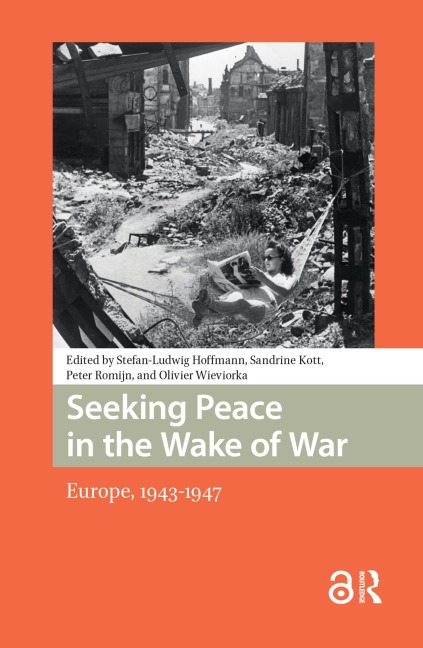
When the Second World War ended, Europe was in ruins. Yet, politically and socially, the years between 1943 and 1947 were a time of dramatic reconfigurations, which proved to be foundational for the making of today's Europe. This volume hones in on the crucial period from the beginning of the end of Nazi rule in Europe to the advent of the Cold War. Through a series of interrelated case studies that span the entire continent, it demonstrates how the everyday experiences of Europeans during these five years shaped the transition of their societies from war to peace. The authors explore these reconfigurations on different scales and levels -the local and regional, the ethnic and national, and the international - with the purpose of enhancing our understanding of how wars end.
Stefan-Ludwig Hoffman is associate professor at the Department of History at the University of California Berkley. Sandrine Kott is professor of contemporary European history at Geneva University.|Peter Romijn is a historian, Head of Research at NIOD, and part-time Professor of Twentieth-Century History at the University of Amsterdam. Olivier Wieviorka is professor of history at l'École normale supérieure in Cachan, France.
The Editors, Introduction: Seeking Peace in the Wake of War. Europe 1943-1947 Section 1: In the Wake of War Marcin Zaremba The 'War Syndrome': World War II and Polish Society Stefan Ludwig Hoffmann Germans into Allies. Writing a Diary in 1945 Olivier Wieviorka, Gabriella Gribaudi, Julie le Gac Two Paths to the Same End? The Challenges of the Liberation in France and Italy Peter Romijn 'Liberators and Patriots': Military Interim Rule and the Politics of Transition in the Netherlands, 1944-1945 Section 2: Reordering communities Juliette Denis The Latvian Orphans Released from the Siberian Special Settlements (1946-1947): The Story of an Unusual Rescue in the Post-War USSR Matej Spurny Migration and Cleansing: Building a New Society in the Czech Borderlands after 1945 Audrey Kichelewski To Stay or to Go? Reconfigurations of Jewish Life in Post-War Poland, 1944-1947 Masha Cerovic Fighters Like No Others: The Soviet Partisans in the Wake of War Section 3: Organizing the Peace Sabine Dullin How the Soviet Empire Relied on Diversity: Territorial Expansion and National Borders at the End of World War II in Ruthenia Dirk Luyten Social Security and the end of the Second World War in France, the Netherlands and Belgium: Social Peace, Organizational Power and the State Polymeris Voglis The Politics of Reconstruction: Foreign Aid and State Authority in Greece, 1945-1947 Sandrine Kott Organizing World Peace: The ILO from the Second World War to the Cold War Philip Nord, Conclusion.
Dieses eBook wird im PDF-Format geliefert und ist mit einem Adobe Kopierschutz (DRM) versehen. Sie können dieses eBook mit allen Geräten lesen, die das PDF-Format und den Adobe Kopierschutz (DRM) unterstützen.
Zum Beispiel mit den folgenden Geräten:
• tolino Reader
Laden Sie das eBook direkt über den Reader-Shop auf dem tolino herunter oder übertragen Sie das eBook auf Ihren tolino mit einer kostenlosen Software wie beispielsweise Adobe Digital Editions.
• Sony Reader & andere eBook Reader
Laden Sie das eBook direkt über den Reader-Shop herunter oder übertragen Sie das eBook mit der kostenlosen Software Sony READER FOR PC/Mac oder Adobe Digital Editions auf ein Standard-Lesegeräte mit epub- und Adobe DRM-Unterstützung.
• Tablets & Smartphones
Möchten Sie dieses eBook auf Ihrem Smartphone oder Tablet lesen, finden Sie hier unsere kostenlose Lese-App für iPhone/iPad und Android Smartphone/Tablets.
• PC & Mac
Lesen Sie das eBook direkt nach dem Herunterladen mit einer kostenlosen Lesesoftware, beispielsweise Adobe Digital Editions, Sony READER FOR PC/Mac oder direkt über Ihre eBook-Bibliothek in Ihrem Konto unter „Meine eBooks“ - „online lesen“.
Schalten Sie das eBook mit Ihrer persönlichen Adobe ID auf bis zu sechs Geräten gleichzeitig frei.
Bitte beachten Sie, dass die Kindle-Geräte das Format nicht unterstützen und dieses eBook somit nicht auf Kindle-Geräten lesbar ist.