Und dann auf "Zum Home-Bildschirm [+]".

Stöbern
genialokal zum Startbildschirm hinzufügen
Installieren Sie die genialokal App auf Ihrem Startbildschirm für einen schnellen Zugriff und eine komfortable Nutzung.
Installieren Sie die genialokal App auf Ihrem Startbildschirm für einen schnellen Zugriff und eine komfortable Nutzung.

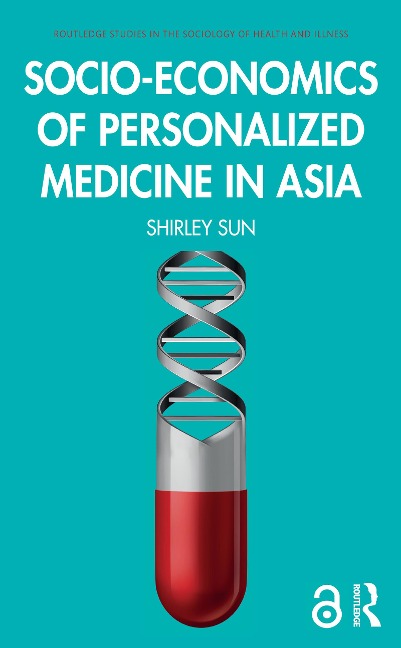

The second decade of the twenty-first century has witnessed a surging interest in personalized medicine with the concomitant promise to enable more precise diagnosis and treatment of disease and illness, based upon an individual's unique genetic makeup. In this book, my goal is to contribute to a growing body of literature on personalized medicine by tracing and analyzing how this field has blossomed in Asia. In so doing, I aim to illustrate how various social and economic forces shape the co-production of science and social order in global contexts. This book shows that there are inextricable transnational linkages between developing and developed countries and also provides a theoretically guided and empirically grounded understanding of the formation and usage of particular racial and ethnic human taxonomies in local, national and transnational settings. The Open Access version of this book, available at http://www.taylorfrancis.com/doi/view/10.4324/9781315537177 has been made available under a Creative Commons Attribution-Non Commercial-No Derivatives 4.0 license.
Shirley Sun is an Associate Professor of Sociology at Nanyang Technological University (NTU), Singapore. Her main research interests are population studies, social inequalities, citizenship and immigration, economic development and social reproduction, and science, technology and society.
1. Introduction 2. Resisting Being "Othered": Regionalism, Nationalism, and the Racialization of Ethnicity in Asia 3. Capitalizing on being "Othered": Precision Medicine and Race in the Context of a Globalized Pharmaceutical Industry 4. Managing "Otherness": Genomic Medicine and Public Health Policy in Singapore 5. Cancer Genomics in Clinics 6. Socio-economic Factors and Ethical Dilemmas in Personalized Medicine Provision 7. Conclusion: Possibilities and Challenges of Personalized Medicine in Asia