Und dann auf "Zum Home-Bildschirm [+]".

Stöbern
genialokal zum Startbildschirm hinzufügen
Installieren Sie die genialokal App auf Ihrem Startbildschirm für einen schnellen Zugriff und eine komfortable Nutzung.
Installieren Sie die genialokal App auf Ihrem Startbildschirm für einen schnellen Zugriff und eine komfortable Nutzung.
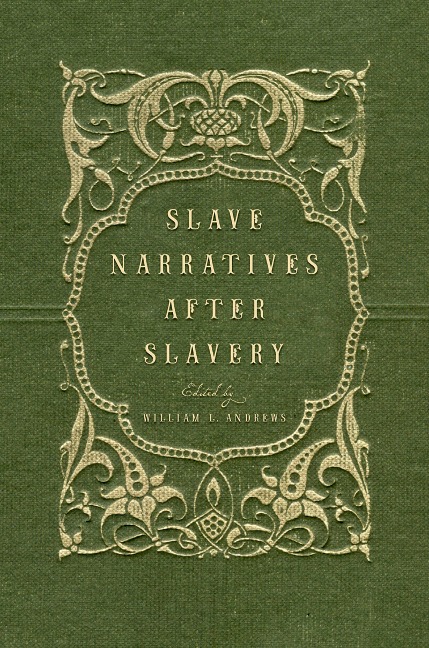
The pre-Civil War autobiographies of famous fugitives such as Frederick Douglass, William Wells Brown, and Harriet Jacobs form the bedrock of the African American narrative tradition. After emancipation arrived in 1865, former slaves continued to write about their experience of enslavement and their upward struggle to realize the promise of freedom and citizenship. Slave Narratives After Slavery reprints five of the most important and revealing first-person narratives of slavery and freedom published after 1865. Elizabeth Keckley's controversial Behind the Scenes (1868) introduced white America to the industry and progressive outlook of an emerging black middle class. The little-known Narrative of the life of John Quincy Adams, When in Slavery, and Now as a Freeman (1872) gave eloquent voice to the African American working class as it migrated from the South to the North in search of opportunity. William Wells Brown's My Southern Home (1880) retooled the image of slavery delineated in his widely-read antebellum Narrative and offered his reader a first-hand assessment of the South at the close of Reconstruction. Lucy Ann Delaney used From the Darkness Cometh the Light (1891) to pay tribute to her enslaved mother and to exemplify the qualities of mind and spirit that had ensured her own fulfillment in freedom. Louis Hughes's Thirty Years a Slave (1897) spoke for a generation of black Americans who, perceiving the spread of segregation across the South, sought to remind the nation of the horrors of its racial history and of the continued dedication of the once enslaved to dignity, opportunity, and independence.
William L. Andrews is E. Maynard Adams Professor of English, University of North Carolina. He is the author of and editor of numerous books, including The Literary Career of Charles W. Chesnutt, To Tell a Free Story: The First Century of Afro-American Autobiography, 1760-1865, and The Norton Anthology of African American Literature.
Introduction (with bibliography) Note on the text Introduction to Keckley and Behind the Scenes Elizabeth Keckley, Behind the Scenes, or, Thirty Years a Slave and Four Years in the White House (New York: G.W. Carleton, 1868). Introduction to Adams and Narrative of the Life John Quincy Adams, Narrative of the Life of John Quincy Adams, When in Slavery, and Now as a Freeman (Harrisburg, Pa.: Sieg, 1872). Introduction to Brown and My Southern Home William Wells Brown, My Southern Home, or, The South and Its People (Boston: A. G. Brown & Co., Publishers, 1880). Introduction to Delaney and From the Darkness Cometh the Light Lucy Ann Berry Delaney, From the Darkness Cometh the Light; or, Struggles for Freedom (St. Louis: J. T. Smith, 1891). Introduction to Hughes and Thirty Years a Slave Hughes, Louis, Thirty Years a Slave: From Bondage to Freedom: The Institution of Slavery as Seen on the Plantation and in the Home of the Planter (Milwaukee: South Side Printing Company, 1897).
Dieses eBook wird im PDF-Format geliefert und ist mit einem Adobe Kopierschutz (DRM) versehen. Sie können dieses eBook mit allen Geräten lesen, die das PDF-Format und den Adobe Kopierschutz (DRM) unterstützen.
Zum Beispiel mit den folgenden Geräten:
• tolino Reader
Laden Sie das eBook direkt über den Reader-Shop auf dem tolino herunter oder übertragen Sie das eBook auf Ihren tolino mit einer kostenlosen Software wie beispielsweise Adobe Digital Editions.
• Sony Reader & andere eBook Reader
Laden Sie das eBook direkt über den Reader-Shop herunter oder übertragen Sie das eBook mit der kostenlosen Software Sony READER FOR PC/Mac oder Adobe Digital Editions auf ein Standard-Lesegeräte mit epub- und Adobe DRM-Unterstützung.
• Tablets & Smartphones
Möchten Sie dieses eBook auf Ihrem Smartphone oder Tablet lesen, finden Sie hier unsere kostenlose Lese-App für iPhone/iPad und Android Smartphone/Tablets.
• PC & Mac
Lesen Sie das eBook direkt nach dem Herunterladen mit einer kostenlosen Lesesoftware, beispielsweise Adobe Digital Editions, Sony READER FOR PC/Mac oder direkt über Ihre eBook-Bibliothek in Ihrem Konto unter „Meine eBooks“ - „online lesen“.
Schalten Sie das eBook mit Ihrer persönlichen Adobe ID auf bis zu sechs Geräten gleichzeitig frei.
Bitte beachten Sie, dass die Kindle-Geräte das Format nicht unterstützen und dieses eBook somit nicht auf Kindle-Geräten lesbar ist.