Und dann auf "Zum Home-Bildschirm [+]".

Stöbern
genialokal zum Startbildschirm hinzufügen
Installieren Sie die genialokal App auf Ihrem Startbildschirm für einen schnellen Zugriff und eine komfortable Nutzung.
Installieren Sie die genialokal App auf Ihrem Startbildschirm für einen schnellen Zugriff und eine komfortable Nutzung.
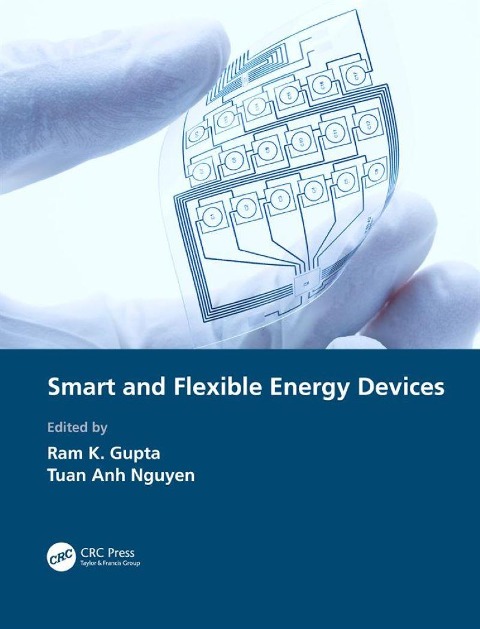
The scientific community and industry have seen tremendous progress in efficient energy production and storage in the last few years. With the advancement in technology, new devices require high-performance, stretchable, bendable, and twistable energy sources, which can be integrated into next-generation wearable, compact, and portable electronics for medical, military, and civilian applications. Smart and Flexible Energy Devices examines the materials, basic working principles, and state-of-the-art progress of flexible devices like fuel cells, solar cells, batteries, and supercapacitors. Covering the synthesis approaches for advanced energy materials in flexible devices and fabrications and fundamental design concepts of flexible energy devices, such as fuel cells, solar cells, batteries, and supercapacitors, top author teams explore how newer materials with advanced properties are used to fabricate the energy devices to meet the future demand for flexible electronics. Additional features include: . Addressing the materials, technologies, and challenges of various flexible energy devices under one cover . Emphasizing the future demand and challenges of the field . Considering all flexible energy types, such as fuel cells, solar cells, batteries, and supercapacitors . Suitability for undergraduate and postgraduate students of material science and energy programs This is a valuable resource for academics and industry professionals working in the field of energy materials, nanotechnology, and energy devices.
Dr. Ram Gupta is an Associate Professor at Pittsburg State University. Dr. Gupta's research focuses on conducting polymers and composites, green energy production and storage using biowastes and nanomaterials, optoelectronics and photovoltaics devices, organic-inorganic hetero-junctions for sensors, bio-based polymers, flame-retardant polymers, bio-compatible nanofibers for tissue regeneration, scaffold and antibacterial applications, corrosion inhibiting coatings, and bio-degradable metallic implants. Dr. Gupta has published over 230 peer-reviewed articles, made over 280 national, international, and regional presentations, chaired many sessions at national/international meetings, edited many books, and written several book chapters. He has received over two and a half million dollars for research and educational activities from many funding agencies. He is serving as Editor-in-Chief, Associate Editor, and editorial board member of numerous journals. Tuan Anh NGUYEN has completed his BSc in Physics from Hanoi University in 1992, and his Ph.D. in Chemistry from Paris Diderot University (France) in 2003. He was a Visiting Scientist at Seoul National University (South Korea, 2004) and the University of Wollongong (Australia, 2005). He then worked as a Postdoctoral Research Associate & Research Scientist at Montana State University (USA), 2006-2009. In 2012, he was appointed as Head of Microanalysis Department at the Institute for Tropical Technology (Vietnam Academy of Science and Technology). He has managed 4 Ph.D. theses as thesis director and 3 are in progress; He is Editor-In-Chief of "Kenkyu Journal of Nanotechnology & Nanoscience" and Founding Co-Editor-In-Chief of "Current Nanotoxicity & Prevention". He is the author of 4 Vietnamese books and Editor of 32 Elsevier books in the Micro & Nano Technologies Series.
Chapter 1. Smart and Flexible Energy Devices: Principles, Advances, and Opportunities Chapter 2. Innovation in Materials and Design for Flexible Energy Devices Chapter 3. Basics and Architectural Aspects of Flexible Energy Devices Chapter 4. Characterization Techniques of Flexible Energy Devices Chapter 5. Micro- and Nanofibers-Based Flexible Energy Devices Chapter 6. 3D Printed Flexible Energy Devices Chapter 7. Environmental Impact of Flexible Energy Devices Chapter 8. Metal Oxide-Based Catalysts for Flexible and Portable Fuel Cells: Current Status and Future Prospects Chapter 9. Flexible Fuel Cells Based on Microbes Chapter 10. Flexible Silicon Photovoltaic Solar Cells Chapter 11. Flexible Solar Cells Based on Metal Oxides Chapter 12. Inorganic Materials for Flexible Solar Cells Chapter 13. Efficient Metal Oxide-Based Flexible Perovskite Solar Cells Chapter 14. Flexible Solar Cells Based on Chalcogenides Chapter 15. Perovskite-based Flexible Solar Cells Chapter 16. Quantum Dots Based Flexible Solar CellsChapter 17. A Method of Strategic Evaluation for Perovskite-Based Flexible Solar Cells Chapter 18. Flexible Batteries Based on Li-ion Chapter 19. Flexible Batteries Based on Na-ion Chapter 20. Flexible Batteries Based on K-ion Chapter 21. Flexible Batteries Based on Zn-ion Chapter 22. Fabrication Techniques for Wearable Batteries Chapter 23. Carbon-Based Advanced Flexible Supercapacitors Chapter 24. 2D Materials for Flexible Supercapacitors Chapter 25. Flexible Supercapacitors Based on Metal Oxides Chapter 26. Recent Advances in Transition Metal Chalcogenides for Flexible Supercapacitors Chapter 27. MOFs-Derived Metal Oxides-Based Compounds for Flexible Supercapacitors Chapter 28. Textile-Based Flexible Supercapacitors Chapter 29. Current Development and Challenges in Textile-Based Flexible Supercapacitors Chapter 30. Flexible Supercapacitors Based on Nanocomposites Chapter 31. Textile-Based Flexible Nanogenerators
Dieses eBook wird im PDF-Format geliefert und ist mit einem Adobe Kopierschutz (DRM) versehen. Sie können dieses eBook mit allen Geräten lesen, die das PDF-Format und den Adobe Kopierschutz (DRM) unterstützen.
Zum Beispiel mit den folgenden Geräten:
• tolino Reader
Laden Sie das eBook direkt über den Reader-Shop auf dem tolino herunter oder übertragen Sie das eBook auf Ihren tolino mit einer kostenlosen Software wie beispielsweise Adobe Digital Editions.
• Sony Reader & andere eBook Reader
Laden Sie das eBook direkt über den Reader-Shop herunter oder übertragen Sie das eBook mit der kostenlosen Software Sony READER FOR PC/Mac oder Adobe Digital Editions auf ein Standard-Lesegeräte mit epub- und Adobe DRM-Unterstützung.
• Tablets & Smartphones
Möchten Sie dieses eBook auf Ihrem Smartphone oder Tablet lesen, finden Sie hier unsere kostenlose Lese-App für iPhone/iPad und Android Smartphone/Tablets.
• PC & Mac
Lesen Sie das eBook direkt nach dem Herunterladen mit einer kostenlosen Lesesoftware, beispielsweise Adobe Digital Editions, Sony READER FOR PC/Mac oder direkt über Ihre eBook-Bibliothek in Ihrem Konto unter „Meine eBooks“ - „online lesen“.
Schalten Sie das eBook mit Ihrer persönlichen Adobe ID auf bis zu sechs Geräten gleichzeitig frei.
Bitte beachten Sie, dass die Kindle-Geräte das Format nicht unterstützen und dieses eBook somit nicht auf Kindle-Geräten lesbar ist.