Und dann auf "Zum Home-Bildschirm [+]".

Stöbern
genialokal zum Startbildschirm hinzufügen
Installieren Sie die genialokal App auf Ihrem Startbildschirm für einen schnellen Zugriff und eine komfortable Nutzung.
Installieren Sie die genialokal App auf Ihrem Startbildschirm für einen schnellen Zugriff und eine komfortable Nutzung.
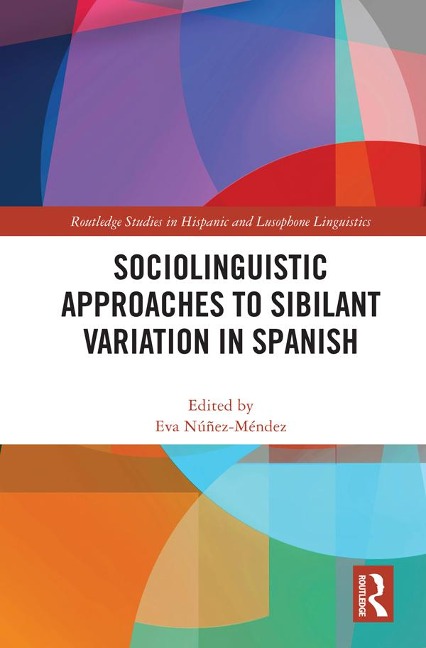
Social processes and the nature of language variation have driven sibilant variation across the Spanish-speaking world. This book explores the current state of Spanish sibilants and their dialectal variations. Focusing on different processes undergone by sibilants in Spanish (e.g., voicing, devoicing, weakening, aspiration, elision) in various geographical areas and language contact situations, each chapter offers an analysis on a unique sociolinguistic case from different formal, experimental, and data-based approaches. The opening chapter orients the reader with an overview of sibilant system's evolution, which serves as an anchor to the other chapters and facilitates understanding for readers new to the topic. The volume is organized around three thematic sections: part one, Spain; part two, United States; and part three, Central and South America. The collection includes research on dialects in both Peninsular and Trans-Atlantic Spanish such as Jerezano, Caribbean Spanish in Boston and New York City, Cuban Spanish in Miami, Colombia-Barranquilla Spanish, northern Buenos Aires Argentine Spanish, and USA heritage Spanish, among other case studies. This volume offers an original and concise approach to one of the most studied variables in Spanish phonetics, taking into account geographically-based phonetic variation, sociolinguistic factors, and various Spanish language contact situations. Written in English, this detailed synthesis of the wide-ranging geolinguistic features of Spanish sibilants provides a valuable resource for scholars in Hispanic studies, linguistics, Spanish dialectology and sociolinguistics.
Eva Núñez is Professor of Spanish Linguistics at Portland State University, USA.
PART I. Spain 1. An overview of the sibilant merger and its development in Spanish 2. Sibilants in Western Andalusian Spanish: the lack of a Sevillian norm in the Jerezano speech community 3. Intervocalic /s/-voicing in Spanish in contact with Catalan PART II. United States 4. Describing and analyzing variability in Spanish /s/: a case study of Caribbeans in Boston and New York City 5. Variable realization of final /s/ in Miami Cuban Spanish: the reversal of diachronic language change 6. Variable /s/-voicing by heritage Spanish speakers in the United States PART III. Central and South America 7. /s/ weakening in Nicaragua 8. A sociophonetic approach to /s/-realization in the Colombian Spanish of Barranquilla 9. Sibilants in Ecuadoran Spanis 10. Syllable-final /s/-variation in an Uruguayan Spanish-Portuguese contact variety 11. Variable voicing in Argentine Spanish /-/
Dieses eBook wird im PDF-Format geliefert und ist mit einem Adobe Kopierschutz (DRM) versehen. Sie können dieses eBook mit allen Geräten lesen, die das PDF-Format und den Adobe Kopierschutz (DRM) unterstützen.
Zum Beispiel mit den folgenden Geräten:
• tolino Reader
Laden Sie das eBook direkt über den Reader-Shop auf dem tolino herunter oder übertragen Sie das eBook auf Ihren tolino mit einer kostenlosen Software wie beispielsweise Adobe Digital Editions.
• Sony Reader & andere eBook Reader
Laden Sie das eBook direkt über den Reader-Shop herunter oder übertragen Sie das eBook mit der kostenlosen Software Sony READER FOR PC/Mac oder Adobe Digital Editions auf ein Standard-Lesegeräte mit epub- und Adobe DRM-Unterstützung.
• Tablets & Smartphones
Möchten Sie dieses eBook auf Ihrem Smartphone oder Tablet lesen, finden Sie hier unsere kostenlose Lese-App für iPhone/iPad und Android Smartphone/Tablets.
• PC & Mac
Lesen Sie das eBook direkt nach dem Herunterladen mit einer kostenlosen Lesesoftware, beispielsweise Adobe Digital Editions, Sony READER FOR PC/Mac oder direkt über Ihre eBook-Bibliothek in Ihrem Konto unter „Meine eBooks“ - „online lesen“.
Schalten Sie das eBook mit Ihrer persönlichen Adobe ID auf bis zu sechs Geräten gleichzeitig frei.
Bitte beachten Sie, dass die Kindle-Geräte das Format nicht unterstützen und dieses eBook somit nicht auf Kindle-Geräten lesbar ist.