Und dann auf "Zum Home-Bildschirm [+]".

Stöbern
genialokal zum Startbildschirm hinzufügen
Installieren Sie die genialokal App auf Ihrem Startbildschirm für einen schnellen Zugriff und eine komfortable Nutzung.
Installieren Sie die genialokal App auf Ihrem Startbildschirm für einen schnellen Zugriff und eine komfortable Nutzung.
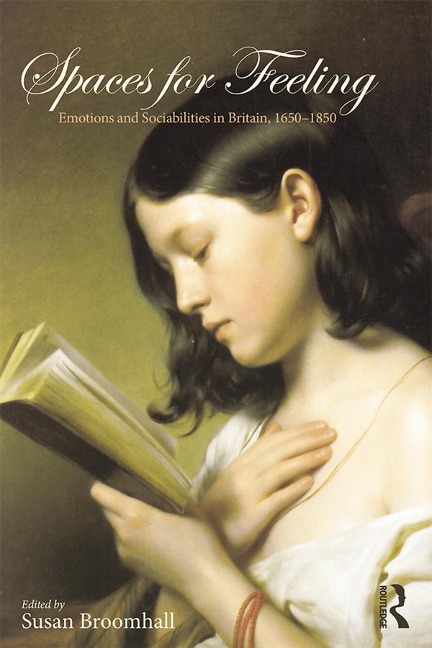
Spaces for Feeling explores how English and Scottish people experienced sociabilities and socialities from 1650 to 1850, and investigates their operation through emotional practices and particular spaces. The collection highlights the forms, practices, and memberships of these varied spaces for feeling in this two hundred year period and charts the shifting conceptualisations of emotions that underpinned them. The authors employ historical, literary, and visual history approaches to analyse a series of literary and art works, emerging forms of print media such as pamphlet propaganda, newspapers, and periodicals, and familial and personal sources such as letters, in order to tease out how particular communities were shaped and cohered through distinct emotional practices in specific spaces of feeling. This collection studies the function of emotions in group formations in Britain during a period that has attracted widespread scholarly interest in the creation and meaning of sociabilities in particular. From clubs and societies to families and households, essays here examine how emotional practices could sustain particular associations, create new social communities and disrupt the capacity of a specific cohort to operate successfully. This timely collection will be essential reading for students and scholars of the history of emotions.
Susan Broomhall is Winthrop Professor of Early Modern History at The University of Western Australia and a Chief Investigator in the Australian Research Council Centre of Excellence for the History of Emotions, 1100-1800. Her previous publications include (with David G. Barrie) Police Courts in Nineteenth-Century Scotland, 2 vols (Ashgate, 2014), and, as editor, Emotions in the Household, 1200-1900 (2007).
List of Figures Notes on Contributors Introduction: Spaces for Feeling: Sociabilities in Britain, 1650-1850, Susan Broomhall 1. 'At my mother's house': Community and Household Spaces in Early Eighteenth-Century Scottish Infanticide Narratives, Joanne McEwan 2. The Mysteries of Popery Unveiled: Affective Language in John Coustos's and Anthony Gavín's Accounts of the Inquisition, Giovanni Tarantino 3. Renovating Affections: Reconstructing the Atholl Family in the Mid-Eighteenth Century, Susan Broomhall 4. Bringing Order to the Passions: Eliza Haywood's Fiction, 1719 and 1748, Aleksondra Hultquist 5. Marginal Households and their Emotions: The 'Kept Mistress' in Enlightenment Edinburgh, Katie Barclay 6. 'Strolling Roxanas': Sexual Transgression and Social Satire in the Eighteenth Century, Katrina O'Loughlin 7. Weeping in Space: Tears, Feelings, and Enthusiasm in Eighteenth-Century Britain, Thomas Dixon 8 Hazlitt on Gesture and Hybrid Emotions: Individuality and Community in the Maidstone Self-Portrait and 'Fonthill Abbey', Richard Read 9. Faces that Speak: A Little Emotion Machine in the Novels of Jane Austen Stephanie Trigg 10. Feeling in the Wynds: Media Representation of Affective Practices in Urban Scotland in the First Half of the Nineteenth Century, Susan Broomhall Select Bibliography Index
Dieses eBook wird im PDF-Format geliefert und ist mit einem Adobe Kopierschutz (DRM) versehen. Sie können dieses eBook mit allen Geräten lesen, die das PDF-Format und den Adobe Kopierschutz (DRM) unterstützen.
Zum Beispiel mit den folgenden Geräten:
• tolino Reader
Laden Sie das eBook direkt über den Reader-Shop auf dem tolino herunter oder übertragen Sie das eBook auf Ihren tolino mit einer kostenlosen Software wie beispielsweise Adobe Digital Editions.
• Sony Reader & andere eBook Reader
Laden Sie das eBook direkt über den Reader-Shop herunter oder übertragen Sie das eBook mit der kostenlosen Software Sony READER FOR PC/Mac oder Adobe Digital Editions auf ein Standard-Lesegeräte mit epub- und Adobe DRM-Unterstützung.
• Tablets & Smartphones
Möchten Sie dieses eBook auf Ihrem Smartphone oder Tablet lesen, finden Sie hier unsere kostenlose Lese-App für iPhone/iPad und Android Smartphone/Tablets.
• PC & Mac
Lesen Sie das eBook direkt nach dem Herunterladen mit einer kostenlosen Lesesoftware, beispielsweise Adobe Digital Editions, Sony READER FOR PC/Mac oder direkt über Ihre eBook-Bibliothek in Ihrem Konto unter „Meine eBooks“ - „online lesen“.
Schalten Sie das eBook mit Ihrer persönlichen Adobe ID auf bis zu sechs Geräten gleichzeitig frei.
Bitte beachten Sie, dass die Kindle-Geräte das Format nicht unterstützen und dieses eBook somit nicht auf Kindle-Geräten lesbar ist.