Und dann auf "Zum Home-Bildschirm [+]".

Stöbern
genialokal zum Startbildschirm hinzufügen
Installieren Sie die genialokal App auf Ihrem Startbildschirm für einen schnellen Zugriff und eine komfortable Nutzung.
Installieren Sie die genialokal App auf Ihrem Startbildschirm für einen schnellen Zugriff und eine komfortable Nutzung.
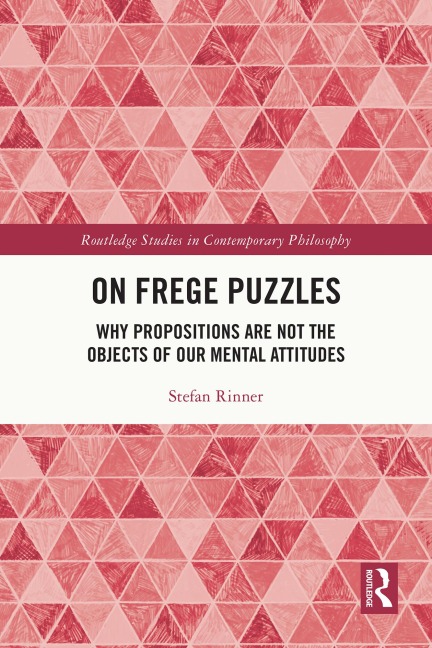
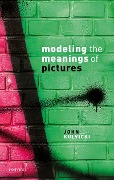
This book argues against the received view of propositional theory, according to which mental attitudes-such as believing, knowing, hoping, and wishing-are relations held between agents and propositions. Roughly speaking, propositions are primary bearers of truth that are neither sentences nor utterances of sentences, be it of a public language or of a language of thought. This book argues that the propositional theory does not provide a solution to Frege's puzzle about belief, which arises if we formulate disquotational principles connecting sincere assertion and belief, certain standards regarding rationality, and semantic principles such as the theory of direct reference within the framework of the propositional theory. This suggests that we must reject the propositional theory. The book emphasises this again by showing that the propositional theory cannot solve Schiffer's puzzle regarding de re belief, which, in addition to disquotational principles connecting sincere assertion and belief, uses highly plausible exportation and rationality principles for de re belief. It then discusses possible alternatives to the propositional theory, such as Marcus' theory of states of affairs, Lewis' property account, Larson and Ludlow's theory of interpreted logical forms, and Moltmann's Multiple Relation Theory. Just like the propositional theory, these theories maintain that mental attitudes such as believing are relations, and they also inherit the main problems of the propositional theory. Therefore, the author proposes and develops a non-relational account of the attitudes in question that together with a measurement account of the respective attitude ascriptions, provides a solution to both Frege's puzzle and Schiffer's puzzle. On Frege Puzzles will appeal to scholars and graduate students working in philosophy of language, philosophy of mind, and logic.
Stefan Rinner is an assistant professor at the University of Duisburg-Essen. His research focuses on the philosophy of language and related areas, including propositional attitude ascriptions and the semantics of referring expressions. He has published several articles on these topics in leading journals, such as Synthese and Erkenntnis.
Introduction 1. Frege's Puzzle 2. Frege Puzzles for Fregeans 3 Frege Puzzles for Russellians 4. Propositionalism and Schiffer's Puzzle 5. Rejecting Relationalism
Dieses eBook wird im PDF-Format geliefert und ist mit einem Adobe Kopierschutz (DRM) versehen. Sie können dieses eBook mit allen Geräten lesen, die das PDF-Format und den Adobe Kopierschutz (DRM) unterstützen.
Zum Beispiel mit den folgenden Geräten:
• tolino Reader
Laden Sie das eBook direkt über den Reader-Shop auf dem tolino herunter oder übertragen Sie das eBook auf Ihren tolino mit einer kostenlosen Software wie beispielsweise Adobe Digital Editions.
• Sony Reader & andere eBook Reader
Laden Sie das eBook direkt über den Reader-Shop herunter oder übertragen Sie das eBook mit der kostenlosen Software Sony READER FOR PC/Mac oder Adobe Digital Editions auf ein Standard-Lesegeräte mit epub- und Adobe DRM-Unterstützung.
• Tablets & Smartphones
Möchten Sie dieses eBook auf Ihrem Smartphone oder Tablet lesen, finden Sie hier unsere kostenlose Lese-App für iPhone/iPad und Android Smartphone/Tablets.
• PC & Mac
Lesen Sie das eBook direkt nach dem Herunterladen mit einer kostenlosen Lesesoftware, beispielsweise Adobe Digital Editions, Sony READER FOR PC/Mac oder direkt über Ihre eBook-Bibliothek in Ihrem Konto unter „Meine eBooks“ - „online lesen“.
Schalten Sie das eBook mit Ihrer persönlichen Adobe ID auf bis zu sechs Geräten gleichzeitig frei.
Bitte beachten Sie, dass die Kindle-Geräte das Format nicht unterstützen und dieses eBook somit nicht auf Kindle-Geräten lesbar ist.