Und dann auf "Zum Home-Bildschirm [+]".

Stöbern
genialokal zum Startbildschirm hinzufügen
Installieren Sie die genialokal App auf Ihrem Startbildschirm für einen schnellen Zugriff und eine komfortable Nutzung.
Installieren Sie die genialokal App auf Ihrem Startbildschirm für einen schnellen Zugriff und eine komfortable Nutzung.
Ihr gewünschter Artikel ist in 0 Buchhandlungen vorrätig - wählen Sie hier eine Buchhandlung in Ihrer Nähe aus:

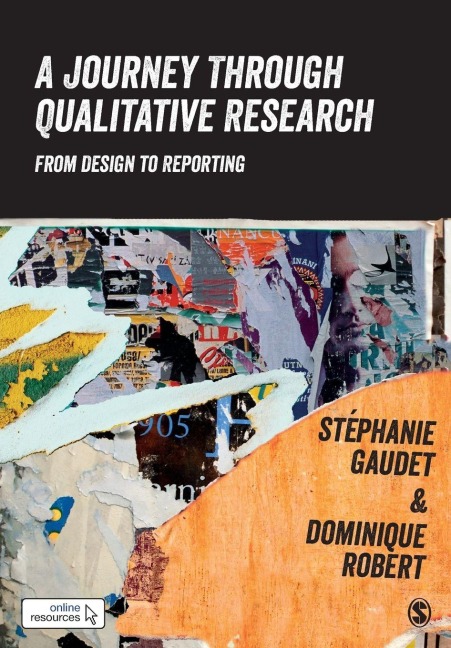
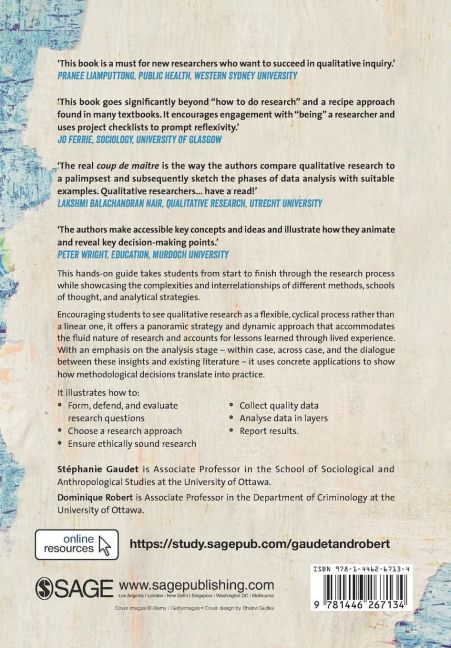
A hands-on, start-to-finish guide to qualitative research, showcasing the complexities and interrelationships of different methods and strategies, taking a flexible, cyclical view of research, rather than a linear one.
Stéphanie Gaudet is Full Professor and Director of the Centre for Interdisciplinary Research on Citizenship and Minorities (CIRCEM) at the University of Ottawa. She works on social and political participation, particularly that of young people, life courses and qualitative methodology. She leads a partnership research project (SSHRC) on citizenship education experiences in community and associative settings (educationetdemocratie.ca) and a research project on youth social and political engagement pathways (SSHRC).
Chapter 1: Choosing qualitative inquiry
The knowledge production process
Qualitative research design
Realm of qualitative epistemologies
Chapter 2: Designing an iterative research project
Designing the research
The writing of a research project
Chapter 3: Choosing an Approach to Guide Methodological Decisions
Phenomenology
Grounded theory
Discourse analysis
Narrative analysis
Ethnography
Chapter 4: Choosing Tools for Your Fieldwork
Observation
Interviews
Documents
Chapter 5: Ethical challenges in qualitative research
Procedural Ethics
Making an Application to the REB
Concerns at the Heart of Research Relationships
Chapter 6: Preparing for analysis and validity requirements
The palimpsest as a metaphor for principles of analysis
Vertical analysis: The first stratum of the palimpsest
Horizontal analysis: The second stratum of the palimpsest
Theoretical analysis: The third stratum of the palimpsest
Initial project
Chapter 7: Vertical Analysis
Contextualizing condensation
Semantic condensation
Chapter 8: Horizontal analysis
Horizontal analysis using discourse analysis through interpretative repertoires
Horizontal analysis using a mixed approached inspired by grounded theory and narrative analysis
Chapter 9: Theorizing and presenting the results
Classification by Typology
Bringing out contrasting characters
Establishing a dialogue to enrich concepts
Ensuring the quality of the study