Und dann auf "Zum Home-Bildschirm [+]".

Stöbern
genialokal zum Startbildschirm hinzufügen
Installieren Sie die genialokal App auf Ihrem Startbildschirm für einen schnellen Zugriff und eine komfortable Nutzung.
Installieren Sie die genialokal App auf Ihrem Startbildschirm für einen schnellen Zugriff und eine komfortable Nutzung.
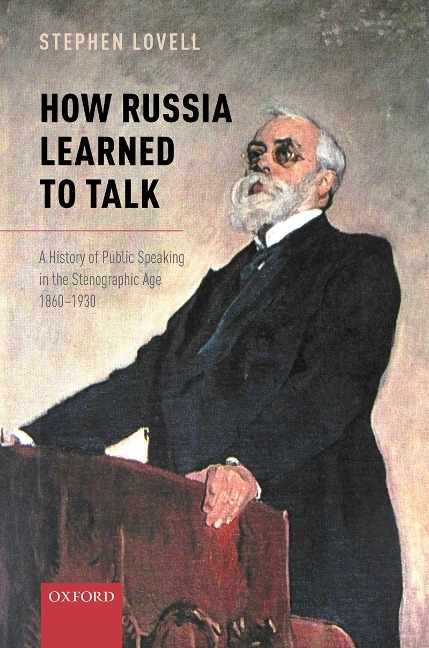
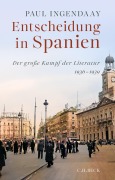
Russia in the late nineteenth century may have been an autocracy, but it was far from silent. In the 1860s, new venues for public speech sprang up: local and municipal assemblies, the courtroom, and universities and learned societies. Theatre became more lively and vernacular, while the Orthodox Church exhorted its priests to become better preachers. Although the tsarist government attempted to restrain Russia's emerging orators, the empire was entering an era of vigorous modern politics. All the while, the spoken word was amplified by the written: the new institutions of the 1860s brought with them the adoption of stenography. Russian political culture reached a new peak of intensity with the 1905 revolution and the creation of a parliament, the State Duma, whose debates were printed in the major newspapers. Sometimes considered a failure as a legislative body, the Duma was a formidable school of modern political rhetoric. It was followed by the cacophonous freedom of 1917, when Aleksandr Kerensky, dubbed Russia's 'persuader-in-chief', emerged as Russia's leading orator only to see his charisma wane. The Bolsheviks could boast charismatic orators of their own, but after the October Revolution they also turned public speaking into a core ritual of Soviet 'democracy'. The Party's own gatherings remained vigorous (if also sometimes vicious) throughout the 1920s; and here again, the stenographer was in attendance to disseminate proceedings to a public of newspaper readers or Party functionaries. How Russia Learned to Talk offers an entirely new perspective on Russian political culture, showing that the era from Alexander II's Great Reforms to early Stalinism can usefully be seen as a single 'stenographic age'. All Russia's rulers, whether tsars or Bolsheviks, were grappling with the challenges and opportunities of mass politics and modern communications. In the process, they gave a new lease of life to the age-old rhetorical technique of oratory.
Stephen Lovell is Professor of Modern History at King's College London. His previous books include the prize-winning Summerfolk: A History of the Dacha, 1710-2000 (2003) and Russia in the Microphone Age: A History of Soviet Radio, 1919-1970 (2015).
- Introduction: Talking as History - 1: Glasnost' in Practice: Public Speaking in the Reform Era, 1856-1867 - 2: Trials and Tribulations: The Long 1870s, 1867-1881 - 3: Small Deeds and Muffled Voices: The Age of Counter-Reform, 1881-1895 - 4: The Rise of Political Speech, 1895-1905 - 5: Public Speaking in the Age of the State Duma - 6: Revolutionary Talk, 1917-1918 - 7: Soviet Talk - Epilogue - Bibliography
Dieses eBook wird im PDF-Format geliefert und ist mit einem Adobe Kopierschutz (DRM) versehen. Sie können dieses eBook mit allen Geräten lesen, die das PDF-Format und den Adobe Kopierschutz (DRM) unterstützen.
Zum Beispiel mit den folgenden Geräten:
• tolino Reader
Laden Sie das eBook direkt über den Reader-Shop auf dem tolino herunter oder übertragen Sie das eBook auf Ihren tolino mit einer kostenlosen Software wie beispielsweise Adobe Digital Editions.
• Sony Reader & andere eBook Reader
Laden Sie das eBook direkt über den Reader-Shop herunter oder übertragen Sie das eBook mit der kostenlosen Software Sony READER FOR PC/Mac oder Adobe Digital Editions auf ein Standard-Lesegeräte mit epub- und Adobe DRM-Unterstützung.
• Tablets & Smartphones
Möchten Sie dieses eBook auf Ihrem Smartphone oder Tablet lesen, finden Sie hier unsere kostenlose Lese-App für iPhone/iPad und Android Smartphone/Tablets.
• PC & Mac
Lesen Sie das eBook direkt nach dem Herunterladen mit einer kostenlosen Lesesoftware, beispielsweise Adobe Digital Editions, Sony READER FOR PC/Mac oder direkt über Ihre eBook-Bibliothek in Ihrem Konto unter „Meine eBooks“ - „online lesen“.
Schalten Sie das eBook mit Ihrer persönlichen Adobe ID auf bis zu sechs Geräten gleichzeitig frei.
Bitte beachten Sie, dass die Kindle-Geräte das Format nicht unterstützen und dieses eBook somit nicht auf Kindle-Geräten lesbar ist.