Und dann auf "Zum Home-Bildschirm [+]".

Stöbern
genialokal zum Startbildschirm hinzufügen
Installieren Sie die genialokal App auf Ihrem Startbildschirm für einen schnellen Zugriff und eine komfortable Nutzung.
Installieren Sie die genialokal App auf Ihrem Startbildschirm für einen schnellen Zugriff und eine komfortable Nutzung.
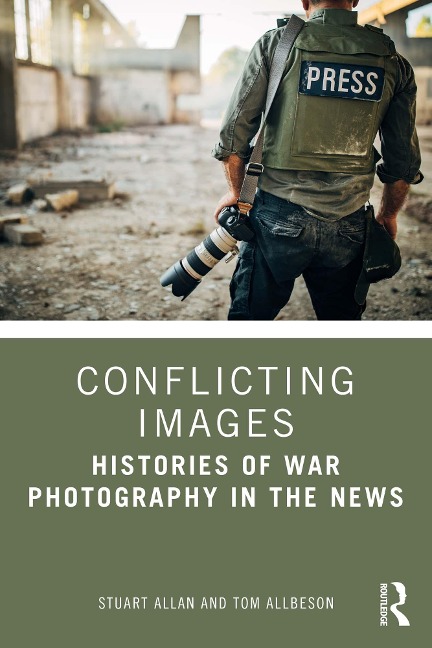
In contrast with historical examinations centring the evolving role of the war correspondent, Conflicting Images focuses on the contribution of photographers and photojournalists, providing an evaluative appraisal of war photography in the news and its development from the nineteenth century to the twenty-first century. Stuart Allan and Tom Allbeson critically explore diverse genres of war photography across a broad historical sweep, encompassing events from the Crimean War (1853-56) and the Civil War in the United States (1861-65) up to and including conflicts unfolding in Syria and Ukraine. This book reflects on the relevance of different types of warfare to visual reporting, from colonial conquest via trench warfare and aerial bombardment, to the ideological dimensions of the Cold War, and 'embedding' and 'winning hearts and minds' during the 'War on Terror' and its aftermath. In pinpointing illustrative examples, the authors examine changing dynamics of production, dissemination, and public engagement. Readers will come to understand how current efforts to rethink the future of war photography in a digital age can benefit from a close and careful consideration of war photography's origins, early development, and gradual, uneven transformation over the years. Conflicting Images aims to invigorate ongoing enquires and inspire new, alternative trajectories for future research and practice. This book is recommended reading for researchers and advanced students of visual journalism and conflict reporting.
Stuart Allan is Professor in the School of Journalism, Media and Culture at Cardiff University, UK. He has published widely, including his editorship of The Routledge Companion to News and Journalism (second edition, 2023). His research interests in war, conflict, and crisis reporting often prioritise visual dimensions, inclusive of contributions from professionals and citizens alike. Tom Allbeson is a Senior Lecturer in Media History at the School of Journalism, Media and Culture at Cardiff University, UK. He is also co-editor of the Journal of War and Culture Studies. His research concerns photojournalism and conflict, visual culture and postwar reconstruction, and collective memory in post-conflict societies.
List of Figures Introduction: The In/visibilities of War Photography Part I: The Emergence of War Photography in the Nineteenth Century 1. Photographic Dispatches from the Frontline 2. Configurations of the 'War Photographer' Part II: Twentieth-Century Conflicts and the Age of Photojournalism 3. Imperialism, Officialdom, and Human Interest in the First World War 4. The Emergence of Photojournalism in a Revolutionary Era 5. Photojournalism Mobilised: The Allied War Effort in the Second World War 6. Concerned Photographers between Decolonial Violence and Cold War Conflict 7. Re-Assertive Militaries and Self-Reflective Media at Century's End Part III: Digital Conflict Imagery in the Twenty-First Century 8. Digital Visions of the September 11 Attacks and the 'War on Terror' 9. The 'Visual Doctrine' of War Photography in Iraq 10. Citizen Imagery of Asymmetric Warfare 11. Visual Evidence and the Precarities of War Photography References Index
Dieses eBook wird im PDF-Format geliefert und ist mit einem Adobe Kopierschutz (DRM) versehen. Sie können dieses eBook mit allen Geräten lesen, die das PDF-Format und den Adobe Kopierschutz (DRM) unterstützen.
Zum Beispiel mit den folgenden Geräten:
• tolino Reader
Laden Sie das eBook direkt über den Reader-Shop auf dem tolino herunter oder übertragen Sie das eBook auf Ihren tolino mit einer kostenlosen Software wie beispielsweise Adobe Digital Editions.
• Sony Reader & andere eBook Reader
Laden Sie das eBook direkt über den Reader-Shop herunter oder übertragen Sie das eBook mit der kostenlosen Software Sony READER FOR PC/Mac oder Adobe Digital Editions auf ein Standard-Lesegeräte mit epub- und Adobe DRM-Unterstützung.
• Tablets & Smartphones
Möchten Sie dieses eBook auf Ihrem Smartphone oder Tablet lesen, finden Sie hier unsere kostenlose Lese-App für iPhone/iPad und Android Smartphone/Tablets.
• PC & Mac
Lesen Sie das eBook direkt nach dem Herunterladen mit einer kostenlosen Lesesoftware, beispielsweise Adobe Digital Editions, Sony READER FOR PC/Mac oder direkt über Ihre eBook-Bibliothek in Ihrem Konto unter „Meine eBooks“ - „online lesen“.
Schalten Sie das eBook mit Ihrer persönlichen Adobe ID auf bis zu sechs Geräten gleichzeitig frei.
Bitte beachten Sie, dass die Kindle-Geräte das Format nicht unterstützen und dieses eBook somit nicht auf Kindle-Geräten lesbar ist.