Und dann auf "Zum Home-Bildschirm [+]".

Stöbern
genialokal zum Startbildschirm hinzufügen
Installieren Sie die genialokal App auf Ihrem Startbildschirm für einen schnellen Zugriff und eine komfortable Nutzung.
Installieren Sie die genialokal App auf Ihrem Startbildschirm für einen schnellen Zugriff und eine komfortable Nutzung.
Ihr gewünschter Artikel ist in 0 Buchhandlungen vorrätig - wählen Sie hier eine Buchhandlung in Ihrer Nähe aus:

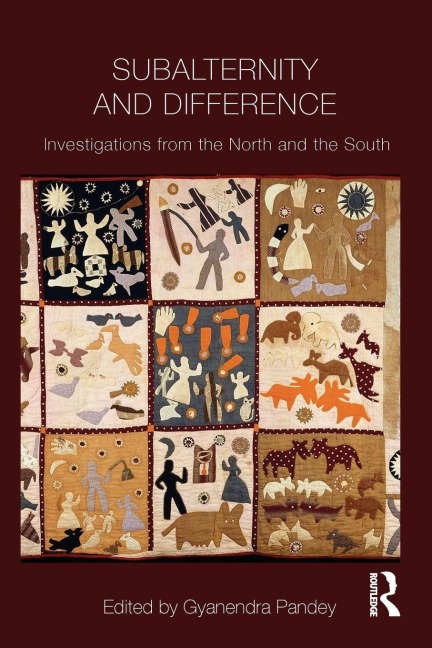

Focusing on the idea of difference as a marker of subalternity, this book looks at the ways in which ordinary citizens have sought to present and identify themselves in ways that defy the conventional categorisations of governments and historical experience. Inspired particularly by questions arising within the feminist movement, chapters examine the ways in which liberal democracies are able to accommodate and live with difference. The reader is encouraged to question normative ontological conventions of society and politics, as well as question some of the revolutionary ideologies which have sought to achieve radical change in the societies concerned by encouraging people to identify with particular class interests. The book goes on to analyse the concept of the Subaltern and the meaning of Subalternity, insisting that it should be understood though action and self-identification in relationship to repression, rather than as an abstract academic tool of analysis. The book marks a new approach to the study of disenfranchised and minoritized populations, challenges simplistic pronouncements of 'difference' based on culture rather than politics. It is an essential read for students and scholars of History, Anthropology, and Colonial and Postcolonial studies.
Gyanendra Pandey is Distinguished Professor of History at Emory University, USA, and is the series editor of the Intersections: Colonial and Postcolonial Histories book series at Routledge. He is one of the leading theorists and originators of the subaltern studies approach and has published widely in the field of colonial and postcolonial studies.
1. Introduction: The Difference of Subalternity Gyanendra Pandey Part 1: Gender, sexuality and the regime of modernity 2. 'At Risk': Gender, Sexuality and Epidemic Logic Dilip K. Das 3. 'Homosexuals from Haystacks': Gay Liberation and the Specter of a Queer Majority in Rural California, circa 1970 Colin Johnson 4. Different Speakers, Different Loves: Female Urbanity in Rekhti Poetry Ruth VanitaPart 2: The politics of belonging 5. Roots of the Oriental Quarter in early 19th Century London Michael H. Fisher 6. Indigenous Immigrants, Religion and the Struggle for Belonging in the United States Mary E. Odem7. All Strom's Children: Gender, Race, and Memory in the 20th Century American South Joseph Crespino Part 3: Revisiting liberalism 8. Thinking Equality: debates in Bengal, c.1870-1940 Prathama Banerjee9. Mestizo Mainstream: Reaffirmations of Natural Citizenship in Ecuador Christopher Krupa10. Viola's Story: Re-locating Difference Gyanendra Pandey