Und dann auf "Zum Home-Bildschirm [+]".

Stöbern
genialokal zum Startbildschirm hinzufügen
Installieren Sie die genialokal App auf Ihrem Startbildschirm für einen schnellen Zugriff und eine komfortable Nutzung.
Installieren Sie die genialokal App auf Ihrem Startbildschirm für einen schnellen Zugriff und eine komfortable Nutzung.
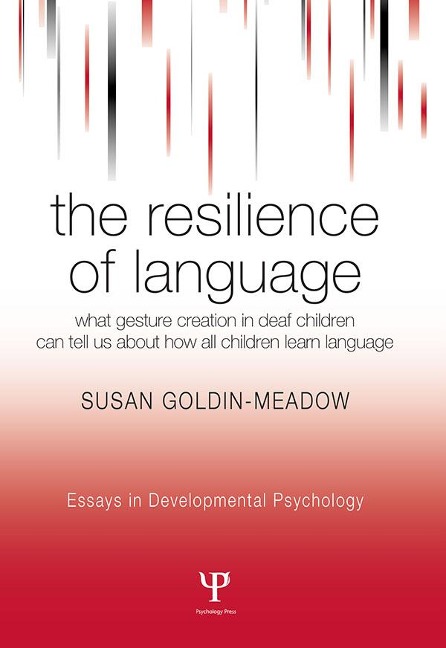
Imagine a child who has never seen or heard any language at all. Would such a child be able to invent a language on her own? Despite what one might guess, the children described in this book make it clear that the answer to this question is 'yes'. The children are congenitally deaf and cannot learn the spoken language that surrounds them. In addition, they have not yet been exposed to sign language, either by their hearing parents or their oral schools. Nevertheless, the children use their hands to communicate - they gesture - and those gestures take on many of the forms and functions of language. The properties of language that we find in the deaf children's gestures are just those properties that do not need to be handed down from generation to generation, but can be reinvented by a child de novo - the resilient properties of language. This book suggests that all children, deaf or hearing, come to language-learning ready to develop precisely these language properties. In this way, studies of gesture creation in deaf children can show us the way that children themselves have a large hand in shaping how language is learned.
Susan Goldin-Meadow
Part 1: The Problem of Language Learning. Out of the Mouths of Babes. How Do Children Learn Language? Language-Learning Across the Globe. Language-Learning by Hand. Does More or Less Input Matter? Part 2: Language Development without a Language Model. Background on Deafness and Language-Learning. How Do We Begin? Words. The Parts of Words. Combining Words Into Simple Sentences. Making Complex Sentences out of Simple Ones: Recursion. Building a System. Beyond the Here-And-Now: The Functions Gesture Serves. How Might Hearing Parents Foster Gesture Creation in Their Deaf Children? Gesture Creation Across the Globe. Part 3: The Conditions that Foster Language and Language-Learning. How Do the Resilient Properties of Language Help Children Learn Language? When Does Gesture Become Language? Is Language Innate? The Resilience of Language. References. Author Index. Subject Index.
Dieses eBook wird im PDF-Format geliefert und ist mit einem Adobe Kopierschutz (DRM) versehen. Sie können dieses eBook mit allen Geräten lesen, die das PDF-Format und den Adobe Kopierschutz (DRM) unterstützen.
Zum Beispiel mit den folgenden Geräten:
• tolino Reader
Laden Sie das eBook direkt über den Reader-Shop auf dem tolino herunter oder übertragen Sie das eBook auf Ihren tolino mit einer kostenlosen Software wie beispielsweise Adobe Digital Editions.
• Sony Reader & andere eBook Reader
Laden Sie das eBook direkt über den Reader-Shop herunter oder übertragen Sie das eBook mit der kostenlosen Software Sony READER FOR PC/Mac oder Adobe Digital Editions auf ein Standard-Lesegeräte mit epub- und Adobe DRM-Unterstützung.
• Tablets & Smartphones
Möchten Sie dieses eBook auf Ihrem Smartphone oder Tablet lesen, finden Sie hier unsere kostenlose Lese-App für iPhone/iPad und Android Smartphone/Tablets.
• PC & Mac
Lesen Sie das eBook direkt nach dem Herunterladen mit einer kostenlosen Lesesoftware, beispielsweise Adobe Digital Editions, Sony READER FOR PC/Mac oder direkt über Ihre eBook-Bibliothek in Ihrem Konto unter „Meine eBooks“ - „online lesen“.
Schalten Sie das eBook mit Ihrer persönlichen Adobe ID auf bis zu sechs Geräten gleichzeitig frei.
Bitte beachten Sie, dass die Kindle-Geräte das Format nicht unterstützen und dieses eBook somit nicht auf Kindle-Geräten lesbar ist.