Und dann auf "Zum Home-Bildschirm [+]".

Stöbern
genialokal zum Startbildschirm hinzufügen
Installieren Sie die genialokal App auf Ihrem Startbildschirm für einen schnellen Zugriff und eine komfortable Nutzung.
Installieren Sie die genialokal App auf Ihrem Startbildschirm für einen schnellen Zugriff und eine komfortable Nutzung.


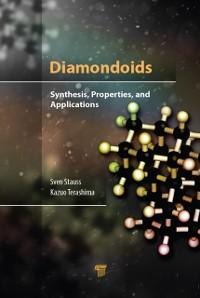
Over the past few decades, carbon nanomaterials, most commonly fullerenes, carbon nanotubes, and graphene, have gained increasing interest in both science and industry, due to their advantageous properties that make them attractive for many applications in nanotechnology. Another class of the carbon nanomaterials family that has slowly been gaining (re)newed interest is diamond molecules, also called diamondoids, which consist of polycyclic carbon cages that can be superimposed on a cubic diamond lattice. Derivatives of diamondoids are used in pharmaceutics, but due to their promising properties-well-defined structures, high thermal and chemical stability, negative electron affinity, and the possibility to tune their bandgap-diamondoids could also serve as molecular building blocks in future nanodevices. This book is the first of its kind to give an exhaustive overview of the structures, properties, and current and possible future applications of diamondoids. It contains a brief historical account of diamondoids, from the discovery of the first diamondoid member, adamantane, to the isolation of higher diamondoids about a decade ago. It summarizes the different approaches to synthesizing diamondoids. In particular, current research on the conventional organic synthesis and new approaches based on microplasmas generated in high-pressure and supercritical fluids are reviewed and the advantages and disadvantages of the different methods discussed. The book will serve as a reference for advanced undergraduate- and graduate-level students in chemistry, physics, materials science, and nanotechnology and researchers in macromolecular science, nanotechnology, chemistry, biology, and medicine, especially those with an interest in nanoparticles.
Sven Stauss received an engineering diploma in materials science from the École Polytechnique Fédérale de Lausanne (EPFL), Switzerland, in 2000. After an internship at the R&D center of Toshiba, Japan, from 2000 to 2001, he pursued a PhD in materials science at the EPFL and the Swiss Federal Laboratories for Materials Testing and Research (Empa). After his graduation in 2005, he joined the group of Prof. Terashima in the Department of Advanced Materials Science at the University of Tokyo, Japan, where he is currently assistant professor. His current research focuses on cryoplasmas and plasmas in supercritical fluids and their application to materials processing. Kazuo Terashima received his ME and PhD in metallurgy and materials science from the University of Tokyo in 1984 and 1988, respectively. From 1993 to 1995, he was a guest professor at the University of Basel, Switzerland. He is now a professor in the Department of Advanced Materials Science, University of Tokyo. His major interest is in plasma materials science. His main research focuses on microplasmas and their application to exotic plasmas, such as supercritical fluid plasmas and cryoplasmas.
Structure and Fundamental Properties of Diamondoids. Applications of Diamondoids. Isolation of Diamondoids from Natural Sources. Synthesis of Diamondoids by Conventional Organic Chemical Synthesis. Synthesis of Diamondoids by Plasmas Generated in High-Pressure Gases and Supercritical Fluids.
Dieses eBook wird im PDF-Format geliefert und ist mit einem Adobe Kopierschutz (DRM) versehen. Sie können dieses eBook mit allen Geräten lesen, die das PDF-Format und den Adobe Kopierschutz (DRM) unterstützen.
Zum Beispiel mit den folgenden Geräten:
• tolino Reader
Laden Sie das eBook direkt über den Reader-Shop auf dem tolino herunter oder übertragen Sie das eBook auf Ihren tolino mit einer kostenlosen Software wie beispielsweise Adobe Digital Editions.
• Sony Reader & andere eBook Reader
Laden Sie das eBook direkt über den Reader-Shop herunter oder übertragen Sie das eBook mit der kostenlosen Software Sony READER FOR PC/Mac oder Adobe Digital Editions auf ein Standard-Lesegeräte mit epub- und Adobe DRM-Unterstützung.
• Tablets & Smartphones
Möchten Sie dieses eBook auf Ihrem Smartphone oder Tablet lesen, finden Sie hier unsere kostenlose Lese-App für iPhone/iPad und Android Smartphone/Tablets.
• PC & Mac
Lesen Sie das eBook direkt nach dem Herunterladen mit einer kostenlosen Lesesoftware, beispielsweise Adobe Digital Editions, Sony READER FOR PC/Mac oder direkt über Ihre eBook-Bibliothek in Ihrem Konto unter „Meine eBooks“ - „online lesen“.
Schalten Sie das eBook mit Ihrer persönlichen Adobe ID auf bis zu sechs Geräten gleichzeitig frei.
Bitte beachten Sie, dass die Kindle-Geräte das Format nicht unterstützen und dieses eBook somit nicht auf Kindle-Geräten lesbar ist.