Und dann auf "Zum Home-Bildschirm [+]".

Stöbern
genialokal zum Startbildschirm hinzufügen
Installieren Sie die genialokal App auf Ihrem Startbildschirm für einen schnellen Zugriff und eine komfortable Nutzung.
Installieren Sie die genialokal App auf Ihrem Startbildschirm für einen schnellen Zugriff und eine komfortable Nutzung.

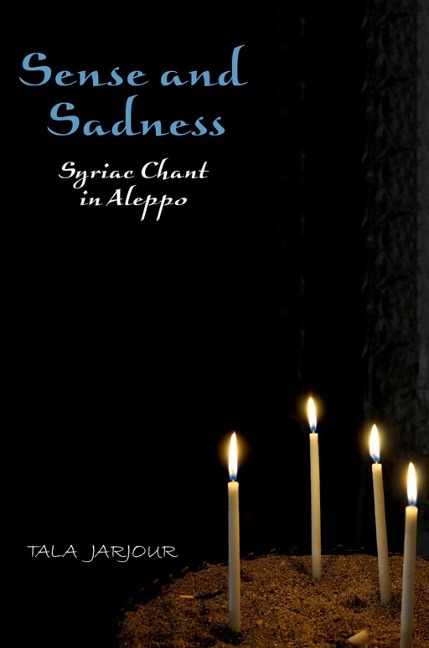
Sense and Sadness is an innovative study of music modality in relation to human emotion and the aesthetics of perception. It is also a musical story of survival through difficulty and pain. Focusing on chant at St George's Syrian Orthodox Church of Aleppo, author Tala Jarjour puts forward the concept of the emotional economy of aesthetics, which enables a new understanding of modal musicality in general and of Syriac musicality in particular. Jarjour combines insights from musicology and ethnomusicology, sound and religious studies, anthropology, history, East Christian and Middle Eastern studies, and the study of emotion, to seamlessly weave together multiple strands of a narrative which then becomes the very story it tells. Drawing on imagination and metaphor, she brings to the fore overlapping, at times contradictory, modes of sense and sense making. At once intimate and analytical, this ethnographic text entwines academic thinking with its subject(s) and subjectivities, portraying events, writing, people, and music as they unfold together through ritual commemorations and a devastating, ongoing war.
Tala Jarjour's academic work focuses on music and religion, especially in contexts related to the Middle East. She wrote her PhD as a Gates Scholar at the University of Cambridge, and is currently Visiting Fellow at Yale University.
Preface Telling history in motion Dismantled machinery Illusive empowerment Part One Modes of Thinking Chapter I Emotion and the Aesthetic [Snapshot] Emotion and the Economy of Aesthetics The emotional economy of aesthetics A living music Central marginality Music complexity Mode as metaphor Understanding through imagination A dynamic outlook on method [Snapshot] A scholarship of emotion Discursive subjectivities Scholar(ship) and subject(s) Situationality as liminality Aestheticizing the emotional Chapter II Edessan Christians in Hayy al-Suryan Unique sounds, against historic odds Syriac liturgy and theology Modern Christianity with ancient roots Begging pardon: Shubqono Forty times "Forty Bows" Early asceticism for modern worshippers Body, voice, and gendered spaces Part Two Modes of Knowledge Chapter III Eight Old Syriac Modes Definitions and tools Conventional European tools Local tools Music book and ontological value Written Sources "The Ethicon" and "The Pearls" Suryani musicology "Tableau sans ombres" Re-shifting focus Chapter IV Chant As Local Knowledge Contested modality A monastic perspective Music knowledge and Hayy al-Suryan Transcription Theoretical issues Local challenges Handwriting tradition Knowledge, modality, and influences Part Three Modes of Value Chapter V Suryaniness Ethnic spirituality Place/space and Urfa/Edessa Language Sound originality Sacred texts Sacred melodies Chapter VI Performing Value The Washing of the Feet Building up sadness Chapter VII Authority Performing authority [Snapshot] Value, one morning, and a camera Voicing authority Performative complexity Part Four Modalities of Song and Emotion Chapter VIII Hasho Huzn as religious aesthetic Hasho, a Syriac term Canonic sadness Aestheticized emotionality By the cross Hasho, the mode Epilogue Non-Conclusions Glossary References