Und dann auf "Zum Home-Bildschirm [+]".

Stöbern
genialokal zum Startbildschirm hinzufügen
Installieren Sie die genialokal App auf Ihrem Startbildschirm für einen schnellen Zugriff und eine komfortable Nutzung.
Installieren Sie die genialokal App auf Ihrem Startbildschirm für einen schnellen Zugriff und eine komfortable Nutzung.
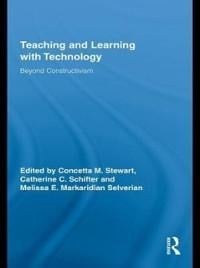
Today, new media is both augmenting and extending the traditional classroom with a variety of technology-based tools available to both students and faculty, and has created "new" virtual classrooms for anywhere, anytime availability to education. Despite the enormous potential for technology to support the educational enterprise in this emerging "creative" economy, technologies are still not yet fully integrated in the classroom and their association with educational outcomes is as-yet unclear. This book profiles scholarly work from around the world to examine closely the effectiveness of the newest media in education at bridging the gaps among and between teachers, students and subject matter at all levels, from K-12 through adult education. These pieces are theory-based investigations with implications for future research, theory and application. Contributors examine how the fields of education and new media have evolved and are continuing to evolve pedagogically and practically, from predominantly instructivist, with a passive, one-way teaching format; to constructivist, including teacher- and learner-controlled, sensorially immersive and socially interactive exchanges. This book will be of interest to students and faculty in the areas of new media in education, including distance learning, online learning and "virtual" learning.
Concetta M. Stewart is Dean of the School of Art and Design at the Pratt Institute. Catherine C. Schifter is Associate Professor in the College of Education at Temple University. Melissa E. Markaridian Selverian is Adjunct Faculty in the School of Communications and Theater at Temple University.
Foreword Chris Dede Part I: Introduction and State of the Field 1. Technologies and the Classroom Come to Age after Century of Growth Catherine C. Schifter and Concetta M. Stewart Part II: Achieving Social Closeness through Authentic Learning Exchanges 2. Effects of Web-Enhanced Course Materials on College Students' Engagement and Learning Outcomes Xigen Li 3. From Homer to High Tech: The Impact of Social Presence and Media Richness on Online Mentoring in Higher Education Jamie S. Switzer 4. Educating Educators for Virtual Schooling: Communicating Roles and Responsibilities Chad Harms, Dale S. Niederhauser, Niki E. Davis, M. D. Roblyer and Stephen B. Gilbert Part III: Media-Rich Environments Building Stronger Connections 5. A New Lens for Learning in the Communications Field: The Effectiveness of Video Lectures with Asynchronous, Synchronous Discussions in Online/Distance Education Amy Schmitz Weiss 6. A New Educational Technology for Media and Communication Studies: Mapping Media in Australia and Sweden Christina Spurgeon, Christy Collis, Marcus Foth and Pernilla Severson 7. Not Your Father's Educational Technology: A Case Study in Mobile Media and Journalism Education Susan Jacobson and Karen Turner Part IV: Complex Virtual Systems: Making Learning Spatially and Socially Whole 8. Virtual Reality in Education Veronica S. Pantelidis and David C. Vinciguerra 9. A User Centered Approach for Building Design Guidelines for the Use of Virtual Actors in CVEs for Learning Daphne Economou 10. Matching Computer Game Genres to Educational Outcomes John L. Sherry 11. The Virtual Harlem Experiments James J. Sosnoski 12. The Unique Features of Educational Virtual Environments Tassos A. Mikropoulos and Joan Bellou Part V: Discussion and Conclusion 13. 'Real' Learning in Virtual Worlds: An Integration of Media, Curricula and Pedagogy through Telepresence Melissa E. Markaridian Selverian and Concetta M. Stewart
Dieses eBook wird im PDF-Format geliefert und ist mit einem Adobe Kopierschutz (DRM) versehen. Sie können dieses eBook mit allen Geräten lesen, die das PDF-Format und den Adobe Kopierschutz (DRM) unterstützen.
Zum Beispiel mit den folgenden Geräten:
• tolino Reader
Laden Sie das eBook direkt über den Reader-Shop auf dem tolino herunter oder übertragen Sie das eBook auf Ihren tolino mit einer kostenlosen Software wie beispielsweise Adobe Digital Editions.
• Sony Reader & andere eBook Reader
Laden Sie das eBook direkt über den Reader-Shop herunter oder übertragen Sie das eBook mit der kostenlosen Software Sony READER FOR PC/Mac oder Adobe Digital Editions auf ein Standard-Lesegeräte mit epub- und Adobe DRM-Unterstützung.
• Tablets & Smartphones
Möchten Sie dieses eBook auf Ihrem Smartphone oder Tablet lesen, finden Sie hier unsere kostenlose Lese-App für iPhone/iPad und Android Smartphone/Tablets.
• PC & Mac
Lesen Sie das eBook direkt nach dem Herunterladen mit einer kostenlosen Lesesoftware, beispielsweise Adobe Digital Editions, Sony READER FOR PC/Mac oder direkt über Ihre eBook-Bibliothek in Ihrem Konto unter „Meine eBooks“ - „online lesen“.
Schalten Sie das eBook mit Ihrer persönlichen Adobe ID auf bis zu sechs Geräten gleichzeitig frei.
Bitte beachten Sie, dass die Kindle-Geräte das Format nicht unterstützen und dieses eBook somit nicht auf Kindle-Geräten lesbar ist.