Und dann auf "Zum Home-Bildschirm [+]".

Stöbern
genialokal zum Startbildschirm hinzufügen
Installieren Sie die genialokal App auf Ihrem Startbildschirm für einen schnellen Zugriff und eine komfortable Nutzung.
Installieren Sie die genialokal App auf Ihrem Startbildschirm für einen schnellen Zugriff und eine komfortable Nutzung.
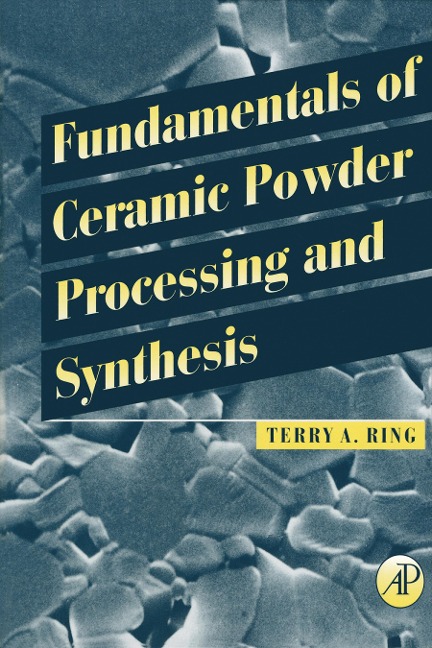
Ceramic powder synthesis and processing are two of the most important technologies in chemical engineering and the ceramics-related area of materials science. This book covers both the processing and the synthesis ofceramic powders in great depth and is indeed the only up-to-date, comprehensive source on the subject available.The application of modern scientific and engineering methods to the field of ceramic powder synthesis has resulted in much greater control of properties. Fundamentals of Ceramic Powder Processing and Synthesis presents examples of these modern methods as they apply to ceramic powders. The book is organized to describe the natural and synthetic raw materials that comprise contemporary ceramics. It covers the three reactant processes used in synthetic ceramic powder synthesis: solid, liquid, andgas.Ceramic powder processing, as a field of materials processing, is undergoing rapid expansion. The present volume is intended as a complete and useful source on this subject of great current interest. It provides comprehensive coverage from a strong chemistry and chemical engineering perspective and is especially applicable to materials scientists, chemical engineers, and applied chemists.Key Features* The most complete and updated reference source on the subject* Comprehensive coverage from a stron chemical engineering and chemistry perspective* Emphasis on both natural and synthetic raw materials in ceramic powder synthesis* Information on reaction kinetics* Superior, more comprehensive coverage than that in existing texts* Sample problems and exercises* Problems at the end of each chapter which supplement the material
Part I: Introduction: History, Raw Materials, Ceramic Powder Characterization. Ceramic Powder Processing History and Discussion of Natural Raw Materials. Ceramic Powder Characterization. Part II: Ceramic Powder Synthesis. The Population Balance. Comminution and Classification of Ceramic Powders. Ceramic Powder Synthesis with Solid Phase Reactant. Liquid Phase Synthesis by Precipitation. Powder Synthesis with Gas Phase Reactants. Other Ceramic Powder Fabrification Processes. Part III: Ceramic Paste FormationMise-En Pte. Wetting, Deagglomeration, and Adsorption. Colloid Stability of Ceramic Suspensions. Colloidal Properties of Ceramic Suspensions. Part IV: Green Body FormationMise en Forme. Mechanical Properties of Dry Ceramic Powders and Wet Ceramic Suspensions. Ceramic Green Body Formation. Part V: Presintering Heat Treatments of Drying and Binder Burnout. Green Body Drying. Binder Burnout. Part VI: Sintering and Finishing. Sintering. Finishing. Appendixes. SubjectIndex.Part I: Introduction: History, Raw Materials, Ceramic Powder Characterization. General Concepts of Ceramic Powder Processing. Ceramic Powder Processing History and Discussion of Natural Raw Materials: Objectives. Historical Perspective. Raw Materials. Selecting a Raw Material. Ceramic Powder Characterization: Objectives. Introduction. Powder Sampling. Particle Size. Particle Morphology. Powder Density. Surface Area. Particle Size Distributions. Comparison of Two-Powder Size Distributions. Blending Powder Samples. Summary. Part II: Ceramic Powder Synthesis: The Population Balance: Objectives. Microscopic Population Balance. Macroscopic Population Balance. Population Balances Where Length, Area, and Volume are Conserved. Population Balances on a Mass Basis. Summary. Comminution and Classification of Ceramic Powders: Objectives. Communition. Classification of Ceramic Powders. Communition and Classification Circuits. Summary. Ceramic Powder Synthesis with Solid Phase Reactant: Objectives. Introduction. Thermodynamics of FluidSolid Reactions. Oxidation Reactions. Reduction Reactions. Nitridation Reactions. Thermodynamics of Multiple Reaction Systems. LiquidSolid Reactions. FluidSolid Reaction Kinetics. FluidSolid Reactors. SolidSolid Reactions. Summary. Liquid Phase Synthesis by Precipitation: Objectives. Introduction. Nucleation Kinetics. Growth Kinetics. Crystal Shape. Size Distribution EffectsPopulation Balance and Precipitator Design. Coprecipitation of Ceramic Powders. Summary. Powder Synthesis with Gas Phase Reactants: Objectives. Introduction. Gas Phase Reactions. Reaction Kinetics. Homogeneous Nucleation. Collisional Growth Theory. Population Balance for Gas PhaseSynthesis. Dispersion Model for Gas Synthesis Reactors. Population Balance with Aggregation. Quenching the Aggregation. Particle Shape. Summary. Other Ceramic Powder Fabrification Processes: Objectives. Spray Drying. Spray Roasting. Metal Organic Decomposition for Ceramic Films. Freeze Drying. SolGel Synthesis. Melt Solidification. Summary. Part III: Ceramic Paste FormationMise-En Pte: Wetting, Deagglomeration, and Adsorption: Objectives. Wetting of a Powder by a Liquid. Deagglomeration. Adsorption onto Powder Surfaces. Chemical Stability of a Powder in a Solvent. Summary. Colloid Stability of Ceramic Suspensions: Objectives. Introduction. Interaction Energy and Colloid Stability. Kinetics of Coagulation and Flocculation. Colloid Stability in Ceramic Systems. Summary. Colloidal Properties of Ceramic Suspensions: Objectives. Introduction. Sedimentation. Brownian Diffusion. Solution and Suspension Colligative Properties. Ordered Suspensions. Summary. Part IV: Green Body FormationMise en Forme: Mechanical Properties of Dry Ceramic Powders and Wet Ceramic Suspensions: Objectives. Introduction. Equations of Motion. Ceramic Suspension Rheology. Mechanical Properties of Dry Ceramic Powders. Summary. Ceramic Green Body Formation: Objectives. Introdution.