Und dann auf "Zum Home-Bildschirm [+]".

Stöbern
genialokal zum Startbildschirm hinzufügen
Installieren Sie die genialokal App auf Ihrem Startbildschirm für einen schnellen Zugriff und eine komfortable Nutzung.
Installieren Sie die genialokal App auf Ihrem Startbildschirm für einen schnellen Zugriff und eine komfortable Nutzung.
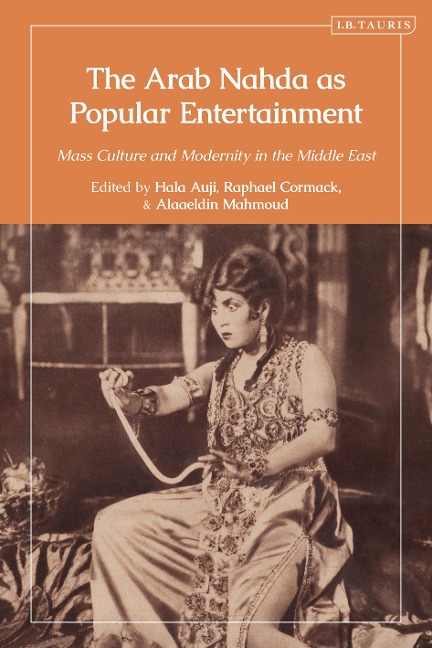
What was popular entertainment like for everyday Arab societies in Middle Eastern cities during the long nineteenth century? In what ways did café culture, theatre, illustrated periodicals, cinema, cabarets, and festivals serve as key forms of popular entertainment for Arabic-speaking audiences, many of whom were uneducated and striving to contend with modernity's anxiety-inducing realities? Studies on the 19th to mid-20th century's transformative cultural movement known as the Arab nahda (renaissance), have largely focussed on concerns with nationalism, secularism, and language, often told from the perspective of privileged groups. Highlighting overlooked aspects of this movement, this book shifts the focus away from elite circles to quotidian audiences. Its ten contributions range in scope, from music and visual media to theatre and popular fiction. Paying special attention to networks of movement and exchange across Arab societies in Lebanon, Syria, Egypt, Iraq, and Morocco, this book heeds the call for 'translocal/transnational' cultural histories, while contributing to timely global studies on gender, sexuality, and morality. Focusing on the often-marginalized frequenters of cafés, artist studios, cinemas, nightclubs, and the streets, it expands the remit of who participated in the nahda and how they did.
Hala Auji is Associate Professor of art history and the Hamad bin Khalifa Endowed Chair for Islamic Art in the Department of Art History at the School of the Arts, Virginia Commonwealth University in Richmond, Virginia, USA. She is the author of Printing Arab Modernity: Book Culture and the American Press in Nineteenth-Century Beirut (2016). Auji received her PhD in Art History from Binghamton University, the State University of New York.
Raphael Cormack is Assistant Professor of Arabic at the Durham University, UK. He was previously a visiting researcher at Columbia University in the City of New York and holds a PhD from the University of Edinburgh. His most recent publication was Midnight in Cairo: The Divas of Egypt's Roaring 20s (2021). He has also edited two collections of Arabic short stories translated into English, The Book of Khartoum and The Book of Cairo.
Alaaeldin Mahmoud is Assistant Professor of English in the Liberal Arts Department at the American University of the Middle East in Kuwait. He is a former Fulbright visiting Scholar at Ohio State University. He is an established translator who translated books of travel writing, fiction, and literary studies, notably his translation of Other Renaissances: A New Approach to World Literature (Kuwait, 2014). His latest book Nusus 'Abd Allah al-Nadim (The Texts of 'Abd Allah al-Nadim) was published in two volumes: al-Diwan al-Shi'ri (The Complete Collected Poems), and al-Athar al-Nathriya al-Kamila (Complete Works in Prose) (Cairo, 2020).
Introduction by Hala Auji, Raphael Cormack, and Alaaeldin Mahmoud
Part I: Leisure and Morality
1. Proper Fun? Struggles over Popular Entertainment in Ottoman Damascus (1875-1914), Till Grallert (Humboldt-Universität zu Berlin, Germany)
2. Immoral Enlightenment: Media and Moral Anxiety in Late Nahda, Walid El Khachab (York University, Canada)
3. Nocturnal Baghdad: Nightclubs and Popular Entertainment, Pelle Valentin Olsen (University of Chicago, USA)
Part II: Performance and Spectacle
4. Female Performers in Beirut (1900-1930s): Agents and Metaphors of Social Change, Diana Abbani (EUME-CNMS Fellow of the Alexander von Humboldt Foundation, Germany)
5. Andalusi Music as Cultural Renaissance in 20th-Century North Africa, Elizabeth Matsushita (Claremont McKenna College, USA )
6. On the Road: Sulayman al-Qardahi and the Travelling Theatrical Troupes of the Nahda, Raphael Cormack (Durham University, UK)
Part III: Media and The Imaginary
7. Incredible Prints: The Intersection of Knowledge and Entertainment in Journal Illustrations, Hala Auji (Virginia Commonwealth University in Richmond, USA)
8. Egyptomaniac Egyptians? Ancient Egypt in the Popular Literary Imaginary in Twentieth Century Egypt, Alaaeldin Mahmoud (American University of the Middle East, Kuwait)
9. The Early Egyptian Film Industry and the Formation of Nationality: Studying Muhammad Karim's Zaynab as a Vision of Modern Standards, Thana al-Shakhs (American University of the Middle East, Kuwait)
Dieses eBook wird im PDF-Format geliefert und ist mit einem Adobe Kopierschutz (DRM) versehen. Sie können dieses eBook mit allen Geräten lesen, die das PDF-Format und den Adobe Kopierschutz (DRM) unterstützen.
Zum Beispiel mit den folgenden Geräten:
• tolino Reader
Laden Sie das eBook direkt über den Reader-Shop auf dem tolino herunter oder übertragen Sie das eBook auf Ihren tolino mit einer kostenlosen Software wie beispielsweise Adobe Digital Editions.
• Sony Reader & andere eBook Reader
Laden Sie das eBook direkt über den Reader-Shop herunter oder übertragen Sie das eBook mit der kostenlosen Software Sony READER FOR PC/Mac oder Adobe Digital Editions auf ein Standard-Lesegeräte mit epub- und Adobe DRM-Unterstützung.
• Tablets & Smartphones
Möchten Sie dieses eBook auf Ihrem Smartphone oder Tablet lesen, finden Sie hier unsere kostenlose Lese-App für iPhone/iPad und Android Smartphone/Tablets.
• PC & Mac
Lesen Sie das eBook direkt nach dem Herunterladen mit einer kostenlosen Lesesoftware, beispielsweise Adobe Digital Editions, Sony READER FOR PC/Mac oder direkt über Ihre eBook-Bibliothek in Ihrem Konto unter „Meine eBooks“ - „online lesen“.
Schalten Sie das eBook mit Ihrer persönlichen Adobe ID auf bis zu sechs Geräten gleichzeitig frei.
Bitte beachten Sie, dass die Kindle-Geräte das Format nicht unterstützen und dieses eBook somit nicht auf Kindle-Geräten lesbar ist.