Und dann auf "Zum Home-Bildschirm [+]".

Stöbern
genialokal zum Startbildschirm hinzufügen
Installieren Sie die genialokal App auf Ihrem Startbildschirm für einen schnellen Zugriff und eine komfortable Nutzung.
Installieren Sie die genialokal App auf Ihrem Startbildschirm für einen schnellen Zugriff und eine komfortable Nutzung.

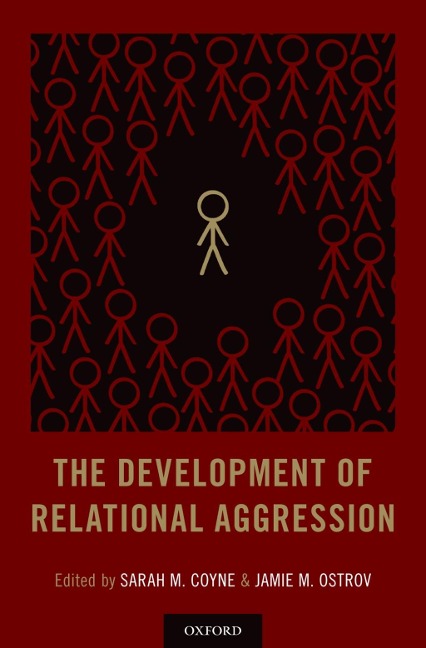
Research over the last few decades has revealed that individuals use a variety of mechanisms to hurt one another, many of which are not physical in nature. In this volume, editors Sarah M. Coyne and Jamie M. Ostrov turn their focus on relational aggression, behavior that is intended to cause harm to another individual's relationships or social standing in the group (e.g., gossiping, social exclusion, and spreading malicious rumors). Unlike physical aggression, the scars of relational aggression are more difficult to detect. However, victims (and their aggressors) may experience strong and long-lasting consequences, including reduced self-esteem, loneliness, depression, anxiety, and more. Over the past 25 years, there has been a growing body of literature on relational aggression and other non-physical forms of aggression that have focused predominantly on gender differences, development, and risk and protective factors. In this volume, the focus turns to the development of relational aggression during childhood, adolescence, and emerging adulthood. Here, Coyne, Ostrov, and their contributing authors examine a number of risk factors and socializing agents or models (e.g., parenting, peers, media, the classroom) that lead to the development of relational aggression over time. An understanding of how these behaviors develop will inform readers of important intervention strategies to curb the use of relational aggression in schools, peer groups, and in family relationships. The Development of Relational Aggression provides scholars, researchers, practitioners, students, and parents with an extensive resource that will help move the field forward in our understanding of the development of relational aggression for the future.
Sarah M. Coyne is an Associate Professor in the School of Family Life at Brigham Young University. Her research focuses on media effects on relational aggression and other behavioral outcomes during childhood and adolescence. Dr. Coyne has published nearly 100 peer-reviewed journal articles and book chapters, and currently serves as an Associate Editor for the journal Aggressive Behavior. She currently has five young children. Jamie M. Ostrov is a Professor in the Department of Psychology at the University at Buffalo, The State University of New York. His research focuses on the development of relational and physical aggression. Dr. Ostrov has published his research in a variety of top peer-reviewed journals, currently serves on nine editorial boards, and his research is currently funded by the National Science Foundation (NSF) and the National Institute on Drug Abuse (NIDA). He has two young children.
Section 1: Relational Aggression Research: An Overview Chapter 1: The Development of Relational Aggression: An Introduction Sarah M. Coyne, Jamie M. Ostrov Chapter 2: Definitions - The Form and Function of Relational Aggression Jamie M. Ostrov, Sarah J. Blakely-McClure, Kristin J. Perry, Kimberly E. Kamper-DeMarco Chapter 3: Developmental Manifestations of Relational Aggression Juan F. Casas, Alicia A. Bower Chapter 4: Developmental Trajectories of Relational Aggression Paula J. Fite, Casey A. Pederson Chapter 5: Methodological Approaches to Studying Relational Aggression Marion K. Underwood, Samuel E. Ehrenreich, Diana J. Meter Chapter 6: Theoretical Perspectives to Studying the Development of Relational Aggression Stephanie A. Godleski Chapter 7: Relational aggression and victimization and psychopathology: Can we explain the links? Bonnie Leadbeater, Clea Sturgess Section 2: Biobehavioral and Evolutionary Approaches to Relational Aggression Chapter 8: An Evolutionary Psychological Perspective of Indirect Aggression in Girls and Women Tracy Vaillancourt, Jaimie Arona Krems Chapter 9: Psychophysiology Indicators of Relational Aggression Dianna Murray-Close, Nicole L. Breslend, Leigh Ann Holterman Chapter 10: Examining Relational Aggression in an Individual Differences Context: Contributions from Personality and Genetics Jennifer L. Tackett, Avantè J. Smack, & Kathleen W. Reardon Section 3: Socialization of Relational Aggression Chapter 11: The Peer Nature of Relational Aggression Marlene J. Sandstrom Chapter 12: Parenting and Relational Aggression David A. Nelson & Craig H. Hart Chapter 13: Media and Relational Aggression Nicole Martins, Sarah M. Coyne, Jennifer Ruh Linder, Chapter 14: Relational Aggression in Sibling Relationships Nicole Campione-Barr, Sonia E. Giron, Christopher Odudu Section 4: The Development of Relational Aggression in Different Contexts Chapter 15: Relational Aggression & Bullying in a School Context Dorothy L. Espelage, Jun Sung Hong, Gabriel J. Merrin Chapter 16: Relational Aggression in Dating and Romantic Relationships Melanie J. Zimmer-Gembeck, Amanda L. Duffy, Samantha Ferguson, Alex A. Gardner Chapter 17: Cultural Contexts of Relational Aggression Yoshito Kawabata Section 5: Interventions and Closing Remarks Chapter 18: An Updated Review of Existing Relational Aggression Programs Stephen S. Leff, Tracy Evian Waasdorp, Krista R. Mehari Chapter 19: The Future of Relational Aggression and Final Remarks Jamie M. Ostrov, Sarah M. Coyne