Und dann auf "Zum Home-Bildschirm [+]".

Stöbern
genialokal zum Startbildschirm hinzufügen
Installieren Sie die genialokal App auf Ihrem Startbildschirm für einen schnellen Zugriff und eine komfortable Nutzung.
Installieren Sie die genialokal App auf Ihrem Startbildschirm für einen schnellen Zugriff und eine komfortable Nutzung.
Ihr gewünschter Artikel ist in 0 Buchhandlungen vorrätig - wählen Sie hier eine Buchhandlung in Ihrer Nähe aus:

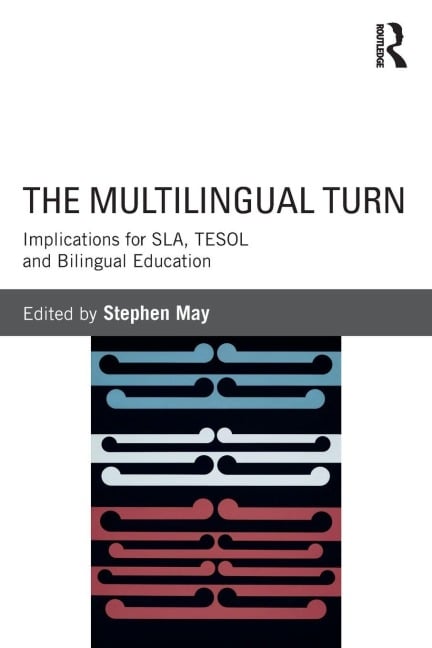
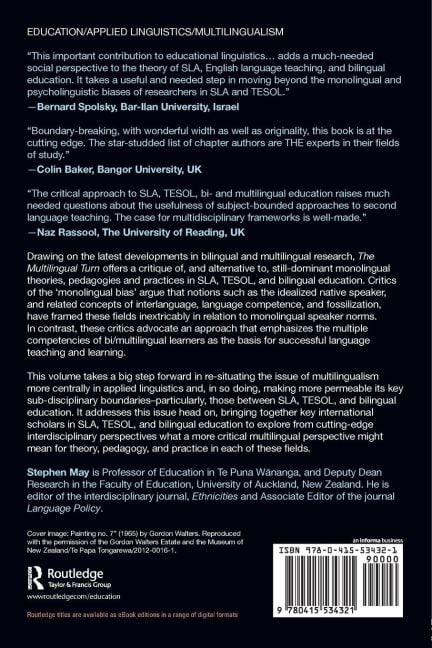
Drawing on the latest developments in bilingual and multilingual research, The Multilingual Turn offers a critique of, and alternative to, still-dominant monolingual theories, pedagogies and practices in SLA, TESOL, and bilingual education. Critics of the 'monolingual bias' argue that notions such as the idealized native speaker, and related concepts of interlanguage, language competence, and fossilization, have framed these fields inextricably in relation to monolingual speaker norms. In contrast, these critics advocate an approach that emphasizes the multiple competencies of bi/multilingual learners as the basis for successful language teaching and learning.
This volume takes a big step forward in re-situating the issue of multilingualism more centrally in applied linguistics and, in so doing, making more permeable its key sub-disciplinary boundaries - particularly, those between SLA, TESOL, and bilingual education. It addresses this issue head on, bringing together key international scholars in SLA, TESOL, and bilingual education to explore from cutting-edge interdisciplinary perspectives what a more critical multilingual perspective might mean for theory, pedagogy, and practice in each of these fields.
Stephen May is Professor of Education in Te Puna Wananga, and Deputy Dean Research in the Faculty of Education, University of Auckland, New Zealand. He is editor of the interdisciplinary journal, Ethnicities and Associate Editor of the journal Language Policy.
Introducing the "Multilingual Turn" Ch. 1. Disciplinary Divides, Knowledge Construction, and the Multilingual Turn Ch. 2. Ways Forward for a Bi/multilingual Turn in SLA Ch. 3. Moving beyond "lingualism": Multilingual embodiment and multimodality in SLA Ch. 4. Theorizing a Competence for Translingual Practice at the Contact Zone Ch. 5. Identity, Literacy and the Multilingual Classroo Ch. 6. Communication and Participatory Involvement in Linguistically Diverse Classrooms Ch. 7. Multilingualism and Common Core State Standards in the US Ch. 8. Who's teaching whom? Co-learning in multilingual classrooms Ch. 9. Beyond Multilingualism: Heteroglossia in Practice