Und dann auf "Zum Home-Bildschirm [+]".

Stöbern
genialokal zum Startbildschirm hinzufügen
Installieren Sie die genialokal App auf Ihrem Startbildschirm für einen schnellen Zugriff und eine komfortable Nutzung.
Installieren Sie die genialokal App auf Ihrem Startbildschirm für einen schnellen Zugriff und eine komfortable Nutzung.
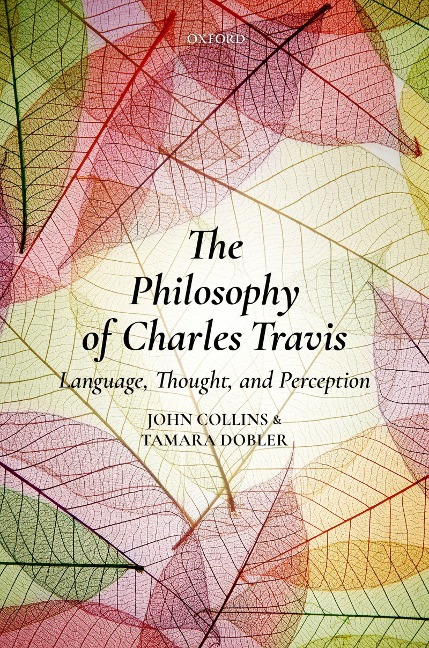
This volume offers a collective critical engagement with the thought of Charles Travis, a leading contemporary philosopher of language and mind, and a scholar of the history of analytical philosophy. The work of Charles Travis is fundamentally situated in the analytical tradition, yet is also radically at odds with many assumptions characteristic of the tradition, especially as regards the nature of language and perception as representational capacities. Twelve philosophers explore themes in his work, and Travis gives extended responses. The editors provide an introductory chapter which situates Travis's ideas in the context of contemporary philosophy of language and mind. The volume divides into three sections, relating to language, thought, and perception. Topics covered in detail include: the nature of linguistic and perceptual representation; Frege; Wittgenstein; the role of context in fixing speech content; and the structure of thought.
John Collins is Professor of Philosophy at the University of East Anglia. His work focuses on the philosophy of language, with especial reference to the status and results of generative linguistics. He also researches on truth, propositions, and various issues in the philosophy of mind. He is the author of many papers, and the books Chomsky: A Guide for the Perplexed (Continuum, 2008) and The Unity of Linguistic Meaning (OUP, 2011).
Tamara Dobler is EU Marie Curie Postdoctoral Fellow at University of Amsterdam. She has written articles on Wittgenstein and context-sensitivity, and her current research focuses on formal modelling of occasion-sensitivity of declarative and interrogative sentences.
Charles Travis is Professor Emeritus in Philosophy at King's College, London. He is the author of many journal articles and numerous books, including, most recently, Perception: Essays after Frege (OUP 2013) and Objectivity and the Parochial (OUP 2010).
- 1: John Collins and Tamara Dobler: The Work of Charles Travis: a Contemporary Overview - Part I: Thought - 2: Hilary Putnam: On Content and Context: Context Sensitivity and Some of Its Critics - 3: Marie McGinn: On Rule-Following: Wright, McDowell and Travis - 4: Charles Travis: What Structure Lurks in the Minds of Men? Frege vs. Fodor - Part II: Language - 5: Oskari Kuusela: Wittgenstein, Dummett and Travis: Theorizing About Logic, Language and Meaning - 6: Nat Hansen: Just What Is It That Makes Travis's Examples So Different, So Appealing? - 7: Alex Davies: Communicating by Doing Something Else - 8: John Collins: Perceiving Language: Issues between Travis and Chomsky - 9: François Recanati: Contextualism and Singular Reference - Part III: Perception - 10: Keith Wilson: Are the Senses Silent? Travis's Argument from Looks - 11: Mark Eli Kalderon: Experiential Pluralism and the Power of Perception - 12: Guy Longworth: Surveying the Facts - 13: Michael O'Sullivan: Aspects, Properties and Ingredients - Part IV: Replies - Replies
Dieses eBook wird im PDF-Format geliefert und ist mit einem Adobe Kopierschutz (DRM) versehen. Sie können dieses eBook mit allen Geräten lesen, die das PDF-Format und den Adobe Kopierschutz (DRM) unterstützen.
Zum Beispiel mit den folgenden Geräten:
• tolino Reader
Laden Sie das eBook direkt über den Reader-Shop auf dem tolino herunter oder übertragen Sie das eBook auf Ihren tolino mit einer kostenlosen Software wie beispielsweise Adobe Digital Editions.
• Sony Reader & andere eBook Reader
Laden Sie das eBook direkt über den Reader-Shop herunter oder übertragen Sie das eBook mit der kostenlosen Software Sony READER FOR PC/Mac oder Adobe Digital Editions auf ein Standard-Lesegeräte mit epub- und Adobe DRM-Unterstützung.
• Tablets & Smartphones
Möchten Sie dieses eBook auf Ihrem Smartphone oder Tablet lesen, finden Sie hier unsere kostenlose Lese-App für iPhone/iPad und Android Smartphone/Tablets.
• PC & Mac
Lesen Sie das eBook direkt nach dem Herunterladen mit einer kostenlosen Lesesoftware, beispielsweise Adobe Digital Editions, Sony READER FOR PC/Mac oder direkt über Ihre eBook-Bibliothek in Ihrem Konto unter „Meine eBooks“ - „online lesen“.
Schalten Sie das eBook mit Ihrer persönlichen Adobe ID auf bis zu sechs Geräten gleichzeitig frei.
Bitte beachten Sie, dass die Kindle-Geräte das Format nicht unterstützen und dieses eBook somit nicht auf Kindle-Geräten lesbar ist.