Und dann auf "Zum Home-Bildschirm [+]".

Stöbern
genialokal zum Startbildschirm hinzufügen
Installieren Sie die genialokal App auf Ihrem Startbildschirm für einen schnellen Zugriff und eine komfortable Nutzung.
Installieren Sie die genialokal App auf Ihrem Startbildschirm für einen schnellen Zugriff und eine komfortable Nutzung.
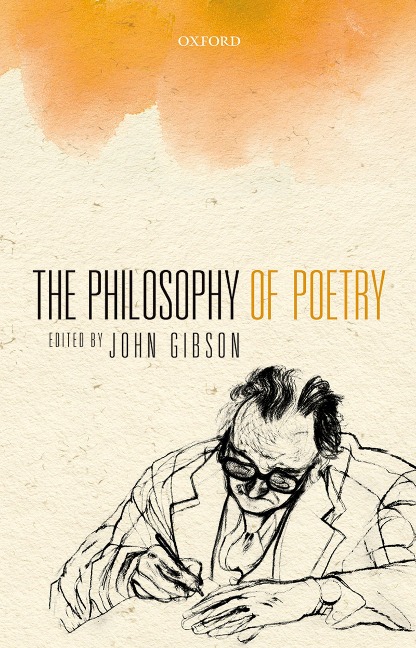
In recent years philosophers have produced important books on nearly all the major arts: the novel and painting, music and theatre, dance and architecture, conceptual art and even gardening. Poetry is the sole exception. This is an astonishing omission, one this collection of original essays will correct. If contemporary philosophy still regards metaphors such as 'Juliet is the sun' as a serious problem, one has an acute sense of how prepared it is to make philosophical and aesthetic sense of poems such W. B. Yeats's 'The Second Coming', Sylvia Plath's 'Daddy', or Paul Celan's 'Todesfuge'. The Philosophy of Poetry brings together philosophers of art, language, and mind to expose and address the array of problems poetry raises for philosophy. In doing so it lays the foundation for a proper philosophy of poetry, setting out the various puzzles and paradoxes that future work in the field will have to address. Given its breadth of approach, the volume is relevant not only to aesthetics but to all areas of philosophy concerned with meaning, truth, and the communicative and expressive powers of language more generally. Poetry is the last unexplored frontier in contemporary analytic aesthetics, and this volume offers a powerful demonstration of how central poetry should be to philosophy.
John Gibson is Associate Professor of Philosophy at the University of Louisville. His research focuses on topics in the philosophy of literature and aesthetics. He is the author of Fiction and the Weave of Life (OUP, 2007) and coeditor of Narrative, Emotion and Insight (Pennsylvania State University Press, 2011), The Literary Wittgenstein (Routledge, 2004), A Sense of The World: Essays on Fiction, Narrative, and Knowledge (Routledge, 2007), and the forthcoming The Routledge Companion to Philosophy of Literature. He is currently working on a manuscript titled Poetry, Metaphor, and Nonsense: An Essay on Meaning.
- Introduction - 1: Peter Lamarque: Semantic Finegrainedness and Poetic Value - 2: Ronald de Sousa: The Dense and the Transparent: Reconciling Opposites - 3: Jesse Prinz and Eric Mandelbaum: Poetic Opacity: How to Paint Things with Words - 4: Sherri Irvin: Unreadable Poems and How They Mean - 5: Simon Blackburn: Can an Analytic Philosopher Read Poetry? - 6: Anna Christina Soy Ribeiro: The Spoken and the Written: An Ontology of Poetic Works - 7: Roger Scruton: Poetry and Truth - 8: Angela Leighton: Poetry's Knowing: So What Do We Know? - 9: Alison Denham: Celan's Song: Pictures, Poetry, and Epistemic Value - 10: Tzachi Zamir: The Inner Paradise - 11: Richard Eldridge: 'To Think Exactly and Courageously': Poetry, Ingeborg Bachmann's Poetics, and her Bohemia Poem - Index
Dieses eBook wird im PDF-Format geliefert und ist mit einem Adobe Kopierschutz (DRM) versehen. Sie können dieses eBook mit allen Geräten lesen, die das PDF-Format und den Adobe Kopierschutz (DRM) unterstützen.
Zum Beispiel mit den folgenden Geräten:
• tolino Reader
Laden Sie das eBook direkt über den Reader-Shop auf dem tolino herunter oder übertragen Sie das eBook auf Ihren tolino mit einer kostenlosen Software wie beispielsweise Adobe Digital Editions.
• Sony Reader & andere eBook Reader
Laden Sie das eBook direkt über den Reader-Shop herunter oder übertragen Sie das eBook mit der kostenlosen Software Sony READER FOR PC/Mac oder Adobe Digital Editions auf ein Standard-Lesegeräte mit epub- und Adobe DRM-Unterstützung.
• Tablets & Smartphones
Möchten Sie dieses eBook auf Ihrem Smartphone oder Tablet lesen, finden Sie hier unsere kostenlose Lese-App für iPhone/iPad und Android Smartphone/Tablets.
• PC & Mac
Lesen Sie das eBook direkt nach dem Herunterladen mit einer kostenlosen Lesesoftware, beispielsweise Adobe Digital Editions, Sony READER FOR PC/Mac oder direkt über Ihre eBook-Bibliothek in Ihrem Konto unter „Meine eBooks“ - „online lesen“.
Schalten Sie das eBook mit Ihrer persönlichen Adobe ID auf bis zu sechs Geräten gleichzeitig frei.
Bitte beachten Sie, dass die Kindle-Geräte das Format nicht unterstützen und dieses eBook somit nicht auf Kindle-Geräten lesbar ist.