Und dann auf "Zum Home-Bildschirm [+]".

Stöbern
genialokal zum Startbildschirm hinzufügen
Installieren Sie die genialokal App auf Ihrem Startbildschirm für einen schnellen Zugriff und eine komfortable Nutzung.
Installieren Sie die genialokal App auf Ihrem Startbildschirm für einen schnellen Zugriff und eine komfortable Nutzung.
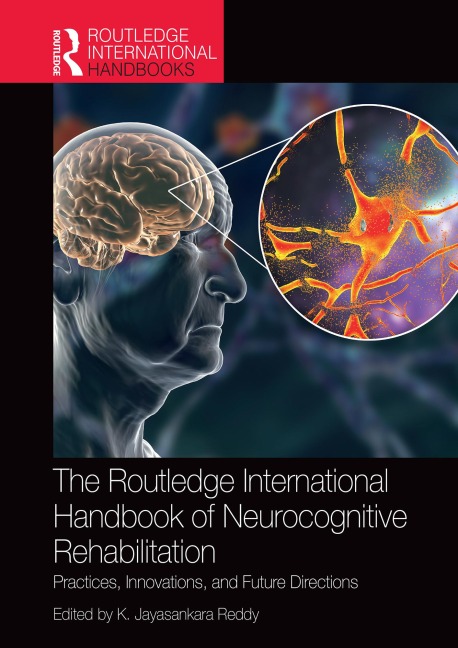
The Routledge International Handbook of Neurocognitive Rehabilitation is a comprehensive resource highlighting the rapid advancements in neurocognitive science and their application in rehabilitation practices. Bringing together perspectives from top authorities in neuropsychology, neurology, neurosurgery, and neuropsychiatry, it explores cutting-edge techniques and resources including virtual reality (VR), augmented reality (AR), machine learning (ML), and artificial intelligence (AI) that are revolutionizing the area. By combining scientific rigor with accessibility, the book closes the gap between state-of-the-art technology and conventional rehabilitation techniques, giving readers academic and practical expertise. Sections focus on the foundations of neurocognitive rehabilitation, technology-driven innovations, clinical applications, and ethical, social, and practical considerations. Case studies and qualitative accounts are integrated into the chapters to illustrate the impact of neurocognitive rehabilitation techniques on patient outcomes, opening up new avenues for individualized and successful therapeutic approaches. It is an essential reference for students, researchers, and professionals to leverage emerging technologies for improving patient outcomes and advancing the discipline of neurocognitive rehabilitation.
K. Jayasankara Reddy is a distinguished expert in neuropsychology, neuroelectrophysiology, and forensic neuropsychology. He earned his M.Sc. and Ph.D. in psychology specializing in neuropsychology. Currently, Dr. Reddy is Professor of Neuropsychology/Cognitive Neuroscience and Dean for Social Sciences at Christ University in Bangalore, India. With a robust academic career spanning teaching, research, and professional practice, he has supervised numerous Ph.D. and M.Phil. candidates, as well as over 100 M.Sc. psychology research projects.
Part I: Foundations of Neurocognitive Rehabilitation 1. Introduction to Neurocognitive Rehabilitation: Overview of concepts, principles, and historical perspectives Priya Prakash and K. Jayasankara Reddy 2. Geriatric Rehabilitation: Aging-Related Cognitive Impairments Shampa Ghosh, Krishna Kumar Singh, Jitendra Kumar Sinha 3. Geriatric Rehabilitation: Evidence-Based Strategies for Aging-Related Cognitive Impairments Pooja Bharadwaj, Dr. Shilpa K S, Roseline Gomes 4. Applying Solution-Focused Brief Therapy in Cognitive Rehabilitation: Insights from Positive Neuropsychology Kritika Rastogi, Sonali Mukherjee, Sabornee Karmakar Basu 5. Role of P300 Event-Related Potential (ERP) in Neuropsychiatric Conditions Lekhanshi Manocha, Aakriti Varshney, Anand Pratap Singh Part II: Technology-Driven Innovations 6. Artificial Intelligence: A Replacement or a Complement to Psychotherapy in Neurocognitive Rehabilitation? Dr N Sharon Sucharitha Gold and Dr S Yogesh Kanna 7. Artificial Intelligence in Neurocognitive Rehabilitation: AI Applications in Assessment, Monitoring, and Therapy Dr. Thaddeus Alfonso, Sherine Georgina Victoria, Shirin AP 8. AI and Brain-Computer Interfaces in Neurocognitive Rehabilitation Dr. Geetanjali Srivastava, Saumya Kushwaha, Rohit Kumar Mishra, Harsh Koria, Aakash Deep, Dr Priyanka Jain 9. EEG Neurofeedback: The Brain's Capacity for Change and Growth Cathlyn Niranjana Bennett and Arunkumar Sekar 10. Neurocognitive changes and neuroplastic adaptations in altered gravitational environments Dr Savita Gaur, Mrs. Ruma Dutta, Dr Rajesh Arora Part III: Clinical Applications 11. Cognitive vs. Behavioral Therapy in ADHD: Executive Function Outcomes Bismirty Bhuyan and Varsha Singh 12. Neurostimulation in Long COVID: Advancing Neurocognitive Rehabilitation and Recovery Nathan Fernandez, K. Jayasankara Reddy, Yogesh Kanna Sathyamoorthy 13. Social Brain and Neurostimulation: Applicability Across Psychiatric Disorders Debaleena Ghosh, Dr. Supratik Kundu, Dr. Susmita Halder 14. Assessing the Impact of Brain Gym Exercises on Memory Enhancement in Students with Learning Disabilities Drishya Sasidharan and Dr. Suphala Kotian 15. Enhancing Executive Functions Through Cognitive-Based Intervention in Individuals with Suicidal Ideation and Attempts: A Mixed-Method Pilot Study Trina Banerjee and K. Jayasankara Reddy Part IV: Ethical, Social, and Practical Considerations 16. Ethics of Technology-Assisted Neurocognitive Rehabilitation Ajay Chandra, Arkalgud Ramaprasad, Madhavi Rangaswamy 17. Harnessing Virtual Reality for Advancing Innovations in Neurocognitive Rehabilitation: Virtual Reality in Neurocognitive Rehabilitation Navkiran Kalsi, Tara Chand, Rajanikant Panda, Neeraj Upadhyay Part V: Future Directions 18. Neuroplasticity Unleashed: Rewiring the Brain for Recovery Sruthy Nair and K. Jayasankara Reddy 19. Neuroplasticity Unleashed: Rewiring the Brain Through BCI and HEG Dr. Mehulkumar B. Dave 20. Advancing the Frontiers of Neurocognitive Rehabilitation: Research and Practice Ahead Aparna Prashanth and K. Jayasankara Reddy
Dieses eBook wird im PDF-Format geliefert und ist mit einem Adobe Kopierschutz (DRM) versehen. Sie können dieses eBook mit allen Geräten lesen, die das PDF-Format und den Adobe Kopierschutz (DRM) unterstützen.
Zum Beispiel mit den folgenden Geräten:
• tolino Reader
Laden Sie das eBook direkt über den Reader-Shop auf dem tolino herunter oder übertragen Sie das eBook auf Ihren tolino mit einer kostenlosen Software wie beispielsweise Adobe Digital Editions.
• Sony Reader & andere eBook Reader
Laden Sie das eBook direkt über den Reader-Shop herunter oder übertragen Sie das eBook mit der kostenlosen Software Sony READER FOR PC/Mac oder Adobe Digital Editions auf ein Standard-Lesegeräte mit epub- und Adobe DRM-Unterstützung.
• Tablets & Smartphones
Möchten Sie dieses eBook auf Ihrem Smartphone oder Tablet lesen, finden Sie hier unsere kostenlose Lese-App für iPhone/iPad und Android Smartphone/Tablets.
• PC & Mac
Lesen Sie das eBook direkt nach dem Herunterladen mit einer kostenlosen Lesesoftware, beispielsweise Adobe Digital Editions, Sony READER FOR PC/Mac oder direkt über Ihre eBook-Bibliothek in Ihrem Konto unter „Meine eBooks“ - „online lesen“.
Schalten Sie das eBook mit Ihrer persönlichen Adobe ID auf bis zu sechs Geräten gleichzeitig frei.
Bitte beachten Sie, dass die Kindle-Geräte das Format nicht unterstützen und dieses eBook somit nicht auf Kindle-Geräten lesbar ist.