Und dann auf "Zum Home-Bildschirm [+]".

Stöbern
genialokal zum Startbildschirm hinzufügen
Installieren Sie die genialokal App auf Ihrem Startbildschirm für einen schnellen Zugriff und eine komfortable Nutzung.
Installieren Sie die genialokal App auf Ihrem Startbildschirm für einen schnellen Zugriff und eine komfortable Nutzung.
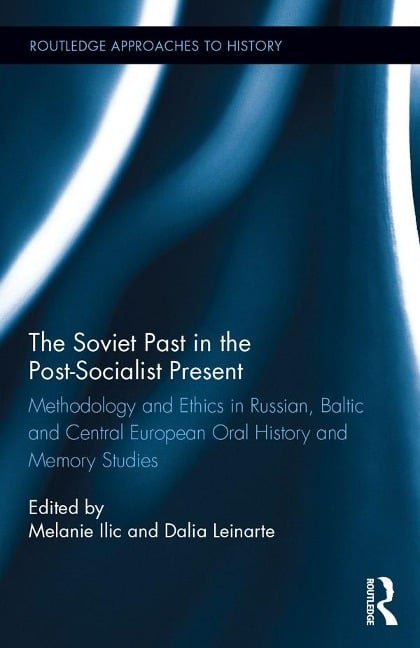
This collection examines practical and ethical issues inherent in the application of oral history and memory studies to research about the Soviet Union and Eastern Europe since the collapse of the Soviet bloc. Case studies highlight the importance of ethical good practice, including the reflexive interrogation of the interviewer and researcher, and aspects of gender and national identity. Researchers use oral history to analyze present-day recollections of the Soviet past, thereby extending our understanding beyond archival records, official rhetoric and popular mythology. Oral history explores individual life stories, but this has sometimes resulted in rather incomplete, incoherent, inconsistent or illogical narratives. Oral history, therefore, presents the researcher with a number of methodological and ethical dilemmas, including the interpretation of "silence" in biographical accounts. This collection links the discussion of oral history ethics with that of memory studies. Memories are shaped by factors that may be, simultaneously, both consecutive and disrupted. In written accounts and responses to interview questions, respondents sometimes display nostalgia for the Soviet past, or, conversely, may seek to de-mythologize the realities of Soviet rule. Case studies explore what to do when interview subjects and memoirists consciously, sub-consciously or unconsciously "forget" aspects of their own past, or themselves seek to take control of the research process.
Melanie Ilic is Professor of Soviet History at the University of Gloucestershire, and Honorary Research Fellow at the Centre for European and Eurasian Studies, The University of Birmingham, UK. Dalia Leinarte is Professor of History and Director of the Gender Studies Centre at Vilnius University, Lithuania, and Fellow Commoner at Lucy Cavendish College, University of Cambridge, UK.
Introductions Introduction: From Interview to Life Story: Methodology and Ethics in Oral History Melanie Ilic Introduction: Silence in Biographical Accounts and Life Stories: The Ethical Aspects of Interpretation Dalia Leinarte Part I: Russia 1. Interview with Anastasia Posadskaya: May 1995 Barbara Engel 2. Women's Everyday Life in Soviet Russia: Collecting Stories, Dealing with Silences and Exploring Nostalgia Yulia Gradskova 3. Interview as Conversation: Agency and Self-Construction in a Russian Rural Woman's Story of Courtship and Marriage Laura J. Olson Part II: Baltic States 4. The Paradoxes of Family Life Trajectories in Soviet and Post-Soviet Life Strategies Ingrida Geciene 5. Research Ethics in Soviet Memory Studies Sigita Kraniauskiene and Laima Zilinskiene 6. "Not Much Love Lost Between Me and My Husband": Love in Estonian Women's Life Stories of the Soviet Period Leena Kurvet-Käosaar 7. History, the Remembered Past and Master Narratives: The Latvian Case Andrejs Plakans 8. Recycling Archival Sources and Oral History: The Nationalization of Private Housing in Soviet Latvia Maija Runcis 9. Three (Un)Successful Cases of the Application of Oral History Methods Aurimas svedas Part III: East Central Europe 10. Self-Sacrificing Motherhood: Reconciling Traumatic Life Experiences of Hungarian Collectivisation Ildikó Asztalos-Morell 11. "We Had to Become Criminals to Survive Under Communism!": Testimonies of Petty Criminality and Everyday Morality in Late Socialist Central Europe Kelly Hignett 12. Female Voices of Post-War Forced Displacement Karolina Koziura and Olena Lytovka, with Melanie Ilic
Dieses eBook wird im PDF-Format geliefert und ist mit einem Adobe Kopierschutz (DRM) versehen. Sie können dieses eBook mit allen Geräten lesen, die das PDF-Format und den Adobe Kopierschutz (DRM) unterstützen.
Zum Beispiel mit den folgenden Geräten:
• tolino Reader
Laden Sie das eBook direkt über den Reader-Shop auf dem tolino herunter oder übertragen Sie das eBook auf Ihren tolino mit einer kostenlosen Software wie beispielsweise Adobe Digital Editions.
• Sony Reader & andere eBook Reader
Laden Sie das eBook direkt über den Reader-Shop herunter oder übertragen Sie das eBook mit der kostenlosen Software Sony READER FOR PC/Mac oder Adobe Digital Editions auf ein Standard-Lesegeräte mit epub- und Adobe DRM-Unterstützung.
• Tablets & Smartphones
Möchten Sie dieses eBook auf Ihrem Smartphone oder Tablet lesen, finden Sie hier unsere kostenlose Lese-App für iPhone/iPad und Android Smartphone/Tablets.
• PC & Mac
Lesen Sie das eBook direkt nach dem Herunterladen mit einer kostenlosen Lesesoftware, beispielsweise Adobe Digital Editions, Sony READER FOR PC/Mac oder direkt über Ihre eBook-Bibliothek in Ihrem Konto unter „Meine eBooks“ - „online lesen“.
Schalten Sie das eBook mit Ihrer persönlichen Adobe ID auf bis zu sechs Geräten gleichzeitig frei.
Bitte beachten Sie, dass die Kindle-Geräte das Format nicht unterstützen und dieses eBook somit nicht auf Kindle-Geräten lesbar ist.