Und dann auf "Zum Home-Bildschirm [+]".

Stöbern
genialokal zum Startbildschirm hinzufügen
Installieren Sie die genialokal App auf Ihrem Startbildschirm für einen schnellen Zugriff und eine komfortable Nutzung.
Installieren Sie die genialokal App auf Ihrem Startbildschirm für einen schnellen Zugriff und eine komfortable Nutzung.
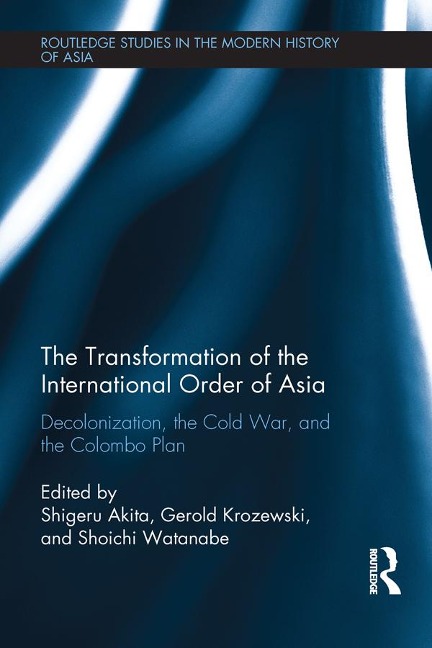
In Asia the 1950s were dominated by political decolonization and the emergence of the Cold War system, and newly independent countries were able to utilize the transformed balance of power for their own economic development through economic and strategic aid programmes. This book examines the interconnections between the transfer of power and state governance in Asia, the emergence of the Cold War, and the transfer of hegemony from the UK to the US, by focusing specifically on the historical roles of international economic aid and the autonomous response from Asian nation states in the immediate post-war context. The Transformation of the International Order of Asia offers closely interwoven perspectives on international economic and political relations from the 1950s to the 1960s, with specific focus on the Colombo Plan and related aid policies of the time. It shows how the plan served different purposes: Britain's aim to reduce India's wartime sterling balances in London; the quest for India's economic independence under Jawaharlal Nehru; Japan's regional economic assertion and its endeavour to improve its international status; Britain's publicity policy during the reorganization of British aid policies at a time of economic crisis; and more broadly, the West's desire to counter Soviet influence in Asia. In doing so, the chapters explore how international economic aid relations became reorganized in relation to the independent development of states in Asia during the period, and crucially, the role this transformation played in the emergence of a new international order in Asia. Drawing on a wide range of international contemporary and archival source materials, this book will be welcomed by students and scholars interested in Asian, international, and economic history, politics and development studies.
Shigeru Akita is Professor in the Graduate School of Letters at Osaka University, Japan. Gerold Krozewski is a Research Fellow the School of Graduate Studies at University of the Free State, South Africa. Shoichi Watanabe is Professor in the Department of History at Tohoku Gakuin University, Japan.
Introduction: The Colombo Plan, aid relations, and the international order of Asia, 1950-1965 Part I: The Colombo Plan and economic development 1. The 1950 Commonwealth Foreign Ministers' meeting and the International Aid Programme for Asia 2. 'The weapons of the weakened': British power, sterling balances, and the origins of the Colombo Plan 3. The Colombo Plan and industrialization in India: technical cooperation for the Indian Institutes of Technology 4. 'A waste of time and money'? The Colombo Plan in Malaya, Singapore and the Borneo Territories during the 1950s 5. The development and activities of the Economic Commission for Asia and the Far East (ECAFE), 1947-1965 II: Changing aid relations and the Colombo Plan 6. The transformation of the Colombo Plan and the sterling area in the late 1950s and early 1960s 7. The Colombo Plan and Japan: focusing on the Tokyo meeting 8. Britain and the reordering of overseas aid, 1956-64: from colonial development finance to assistance to sovereign states 9. The Colombo Plan and British publicity policies towards Southeast Asia, 1950-1965 Part III: The Cold War, aid policies, and the international order 10. US Cold War policy and the Colombo Plan: a continuing search for regional cooperation in Asia in the 1950s 11. Peace offensive between the two wars: Khrushchev's policy towards Asia, 1953-1964 12. Development assistance as a Cold War tool: the United States, international institutions, and the political economy of Asian development, 1947-1965 13. The changing international order in Asia and Anglo-Japanese relations: from the mid-1950s to the early 1960s
Dieses eBook wird im PDF-Format geliefert und ist mit einem Adobe Kopierschutz (DRM) versehen. Sie können dieses eBook mit allen Geräten lesen, die das PDF-Format und den Adobe Kopierschutz (DRM) unterstützen.
Zum Beispiel mit den folgenden Geräten:
• tolino Reader
Laden Sie das eBook direkt über den Reader-Shop auf dem tolino herunter oder übertragen Sie das eBook auf Ihren tolino mit einer kostenlosen Software wie beispielsweise Adobe Digital Editions.
• Sony Reader & andere eBook Reader
Laden Sie das eBook direkt über den Reader-Shop herunter oder übertragen Sie das eBook mit der kostenlosen Software Sony READER FOR PC/Mac oder Adobe Digital Editions auf ein Standard-Lesegeräte mit epub- und Adobe DRM-Unterstützung.
• Tablets & Smartphones
Möchten Sie dieses eBook auf Ihrem Smartphone oder Tablet lesen, finden Sie hier unsere kostenlose Lese-App für iPhone/iPad und Android Smartphone/Tablets.
• PC & Mac
Lesen Sie das eBook direkt nach dem Herunterladen mit einer kostenlosen Lesesoftware, beispielsweise Adobe Digital Editions, Sony READER FOR PC/Mac oder direkt über Ihre eBook-Bibliothek in Ihrem Konto unter „Meine eBooks“ - „online lesen“.
Schalten Sie das eBook mit Ihrer persönlichen Adobe ID auf bis zu sechs Geräten gleichzeitig frei.
Bitte beachten Sie, dass die Kindle-Geräte das Format nicht unterstützen und dieses eBook somit nicht auf Kindle-Geräten lesbar ist.