Und dann auf "Zum Home-Bildschirm [+]".

Stöbern
genialokal zum Startbildschirm hinzufügen
Installieren Sie die genialokal App auf Ihrem Startbildschirm für einen schnellen Zugriff und eine komfortable Nutzung.
Installieren Sie die genialokal App auf Ihrem Startbildschirm für einen schnellen Zugriff und eine komfortable Nutzung.
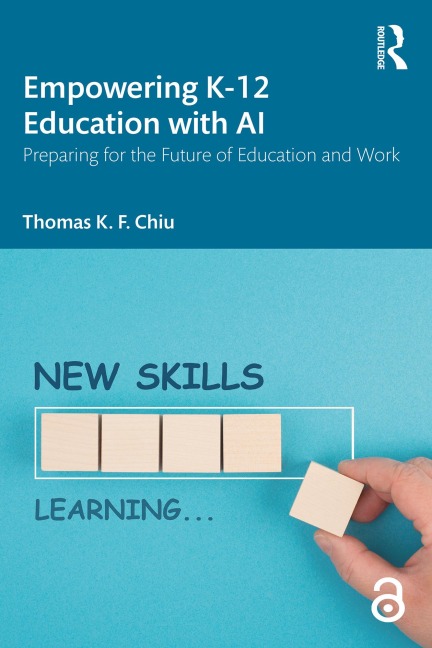
Thomas Chiu's book is one of the first to look at the impacts of artificial intelligence (AI) on K-12 education in two areas: AI education, and AI in education. AI education refers to teaching AI, and AI in education refers to using AI to support learning and teaching. Chiu examines the opportunities and challenges of these impacts for teachers and students, proposes a framework and a set of principles for the two areas with examples, and suggests learning outcomes. AI in K-12 education is one of the most important global strategic initiatives since it has made and continues to make impacts on education and the job market. Including AI technology and topics in K-12 education not only helps children understand what AI technologies are and how they work, but also inspires future workplace readiness and potential AI researchers, ethical designers, and software developers. However, educators and AI experts in general realize that planning AI-related education is very challenging. It involves integrating the topics or technologies into the curriculum, necessitating teacher development to address the gaps in knowledge, addressing educational inequity, and securing equipment and resources. Understanding student and teacher opportunities and challenges is crucial. This book is an essential and thought-provoking read for researchers, teacher educators, and school teachers and leaders who wish to embrace AI to prepare K-12 students for their future education and the workforce. Chapters 1, 2, 4, and 8 of this book are freely available as a downloadable Open Access PDF at http://www.taylorfrancis.com under a Creative Commons [Attribution-Non Commercial-No Derivatives (CC-BY-NC-ND)] 4.0 license.
Thomas K. F. Chiu is Assistant Professor at the Chinese University of Hong Kong. He has been designated by Stanford University as one of the top 2% most cited scientists in education for 2022, 2023, and 2024. He is an associate editor for the International Journal of STEM Education, Interactive Learning Environments, Australasian Journal of Educational Technology, and The Asia-Pacific Education Researcher. He is a member of several local and international committees on AI and digital education.
1. Introduction to Transforming K-12 Education with Artificial Intelligence 2. Student AI Literacy and Competency 3. Teacher Education for AI Competency 4. Instructional Designs for AI Interdisciplinary Learning 5. Assessment in the Age of AI 6. Attracting and Retaining Various AI Talents Among the Young 7. Addressing Education Equity with Ecosystems and Innovative Pedagogies in the AI Era 8. Reform, Challenges, and Future Research on AI for K-12 Education
Dieses eBook wird im PDF-Format geliefert und ist mit einem Adobe Kopierschutz (DRM) versehen. Sie können dieses eBook mit allen Geräten lesen, die das PDF-Format und den Adobe Kopierschutz (DRM) unterstützen.
Zum Beispiel mit den folgenden Geräten:
• tolino Reader
Laden Sie das eBook direkt über den Reader-Shop auf dem tolino herunter oder übertragen Sie das eBook auf Ihren tolino mit einer kostenlosen Software wie beispielsweise Adobe Digital Editions.
• Sony Reader & andere eBook Reader
Laden Sie das eBook direkt über den Reader-Shop herunter oder übertragen Sie das eBook mit der kostenlosen Software Sony READER FOR PC/Mac oder Adobe Digital Editions auf ein Standard-Lesegeräte mit epub- und Adobe DRM-Unterstützung.
• Tablets & Smartphones
Möchten Sie dieses eBook auf Ihrem Smartphone oder Tablet lesen, finden Sie hier unsere kostenlose Lese-App für iPhone/iPad und Android Smartphone/Tablets.
• PC & Mac
Lesen Sie das eBook direkt nach dem Herunterladen mit einer kostenlosen Lesesoftware, beispielsweise Adobe Digital Editions, Sony READER FOR PC/Mac oder direkt über Ihre eBook-Bibliothek in Ihrem Konto unter „Meine eBooks“ - „online lesen“.
Schalten Sie das eBook mit Ihrer persönlichen Adobe ID auf bis zu sechs Geräten gleichzeitig frei.
Bitte beachten Sie, dass die Kindle-Geräte das Format nicht unterstützen und dieses eBook somit nicht auf Kindle-Geräten lesbar ist.