Und dann auf "Zum Home-Bildschirm [+]".

Stöbern
genialokal zum Startbildschirm hinzufügen
Installieren Sie die genialokal App auf Ihrem Startbildschirm für einen schnellen Zugriff und eine komfortable Nutzung.
Installieren Sie die genialokal App auf Ihrem Startbildschirm für einen schnellen Zugriff und eine komfortable Nutzung.
Ihr gewünschter Artikel ist in 0 Buchhandlungen vorrätig - wählen Sie hier eine Buchhandlung in Ihrer Nähe aus:


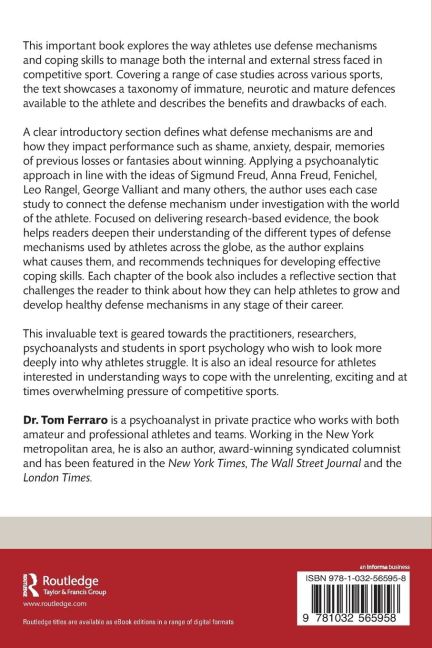
This important book explores the way athletes use defense mechanisms and coping skills to manage internal and external stress faced in competitive sport. Covering case studies across various sports, the text showcases immature, neurotic and mature defences available to the athlete and describes the benefits and drawbacks of each.
Dr. Tom Ferraro is a psychoanalyst in private practice who works with both amateur and professional athletes and teams. Working in the New York metropolitan area, he is also an author, award-winning syndicated columnist and has been featured in the New York Times, The Wall Street Journal and the London Times.
Introduction 1. Defense Mechanisms Used by Athletes 2. Why Defenses Mechanisms Must be Addressed Prior to Teaching Coping Skills 3. Emotional Breakdowns in Athletes: Why They Happen and What to do About Them Part 1. The Immature Defenses 4. Denial Mechanisms in an Aging Athlete 5. Acting Out, Impulsivity and Drug Use in Athletes 6. Grandiosity, Self-Idealization and Narcissism in the Athlete 7. Depersonalization in a Golfer 8. Autistic Fantasies in a Long-Distance Swimmer 9. Perfectionism or the Splitting Defense in Athletes 10. Superstitious Behavior Used by the Regressed Athlete 11. Regression in a Professional Soccer Team 12. Somatization in Athletes 13. Scapegoating and Splitting in Professional Teams 14. Identification with the Aggressor as a Tool to Suppress Anxiety Part 2. The Neurotic Defenses 15. Displacement of Anger into a Spouse 16. Repression and Reaction Formation in Asian Athletes 17. Overcompensation: Turning Inferiority into Superiority in a LPGA Golfer 18. Doubting in Athletes and the Intellectualization Defense 19. The Undoing Defense: Why Athletes Choke 20. Isolation of Affect Defense in Athletes 21. Dissociation in Sports 22. Reaction Formation: The Problem of Being Mr. Nice Guy 23. The Yips in Golf as an Example of Repression Part 3. The Mature Defenses 24. Counterphobia or Why Athletes Compete 25. The Value of Self-Observation for Athletes 26. Altruistic Surrender in Sports or Why Athletes Give Away Leads 27. The Anticipation Defense as the Definitive Pre-Game Routine 28. Asceticism and the Renunciation of Pleasure in a Long-Distance Cyclist 29. How Athletes Use Humor to Cope with Stress 30. Suppression Used to Manage Competitive Anxiety 31. Sublimation, Aggression and Winning 32. Sublimation of the Sexual Impulse in Sports Part 4. Odds and Ends 33. The Weakening of Defense Mechanisms with Age 34. Meditation and Prayer as a Way to Find the Zone 35. Using a 'Higher Power' as a Coping Mechanism in Sports 36. Mental Health Versus Mental Illness in Athletes 37. The Problem of Prescription Drug Use in Athletes 38. Depression Used as a Defense by Athletes Who Fear Failure 39. Cultural Differences in the Use of Defenses 40. Concluding Remarks on Ways To Identify Defenses in Athletes