Und dann auf "Zum Home-Bildschirm [+]".

Stöbern
genialokal zum Startbildschirm hinzufügen
Installieren Sie die genialokal App auf Ihrem Startbildschirm für einen schnellen Zugriff und eine komfortable Nutzung.
Installieren Sie die genialokal App auf Ihrem Startbildschirm für einen schnellen Zugriff und eine komfortable Nutzung.

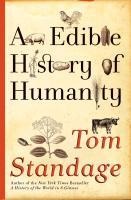
Throughout history, food has done more than simply provide sustenance. It has acted as a tool of social transformation, political organization, geopolitical competition, industrial development, military conflict and economic expansion. An Edible History of Humanity is an account of how food has helped to shape and transform societies around the world, from the emergence of farming in China by 7,500 BCE to today's use of sugar cane and corn to make ethanol.
Food has been a kind of technology, a tool that has changed the course of human progress. It helped to found, structure, and connect together civilizations worldwide, and to build empires and bring about a surge in economic development through industrialization. Food has been employed as a military and ideological weapon. And today, in the culmination of a process that has been going on for thousands of years, the foods we choose in the supermarket connect us to global debates about trade, development and the adoption of new technologies.
Drawing from many fields including genetics, archaeology, anthropology, ethno-botany and economics, the story of these food-driven transformations is a fully satisfying account of the whole of human history.
Tom Standage is business editor at The Economist magazine and the author of four works of history, including A History of the World in 6 Glasses and The Victorian Internet. He has also written for the Guardian, the New York Times, Wired, and other publications. Standage holds a degree in engineering and computer science from Oxford University, and is the least musical member of a musical family. He is married and has two children.