Und dann auf "Zum Home-Bildschirm [+]".

Stöbern
genialokal zum Startbildschirm hinzufügen
Installieren Sie die genialokal App auf Ihrem Startbildschirm für einen schnellen Zugriff und eine komfortable Nutzung.
Installieren Sie die genialokal App auf Ihrem Startbildschirm für einen schnellen Zugriff und eine komfortable Nutzung.
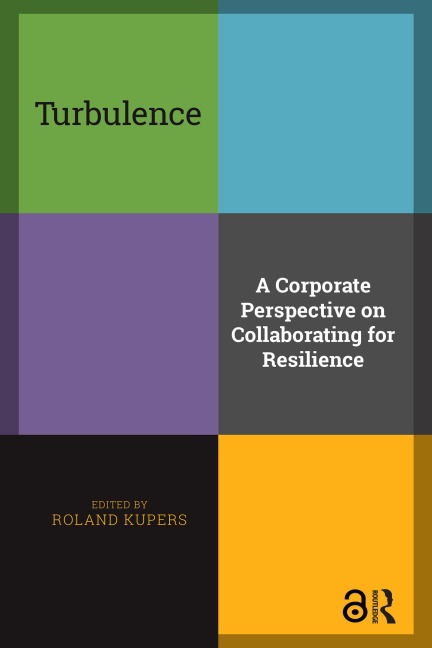
The ever tighter coupling of our food, water and energy systems, in the context of a changing climate is leading to increasing turbulence in the world. As a consequence, it becomes ever more crucial to develop cities, regions, and economies with resilience in mind. Because of their global reach, substantial resources, and information-driven leadership structures, multinational corporations can play a major, constructive role in improving our understanding and design of resilient systems. This volume is the product of the Resilience Action Initiative, a collaboration among Dow, DuPont, IBM, McKinsey & Co., Shell, Siemens, Swiss Re, Unilever, and Yara designed to explore possible corporate contributions to global resilience, especially at the nexus of water, food and energy. Aggressively forward-thinking, and consistent with an enlightened self-interest, the ideas considered here represent a corporate perspective on the broad collaborations required for a more resilient world.
Roland Kupers is an associate fellow in the Smith School of Enterprise and the Environment at the University of Oxford.
Editor's introduction (Roland Kupers) Preface (Peter Voser) Preface: Turbulence - by way of an introduction (Michel Liès) Part I Introduction to RAI 1 The Resilience action initiative: An introduction (Maike Boggemann and Norbert Both) Understanding the 'stress nexus' The Resilience Action Initiative Definition of resilience The RAI approach Knowledge projects The challenges of resilience in practice Broader sharing and dialogue Collaboration and leadership Part II The resilience lens 2 A pragmatic frame to explore resilience (Marco Albani and Roland Kupers) A diagnostic frame Beyond a diagnostic frame The boundary conundrum The difficult relationship between efficiency and resilience Dealing with multiple scales Making system assumptions explicit Open questions and dilemmas 3 A resilience lens for enterprise risk management (David N. Bresch, Jaap Berghuijs, Rainer Egloff, Roland Kupers) Enriching corporate risk management Structural resilience Integrative resilience Transformative resilience 4 Multi-sector collaboration for resilience (Dr Mark Smith) Change for resilience Collaboration for systemic change Applying collaboration to resilience Conclusion: A collaborative agenda for resilience 5 Building resilience through teamwork. Seven tips to make it work (Marco Albani and Kimberly Henderson) Part III Resilience in action 6 The case for green infrastructure (Neil C. Hawkins and Glenn Prickett) Introduction and objective Green infrastructure: Concept and definition Green infrastructure: Solution examples Identifying areas of opportunity Key conclusions Moving forward 7 Nexus! Resilience in a pressure cooker (Herman van der Meyden) The game development process The game mechanics Simulating aspects of resilience Insights from a year of Nexus! sessions 8 Getting to resilience from the bottom-up. From upscaling to downscaling, from valuation to values and from having to sharing - How corporates can leverage the next generation's way of working to increase resilience (Thekla Teunis) Fading boundaries and stronger horizontal and local networks Initial results Main lessons Barriers for breakthrough bottom-up innovation Business value 9 Corporations and Resilience (Simone Arizzi, Maximilian Egger, Dawn Rittenhaus and Peter Williams) The Resilience Action Initiative Conclusion Epilogue (Brian Walker), Conclusion, Appendix, Author biographies, Bibliography, Index.
Dieses eBook wird im PDF-Format geliefert und ist mit einem Adobe Kopierschutz (DRM) versehen. Sie können dieses eBook mit allen Geräten lesen, die das PDF-Format und den Adobe Kopierschutz (DRM) unterstützen.
Zum Beispiel mit den folgenden Geräten:
• tolino Reader
Laden Sie das eBook direkt über den Reader-Shop auf dem tolino herunter oder übertragen Sie das eBook auf Ihren tolino mit einer kostenlosen Software wie beispielsweise Adobe Digital Editions.
• Sony Reader & andere eBook Reader
Laden Sie das eBook direkt über den Reader-Shop herunter oder übertragen Sie das eBook mit der kostenlosen Software Sony READER FOR PC/Mac oder Adobe Digital Editions auf ein Standard-Lesegeräte mit epub- und Adobe DRM-Unterstützung.
• Tablets & Smartphones
Möchten Sie dieses eBook auf Ihrem Smartphone oder Tablet lesen, finden Sie hier unsere kostenlose Lese-App für iPhone/iPad und Android Smartphone/Tablets.
• PC & Mac
Lesen Sie das eBook direkt nach dem Herunterladen mit einer kostenlosen Lesesoftware, beispielsweise Adobe Digital Editions, Sony READER FOR PC/Mac oder direkt über Ihre eBook-Bibliothek in Ihrem Konto unter „Meine eBooks“ - „online lesen“.
Schalten Sie das eBook mit Ihrer persönlichen Adobe ID auf bis zu sechs Geräten gleichzeitig frei.
Bitte beachten Sie, dass die Kindle-Geräte das Format nicht unterstützen und dieses eBook somit nicht auf Kindle-Geräten lesbar ist.