Und dann auf "Zum Home-Bildschirm [+]".

Stöbern
genialokal zum Startbildschirm hinzufügen
Installieren Sie die genialokal App auf Ihrem Startbildschirm für einen schnellen Zugriff und eine komfortable Nutzung.
Installieren Sie die genialokal App auf Ihrem Startbildschirm für einen schnellen Zugriff und eine komfortable Nutzung.
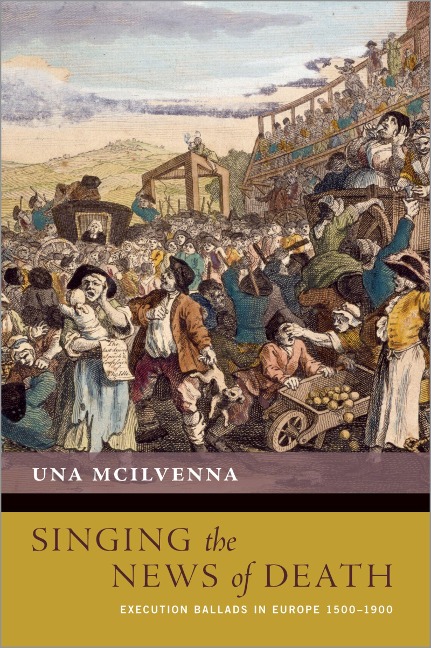
Across Europe, from the dawn of print until the early twentieth century, the news of crime and criminals' public executions was printed in song form on cheap broadsides and pamphlets to be sold in streets and marketplaces by ballad-singers. Singing the News of Death: Execution Ballads in Europe 1500-1900 looks at how and why song was employed across Europe for centuries as a vehicle for broadcasting news about crime and executions, exploring how this performative medium could frame and mediate the message of punishment and repentance. Examining ballads in English, French, Dutch, German, and Italian across four centuries, author Una McIlvenna offers the first multilingual and longue durée study of the complex and fascinating phenomenon of popular songs about brutal public death. Ballads were frequently written in the first-person voice, and often purported to be the last words, confession or 'dying speech' of the condemned criminal, yet were ironically on sale the day of the execution itself. Musical notation was generally not required as ballads were set to well-known tunes. Execution ballads were therefore a medium accessible to all, regardless of literacy, social class, age, gender or location. A genre that retained extraordinary continuities in form and content across time, space, and language, the execution ballad grew in popularity in the nineteenth century, and only began to fade as executions themselves were removed from the public eye. With an accompanying database of recordings, Singing the News of Death brings these centuries-old songs of death back to life.
Una McIlvenna is Honorary Senior Lecturer at the Australian National University. A literary and cultural historian of early modern Europe, she is also the author of Scandal and Reputation at the Court of Catherine de Medici (2016). She has held positions at the Universities of Melbourne, Sydney, Kent and Queen Mary University of London.
Acknowledgements Abbreviations List of Illustrations List of Music Examples Introduction Part I: Selling the news of death Chapter One: The significance of contrafactum or, how melody made meaning Chapter Two: The centrality of shame in the punishment ritual Chapter Three: Fake news? How execution ballads walked the line between truth and fiction Part II: Crimes that Feature in Execution Ballads Chapter Four: The Devil's business: religion, witchcraft, sorcery, possession Chapter Five: How ballads portrayed murder and violence Chapter Six: Political executions in song Chapter Seven: Outlaw ballads: fantasy vs reality Chapter Eight: The end of execution ballads? Coda: Songs about the executioner Conclusion Bibliography Index
Dieses eBook wird im PDF-Format geliefert und ist mit einem Adobe Kopierschutz (DRM) versehen. Sie können dieses eBook mit allen Geräten lesen, die das PDF-Format und den Adobe Kopierschutz (DRM) unterstützen.
Zum Beispiel mit den folgenden Geräten:
• tolino Reader
Laden Sie das eBook direkt über den Reader-Shop auf dem tolino herunter oder übertragen Sie das eBook auf Ihren tolino mit einer kostenlosen Software wie beispielsweise Adobe Digital Editions.
• Sony Reader & andere eBook Reader
Laden Sie das eBook direkt über den Reader-Shop herunter oder übertragen Sie das eBook mit der kostenlosen Software Sony READER FOR PC/Mac oder Adobe Digital Editions auf ein Standard-Lesegeräte mit epub- und Adobe DRM-Unterstützung.
• Tablets & Smartphones
Möchten Sie dieses eBook auf Ihrem Smartphone oder Tablet lesen, finden Sie hier unsere kostenlose Lese-App für iPhone/iPad und Android Smartphone/Tablets.
• PC & Mac
Lesen Sie das eBook direkt nach dem Herunterladen mit einer kostenlosen Lesesoftware, beispielsweise Adobe Digital Editions, Sony READER FOR PC/Mac oder direkt über Ihre eBook-Bibliothek in Ihrem Konto unter „Meine eBooks“ - „online lesen“.
Schalten Sie das eBook mit Ihrer persönlichen Adobe ID auf bis zu sechs Geräten gleichzeitig frei.
Bitte beachten Sie, dass die Kindle-Geräte das Format nicht unterstützen und dieses eBook somit nicht auf Kindle-Geräten lesbar ist.