Und dann auf "Zum Home-Bildschirm [+]".

Stöbern
genialokal zum Startbildschirm hinzufügen
Installieren Sie die genialokal App auf Ihrem Startbildschirm für einen schnellen Zugriff und eine komfortable Nutzung.
Installieren Sie die genialokal App auf Ihrem Startbildschirm für einen schnellen Zugriff und eine komfortable Nutzung.
Ihr gewünschter Artikel ist in 0 Buchhandlungen vorrätig - wählen Sie hier eine Buchhandlung in Ihrer Nähe aus:

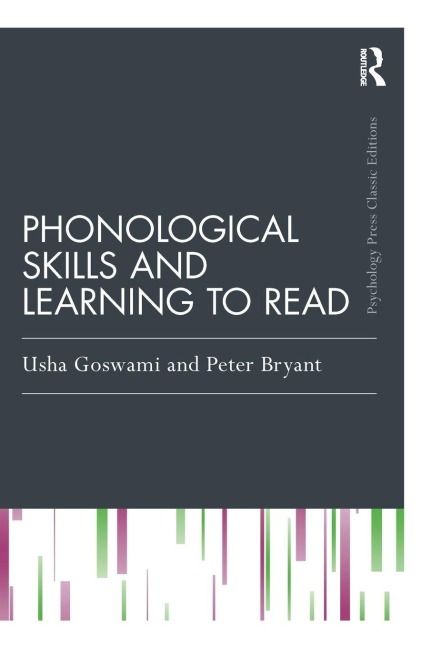
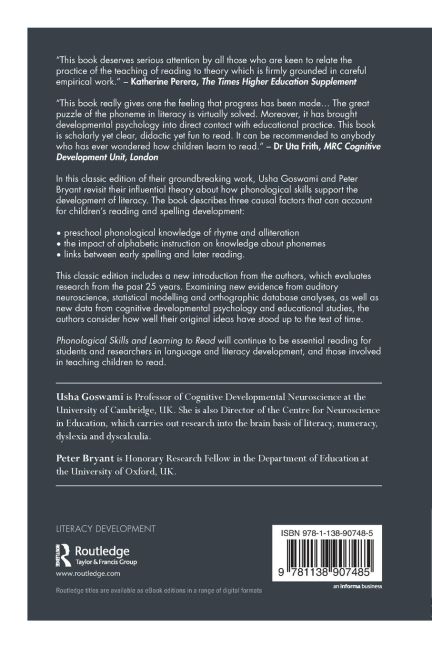
In this classic edition of their ground-breaking work, Usha Goswami and Peter Bryant revisit their influential theory about how phonological skills support the development of literacy. The book describes three causal factors which can account for children's reading and spelling development:
pre-school phonological knowledge of rhyme and alliteration
the impact of alphabetic instruction on knowledge about phonemes
links between early spelling and later reading.-
This classic edition includes a new introduction from the authors which evaluates research from the past 25 years. Examining new evidence from auditory neuroscience, statistical modelling and orthographic database analyses, as well as new data from cognitive developmental psychology and educational studies, the authors consider how well their original ideas have stood up to the test of time.
Phonological Skills and Learning to Read will continue to be essential reading for students and researchers in language and literacy development, and those involved in teaching children to read.
Usha Goswami is Professor of Cognitive Developmental Neuroscience at the University of Cambridge, UK. She is also Director of the Centre for Neuroscience in Education, which carries out research into the brain basis of literacy, numeracy, dyslexia and dyscalculia. Peter Bryant is Honorary Research Fellow in the Department of Education at the University of Oxford UK.
Praise for the First Edition, Introduction to the Classic Edition 1 Phonological Awareness and Reading. 2 How Children Read Words. 3 Spelling and Phonological Awareness. 4 How Children Read and Write New Words. 5 Comparisons with Backward Readers and Spellers. 6 Correlations and Longitudinal Predictions. 7 Teaching Children About Sound. 8 Do Children Read and Fail to Learn to Read in Different Ways from Each Other. 9 Theories About Learning to Read. Index