Und dann auf "Zum Home-Bildschirm [+]".

Stöbern
genialokal zum Startbildschirm hinzufügen
Installieren Sie die genialokal App auf Ihrem Startbildschirm für einen schnellen Zugriff und eine komfortable Nutzung.
Installieren Sie die genialokal App auf Ihrem Startbildschirm für einen schnellen Zugriff und eine komfortable Nutzung.
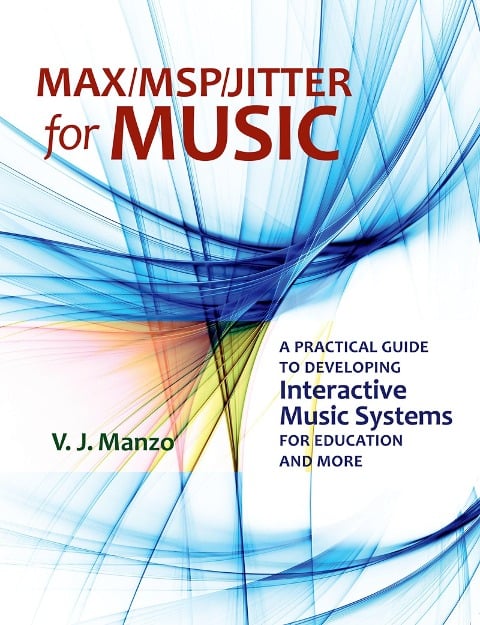
In Max/MSP/Jitter for Music, expert author and music technologist V. J. Manzo provides a user-friendly introduction to a powerful programming language that can be used to write custom software for musical interaction. Through clear, step-by-step instructions illustrated with numerous examples of working systems, the book equips you with everything you need to know in order to design and complete meaningful music projects. The book also discusses ways to interact with software beyond the mouse and keyboard through use of camera tracking, pitch tracking, video game controllers, sensors, mobile devices, and more. This book will be of special value for everyone who teaches music at any level, from classroom instructors to ensemble directors to private studio instructors. Whether you want to create simple exercises for beginning performers or more complex programs for aspiring composers, this book will show you how to write customized software that can complement and even inspire your instructional objectives. No specialist foreknowledge is required to use this book to enliven your experience with music technology. Even musicians with no prior programming skills can learn to supplement their lessons with interactive instructional tools, to develop adaptive instruments to aid in composition and performance activities, and to create measurement tools with which to conduct research. This book allows you to: -Learn how to design meaningful projects for composition, performance, music therapy, instruction, and research -Understand powerful software through this accessible introduction, written for beginners -Follow along through step-by-step tutorials -Grasp the principles by downloading the extensive software examples from the companion website This book is ideal for: -Music educators at all levels looking to integrate software in instruction -Musicians interested in how software can improve their practice and performance -Music composers with an interest in designing interactive music -Music therapists looking to tailor programs to the needs of specific groups or individuals And all who are interested in music technology. Visit the companion website at www.oup.com/us/maxmspjitter
V.J. Manzo (PhD Temple University, M.M. New York University) is Assistant Professor of Music Technology and Perception at Worcester Polytechnic Institute (WPI). He is a composer and guitarist with research interests in theory and composition, artificial intelligence, interactive music systems, and music cognition. He has authored several open-source interactive music projects including the Modal Object Library, a collection of composition/theory algorithms for use in algorithmic and electro-acoustic composition, and EAMIR, an open-source project assisting individuals, including those with disabilities, to compose and perform music with accessible musical interfaces, alternate/adaptive controllers, and sensors. V.J. has lectured on electronic music and interactive music systems for education and presented his compositions and interactive systems at numerous universities, conferences, and performance venues including ACM, ATMI, CMS, ISTE, TI:ME, SEAMUS, MENC, Peabody, American Composers Forum, and ASTA. For more info, visit www.vjmanzo.com.
Foreword by David Elliott Preface Acknowledgments Chapter 1: Introduction to Programming Chapter 2: Generating Music Chapter 3: Math and Music Chapter 4: Scales and Chords Chapter 5: Interactive Ear-training Chapter 6: Data Structures Chapter 7: Control Interfaces Chapter 8: Control Interfaces Continued Chapter 9: Tools for Music Theory Concepts Chapter 10: Working with Time Chapter 11: Building Standalone Applications Chapter 12: Working with Audio Chapter 13: Audio Playback and Pitch Tracking Chapter 14: Audio Buffers Chapter 15: Audio Effects and Processing Chapter 16: Working with Live Video Chapter 17: Working with Video Files Chapter 18: Video Research Instrument Chapter 19: Informal Music Learning Instruments Chapter 20: Compositions and Perception Tools Index
Dieses eBook wird im PDF-Format geliefert und ist mit einem Adobe Kopierschutz (DRM) versehen. Sie können dieses eBook mit allen Geräten lesen, die das PDF-Format und den Adobe Kopierschutz (DRM) unterstützen.
Zum Beispiel mit den folgenden Geräten:
• tolino Reader
Laden Sie das eBook direkt über den Reader-Shop auf dem tolino herunter oder übertragen Sie das eBook auf Ihren tolino mit einer kostenlosen Software wie beispielsweise Adobe Digital Editions.
• Sony Reader & andere eBook Reader
Laden Sie das eBook direkt über den Reader-Shop herunter oder übertragen Sie das eBook mit der kostenlosen Software Sony READER FOR PC/Mac oder Adobe Digital Editions auf ein Standard-Lesegeräte mit epub- und Adobe DRM-Unterstützung.
• Tablets & Smartphones
Möchten Sie dieses eBook auf Ihrem Smartphone oder Tablet lesen, finden Sie hier unsere kostenlose Lese-App für iPhone/iPad und Android Smartphone/Tablets.
• PC & Mac
Lesen Sie das eBook direkt nach dem Herunterladen mit einer kostenlosen Lesesoftware, beispielsweise Adobe Digital Editions, Sony READER FOR PC/Mac oder direkt über Ihre eBook-Bibliothek in Ihrem Konto unter „Meine eBooks“ - „online lesen“.
Schalten Sie das eBook mit Ihrer persönlichen Adobe ID auf bis zu sechs Geräten gleichzeitig frei.
Bitte beachten Sie, dass die Kindle-Geräte das Format nicht unterstützen und dieses eBook somit nicht auf Kindle-Geräten lesbar ist.