Und dann auf "Zum Home-Bildschirm [+]".

Stöbern
genialokal zum Startbildschirm hinzufügen
Installieren Sie die genialokal App auf Ihrem Startbildschirm für einen schnellen Zugriff und eine komfortable Nutzung.
Installieren Sie die genialokal App auf Ihrem Startbildschirm für einen schnellen Zugriff und eine komfortable Nutzung.
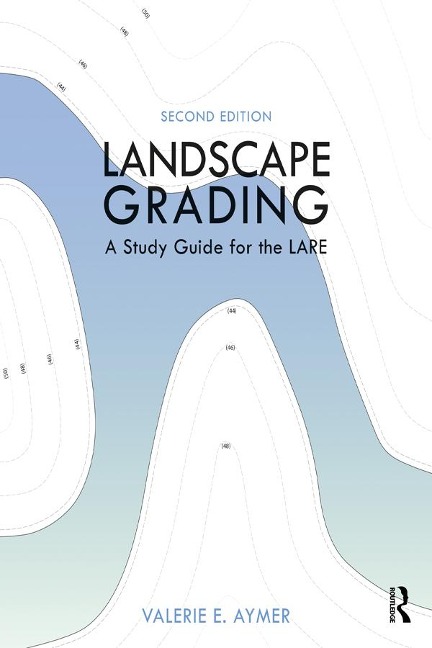
For every element that we design in the landscape, there is a corresponding grading concept, and how these concepts are drawn together is what creates a site grading plan. This study guide explores these concepts in detail to help you learn how to grade with confidence in preparation for the Grading, Drainage and Construction Documentation section of the Landscape Architecture Registration Examination (LARE). This updated second edition is designed as a textbook for the landscape architecture student, a study guide for the professional studying for the LARE, and a refresher for licensed landscape architects. New to this edition: . Additional illustrations and explanations for grading plane surfaces and warped planes, swales, berms, retention ponds, and drain inlets; . Additional illustrations and explanations for grading paths, ramp landings, ramp/stair combinations and retaining walls; . A section on landscape and built element combinations, highlighting grading techniques for parking lots, culverts and sloping berms; . A section on landscape grading standards, recognizing soil cut and fill, determining pipe cover, finding FFE, and horizontal and vertical curves; . Updated information about the computer-based LARE test; . All sections updated to comply with current ADA guidelines; . An appendix highlighting metric standards and guidelines for accessibility design in Canada and the UK. With 223 original illustrations to aid the reader in understanding the grading concepts, including 32 end-of-chapter exercises and solutions to practice the concepts introduced in each chapter, and 10 grading vignettes that combine different concepts into more robust exercises, mimicking the difficulty level of questions on the LARE, this book is your comprehensive guide to landscape grading.
Valerie Aymer is a licensed landscape architect and a member of the American Society of Landscape Architects. She received her Master's in Landscape Architecture in 2002 from Cornell University and her professional license in 2009. She has practiced in Florida, New Jersey, Pennsylvania, Virginia, and New York, most notably on the World Trade Center projects in Lower Manhattan. In 2015, she joined the faculty of the Department of Landscape Architecture at Cornell University where she teaches several technical courses including site engineering.
Introduction Section One - Grading Basics 1.1) What is Grading? 1.2) Understanding Spot Elevations 1.3) Determining Slopes 1.4) Interpolation and Slope Intervals 1.5) Contour Grading 1.6) Graphic Conventions 1.7) Summary 1.8) Exercises 1.9) Literature Cited Section Two - Landforms 2.1) What Are Landforms? 2.2) Watersheds 2.3) Ridges, Peaks and High Points 2.4) Valleys, Ponds and Low Points 2.5) Plane Surfaces 2.6) Summary 2.7) Exercises 2.8) Literature Cited Section Three - Grading of Landscape Elements 3.1) Drainage Systems 3.2) Plane Surfaces and Warped Planes 3.3) Swales 3.4) Retention Ponds 3.5) Drain Inlets 3.6) Berms 3.7) Summary 3.8) Exercises 3.9) Literature Cited Section Four - Grading of Built Elements 4.1) Roads, Shoulders, Curbs and Sidewalks 4.2) Paths 4.3) Stairs 4.4) Ramps 4.5) Retaining Walls 4.6) Summary 4.7) Exercises 4.8) Literature Cited Section Five - Landscape and Built Element Combinations 5.1) Parking Lots 5.2) Culverts 5.3) Sloping Berms 5.4) Summary 5.5) Exercises 5.6) Literature Cited Section Six - Other Concepts That Are Good to Know 6.1) Calculating Ffe 6.2) Cut And Fill 6.3) Pipes 6.4) Horizontal and Vertical Curves 6.5) Landscape Grading Standards 6.6) Summary 6.7) Exercises 6.8) Literature Cited Section Seven - Taking The Examination 7.1) A Note About the Computer-Based Test 7.2) Scheduling Your Life Before the Exam 7.3) Test-Taking Tips 7.4) Identifying Topographic Signatures 7.5) Where to Start 7.6) Recommended Reading 7.7) Literature Cited Section Eight - Grading Vignettes Section Nine - Solutions to Exercises And Vignettes Appendix - Metric Standards in Canada and the United Kingdom A.1) Units of Linear Measurement A.2) Comparison of Accessible Building Regulations A.3) Stairs A.4.) Ramps A.5) Summary A.6) Literature Cited Index Acknowledgements
Dieses eBook wird im PDF-Format geliefert und ist mit einem Adobe Kopierschutz (DRM) versehen. Sie können dieses eBook mit allen Geräten lesen, die das PDF-Format und den Adobe Kopierschutz (DRM) unterstützen.
Zum Beispiel mit den folgenden Geräten:
• tolino Reader
Laden Sie das eBook direkt über den Reader-Shop auf dem tolino herunter oder übertragen Sie das eBook auf Ihren tolino mit einer kostenlosen Software wie beispielsweise Adobe Digital Editions.
• Sony Reader & andere eBook Reader
Laden Sie das eBook direkt über den Reader-Shop herunter oder übertragen Sie das eBook mit der kostenlosen Software Sony READER FOR PC/Mac oder Adobe Digital Editions auf ein Standard-Lesegeräte mit epub- und Adobe DRM-Unterstützung.
• Tablets & Smartphones
Möchten Sie dieses eBook auf Ihrem Smartphone oder Tablet lesen, finden Sie hier unsere kostenlose Lese-App für iPhone/iPad und Android Smartphone/Tablets.
• PC & Mac
Lesen Sie das eBook direkt nach dem Herunterladen mit einer kostenlosen Lesesoftware, beispielsweise Adobe Digital Editions, Sony READER FOR PC/Mac oder direkt über Ihre eBook-Bibliothek in Ihrem Konto unter „Meine eBooks“ - „online lesen“.
Schalten Sie das eBook mit Ihrer persönlichen Adobe ID auf bis zu sechs Geräten gleichzeitig frei.
Bitte beachten Sie, dass die Kindle-Geräte das Format nicht unterstützen und dieses eBook somit nicht auf Kindle-Geräten lesbar ist.