Und dann auf "Zum Home-Bildschirm [+]".

Stöbern
genialokal zum Startbildschirm hinzufügen
Installieren Sie die genialokal App auf Ihrem Startbildschirm für einen schnellen Zugriff und eine komfortable Nutzung.
Installieren Sie die genialokal App auf Ihrem Startbildschirm für einen schnellen Zugriff und eine komfortable Nutzung.



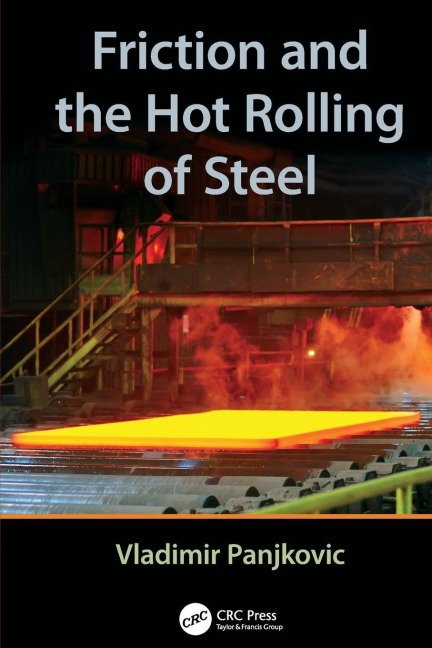
This text offers a systematic presentation of the evolution of concepts of friction, and its fundamental causes. It introduces key factors influencing friction in engineering systems. Applying these concepts, experimental observations and phenomena in various processes, readers understand the key frictional phenomena in the large-scale, commercial process of hot steel rolling. The usefulness of the book is not limited to hot rolling. It also provides an understanding of frictional phenomena in other important industrial sectors, such as automotive industry, railway transport, metal cutting and forming.
Vladimir Panjkovic, PhD, graduated with a degree in electrical engineering from the University of Novi Sad, and earned his PhD in materials science and engineering from the University of New South Wales. His fields of work include the applications of artificial intelligence to process control, development and deployment of mathematical models of ironmaking processes and steel rolling, analysis of tribological problems in hot strip rolling, and the design and commissioning of thermal equipment. Panjkovic has been awarded the BlueScope Steel Research Excellence Award; the National Project Excellence Award in Automation, Control and Instrumentation; and the John A. Brodie medal in chemical engineering.
Early Studies of Friction. The Eighteenth Century. The Nineteenth Century. The Twentieth Century and Beyond. Roughness and Friction. Liquid Lubrication, Stribeck Curve and the Friction-Velocity Dependence. Solid Lubricants. Modelling of Friction in Control Engineering. Modelling of Macroscopic Friction. Friction on the Atomic and Molecular Scales. Tribological Properties of Oxidised Metals and Carbides. Chemical Composition and Microstructure of the Shells of HSS, HiCr and ICDP Work Rolls. Presence and Behaviour of Oxides in Roll Gap. The Impact of Roll Wear on Friction. Friction Evolution over Schedules and Campaigns. Relation between Friction and the Chemical Composition of Rolls. Mathematical Models of Friction in Steel Rolling. Appendices. References.