Und dann auf "Zum Home-Bildschirm [+]".

Stöbern
genialokal zum Startbildschirm hinzufügen
Installieren Sie die genialokal App auf Ihrem Startbildschirm für einen schnellen Zugriff und eine komfortable Nutzung.
Installieren Sie die genialokal App auf Ihrem Startbildschirm für einen schnellen Zugriff und eine komfortable Nutzung.
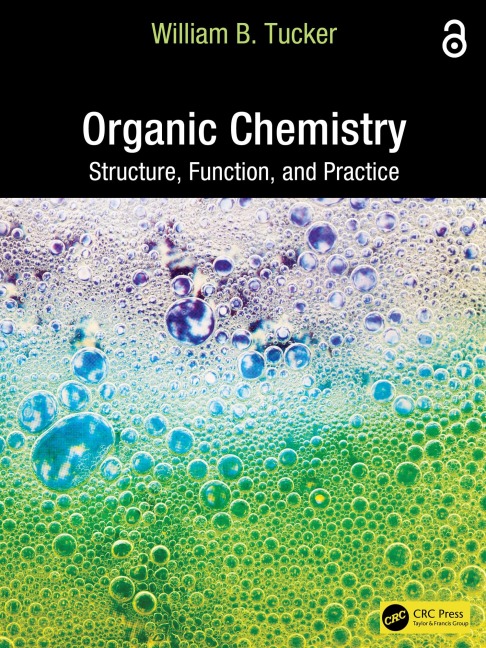
With a focus on organic chemistry students at all levels, problems are incorporated into the body of the text in an effort to engage students more directly in chemistry. Arrowless mechanisms seek to help students develop their electron-pushing skills and intuition through repeated practice. By design this volume is more actively engaging than a traditional textbook. In addition, the historical development of ideas is presented to help frame and center these concepts for the reader. Primary and summative sources are given for all topics covered. The sources provide definitive information for the reader and ensure that all information is supported by peer-reviewed, experimental sources. Features: - The development of key ideas is presented in their historical context. - All information presented is supported through citations to chemical literature - Problems are incorporated into the body of the text, including arrowless mechanisms which encourage students to engage more actively and to develop their electron-pushing skills and intuition. - International Union of Pure and Applied Chemistry style and technical guidelines are followed throughout the text. - The problems, text, and presentation are based on years of classroom refinement of teaching pedagogy.
Dr William Tucker - his passion for chemistry was inspired by his high school teacher, Gary Osborn. He left Maine to pursue Chemistry at Middlebury College, and after graduating in 2010 he decided to pursue a PhD in organic chemistry at the University of Wisconsin-Madison. At the University of Wisconsin-Madison, he worked in the laboratory of Dr Sandro Mecozzi, where he developed semifluorinated triphilic surfactants for hydrophobic drug delivery. After earning his PhD in 2015, he took a fellowship at Boston University as a Postdoctoral Faculty Fellow. There he co-taught organic chemistry while working in the laboratory of Dr John Caradonna. In the Caradonna laboratory, he worked on developing a surface-immobilized iron-oxidation catalyst for the oxidation of C-H bonds using dioxygen from the air as the terminal oxidant. Throughout all of this work, his passion has always been for teaching and working with students both in and out of the classroom. He has been lucky for the past six years to work at Concord Academy, where his students have, through their questions, pushed him to think deeper and more critically about chemistry. Their curiosity inspires him, and their inquisitiveness inspired his writing.
Chapter 01 Introduction Chapter 02 Electrons, bonding, and structure Chapter 03 Alkanes, cycloalkanes, and nomenclature fundamentals Chapter 04 Arrow pushing and solvent Chapter 05 Radical reactions Chapter 06 Stereochemistry Chapter 07 Infrared spectroscopy Chapter 08 Mass spectrometry Chapter 09 Nuclear magnetic resonance Chapter 10 Acids and bases Chapter 11 Alkene structure and nomenclature Chapter 12 Electrophilic addition to alkenes Chapter 13 Reactions of alkynes Chapter 14 Nucleophilic substitution and B-elimination reactions Chapter 15 Alcohols Chapter 16 Ethers and epoxides Chapter 17 Organometallic chemistry: magnesium, lithium, copper, and carbenes Chapter 18 Organometallic chemistry: palladium Chapter 19 Aldehydes and ketones Chapter 20 Carboxylic acids Chapter 21 Carboxylic acid derivatives Chapter 22 Enols, enolates, and enamines Chapter 23 Amines Chapter 24 Conjugated diene chemistry Chapter 25 Aromaticity Chapter 26 Aromatic substitution Common organic functional groups and nomenclature Index
Dieses eBook wird im PDF-Format geliefert und ist mit einem Adobe Kopierschutz (DRM) versehen. Sie können dieses eBook mit allen Geräten lesen, die das PDF-Format und den Adobe Kopierschutz (DRM) unterstützen.
Zum Beispiel mit den folgenden Geräten:
• tolino Reader
Laden Sie das eBook direkt über den Reader-Shop auf dem tolino herunter oder übertragen Sie das eBook auf Ihren tolino mit einer kostenlosen Software wie beispielsweise Adobe Digital Editions.
• Sony Reader & andere eBook Reader
Laden Sie das eBook direkt über den Reader-Shop herunter oder übertragen Sie das eBook mit der kostenlosen Software Sony READER FOR PC/Mac oder Adobe Digital Editions auf ein Standard-Lesegeräte mit epub- und Adobe DRM-Unterstützung.
• Tablets & Smartphones
Möchten Sie dieses eBook auf Ihrem Smartphone oder Tablet lesen, finden Sie hier unsere kostenlose Lese-App für iPhone/iPad und Android Smartphone/Tablets.
• PC & Mac
Lesen Sie das eBook direkt nach dem Herunterladen mit einer kostenlosen Lesesoftware, beispielsweise Adobe Digital Editions, Sony READER FOR PC/Mac oder direkt über Ihre eBook-Bibliothek in Ihrem Konto unter „Meine eBooks“ - „online lesen“.
Schalten Sie das eBook mit Ihrer persönlichen Adobe ID auf bis zu sechs Geräten gleichzeitig frei.
Bitte beachten Sie, dass die Kindle-Geräte das Format nicht unterstützen und dieses eBook somit nicht auf Kindle-Geräten lesbar ist.