Und dann auf "Zum Home-Bildschirm [+]".

Stöbern
genialokal zum Startbildschirm hinzufügen
Installieren Sie die genialokal App auf Ihrem Startbildschirm für einen schnellen Zugriff und eine komfortable Nutzung.
Installieren Sie die genialokal App auf Ihrem Startbildschirm für einen schnellen Zugriff und eine komfortable Nutzung.
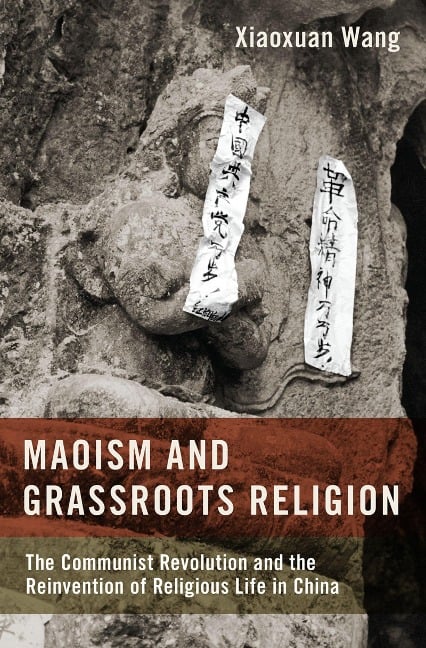
Maoism and Grassroots Religion explores grassroots religious life under and after Mao in Rui'an County, Wenzhou of southeast China, a region widely known for its religious vitality. Drawing from unexplored local state archives, records of religious institutions, memoirs, and interviews, it tells the story of local communities' encounter with the Communist revolution, and its consequences, especially competition and struggles for religious property and ritual space. Rather than being totally disrupted, Xiaoxuan Wang shows, religious life under Mao was characterized by remarkable variety and unevenness and was contingent on the interactions of local dynamics with Maoist campaigns--including land reform, the Great Leap Forward, and the Cultural Revolution. The revolutionary experience strongly determined the trajectories and development patterns of different religions, inter-religious dynamics, and state-religion relationships in the post-Mao era. Wang goes beyond the image of totalistic control and suppression, to show how Maoism is relevant to religious revitalization in the post-Mao era and, more broadly, the modern fate of Chinese religions and secularism in East Asia. Maoism permanently altered the religious landscape in China, especially by inadvertently promoting the localization and even (in some areas) expansion of Protestant Christianity, as well as the reinvention of traditional communal religion. Contrary to the popular image of total suppression and disruption during the Mao years, this book shows that religious changes under Mao were highly complex and contingent on a confluence of political campaigns, local politics and community responses.The post-Mao religious revival had deep historical roots in the Mao years, Wang argues, and cannot be explained by contemporary economic motives and cultural logics alone. This book calls for a new understanding of Maoism and secularism in the People's Republic of China.
Xiaoxuan Wang is a historian of modern and late imperial China. His research interests include communal religion, Christianity, and the Chinese diaspora in Europe and the US. He received his Ph.D. from Harvard University in 2015.
List of Maps, Figures and Photos Acknowledgements Translations, Characters, and Abbreviations Introduction Chapter One: Revolution and Religion: The Pre-1949 Encounter Chapter Two: The Land Revolution and Religious Communities in the Early 1950s Chapter Three: The Contests for Communal Temples in the Early 1950s to the Mid-1970s Chapter Four: Destruction and Renewal: Christian Churches from the Early 1950s to the Mid-1960s Chapter Five: Diversification and Unification: Protestant Churches during the Cultural Revolution Chapter Six: Mixed Blessings: Growth and Schisms among Protestant Churches, 1978-2014 Chapter Seven: Déjà Vu? -The Temple Reclamation Movement and the Revitalization of Rural Organizations, 1978-2014 Conclusion Chinese Term List Bibiliography Index
Dieses eBook wird im PDF-Format geliefert und ist mit einem Adobe Kopierschutz (DRM) versehen. Sie können dieses eBook mit allen Geräten lesen, die das PDF-Format und den Adobe Kopierschutz (DRM) unterstützen.
Zum Beispiel mit den folgenden Geräten:
• tolino Reader
Laden Sie das eBook direkt über den Reader-Shop auf dem tolino herunter oder übertragen Sie das eBook auf Ihren tolino mit einer kostenlosen Software wie beispielsweise Adobe Digital Editions.
• Sony Reader & andere eBook Reader
Laden Sie das eBook direkt über den Reader-Shop herunter oder übertragen Sie das eBook mit der kostenlosen Software Sony READER FOR PC/Mac oder Adobe Digital Editions auf ein Standard-Lesegeräte mit epub- und Adobe DRM-Unterstützung.
• Tablets & Smartphones
Möchten Sie dieses eBook auf Ihrem Smartphone oder Tablet lesen, finden Sie hier unsere kostenlose Lese-App für iPhone/iPad und Android Smartphone/Tablets.
• PC & Mac
Lesen Sie das eBook direkt nach dem Herunterladen mit einer kostenlosen Lesesoftware, beispielsweise Adobe Digital Editions, Sony READER FOR PC/Mac oder direkt über Ihre eBook-Bibliothek in Ihrem Konto unter „Meine eBooks“ - „online lesen“.
Schalten Sie das eBook mit Ihrer persönlichen Adobe ID auf bis zu sechs Geräten gleichzeitig frei.
Bitte beachten Sie, dass die Kindle-Geräte das Format nicht unterstützen und dieses eBook somit nicht auf Kindle-Geräten lesbar ist.