Und dann auf "Zum Home-Bildschirm [+]".

Stöbern
genialokal zum Startbildschirm hinzufügen
Installieren Sie die genialokal App auf Ihrem Startbildschirm für einen schnellen Zugriff und eine komfortable Nutzung.
Installieren Sie die genialokal App auf Ihrem Startbildschirm für einen schnellen Zugriff und eine komfortable Nutzung.
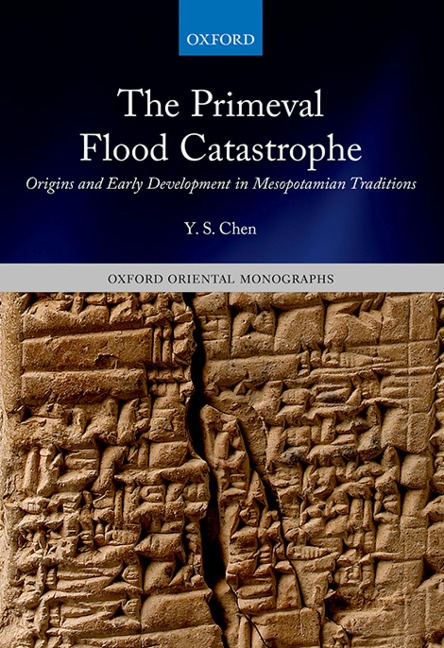
Previous research on Mesopotamian Flood traditions tended to focus on a few textual sources. How the traditions originated and developed as a whole has not been seriously investigated. By systematically examining a large body of relevant cuneiform sources of diverse genres from the Early Dynastic III period (ca. 2600-2350 B.C.) to the end of the first millennium B.C., this book observes that it is during the Old Babylonian period (ca. 2000-1600) and classical attestations of the Flood traditions are found. On linguistic, conceptual and literary-historical grounds, the book argues that the Flood traditions emerged relatively late in Sumerian traditions. It traces different evolutionary stages of the Flood traditions, from the emergence of the Flood motif within the socio-political and cultural contexts of the early Isin dynasty (ca. 2017-1896 B.C.), to the diverse mythological representations of the motif in literary traditions, to the historicisation of the motif in chronography, and finally to the interactions between various strands of the Flood traditions and other Mesopotamian literary traditions, such as Sumerian and Babylonian compositions about Gilgames.
By uncovering the processes through which the Flood traditions were constructed, the book offers a valuable case study on the complex and dynamic relationship between myth-making, the development of literature, the rise of historical consciousness and historiography, and socio-political circumstances in the ancient world. The origins and development of the Flood traditions examined in the book, furthermore, represent one of the best documented examples illustrating the continuities and changes in Mesopotamian intellectual, linguistic, literary, socio-political and religious history over the course of two and a half millennia.
Y. S. Chen, Research Fellow in Ancient Near Eastern Studies, Wolfson College, University of Oxford
- Note on Transliteration and Translation - Relevant Dates of Ancient Mesopotamia - Map of the Ancient Near East - Map of Ancient Mesopotamia - Introduction - 1: Flood Terminology - 2: The Primeval Flood Catastrophe Motif - 3: Antediluvian Traditions - 4: The Flood Epic - Conclusion
Dieses eBook wird im PDF-Format geliefert und ist mit einem Adobe Kopierschutz (DRM) versehen. Sie können dieses eBook mit allen Geräten lesen, die das PDF-Format und den Adobe Kopierschutz (DRM) unterstützen.
Zum Beispiel mit den folgenden Geräten:
• tolino Reader
Laden Sie das eBook direkt über den Reader-Shop auf dem tolino herunter oder übertragen Sie das eBook auf Ihren tolino mit einer kostenlosen Software wie beispielsweise Adobe Digital Editions.
• Sony Reader & andere eBook Reader
Laden Sie das eBook direkt über den Reader-Shop herunter oder übertragen Sie das eBook mit der kostenlosen Software Sony READER FOR PC/Mac oder Adobe Digital Editions auf ein Standard-Lesegeräte mit epub- und Adobe DRM-Unterstützung.
• Tablets & Smartphones
Möchten Sie dieses eBook auf Ihrem Smartphone oder Tablet lesen, finden Sie hier unsere kostenlose Lese-App für iPhone/iPad und Android Smartphone/Tablets.
• PC & Mac
Lesen Sie das eBook direkt nach dem Herunterladen mit einer kostenlosen Lesesoftware, beispielsweise Adobe Digital Editions, Sony READER FOR PC/Mac oder direkt über Ihre eBook-Bibliothek in Ihrem Konto unter „Meine eBooks“ - „online lesen“.
Schalten Sie das eBook mit Ihrer persönlichen Adobe ID auf bis zu sechs Geräten gleichzeitig frei.
Bitte beachten Sie, dass die Kindle-Geräte das Format nicht unterstützen und dieses eBook somit nicht auf Kindle-Geräten lesbar ist.