Und dann auf "Zum Home-Bildschirm [+]".

Stöbern
genialokal zum Startbildschirm hinzufügen
Installieren Sie die genialokal App auf Ihrem Startbildschirm für einen schnellen Zugriff und eine komfortable Nutzung.
Installieren Sie die genialokal App auf Ihrem Startbildschirm für einen schnellen Zugriff und eine komfortable Nutzung.

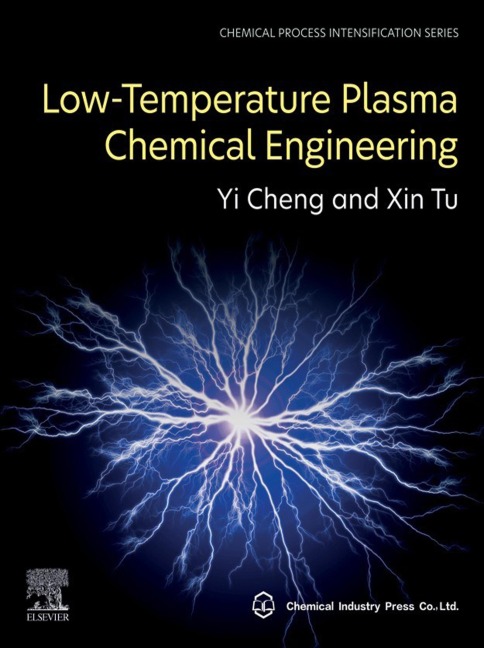
Low-Temperature Plasma Chemical Engineering bridges the gap between the plasma and chemical engineering communities. It includes principles and mechanisms of plasma process intensification, novel plasma reactor and process design, and process optimization. The book highlights various plasma chemical processes, such as oxidation of volatile organic compounds (VOCs), methane reforming, CO2 conversion, and biomass tar reforming. It also discusses nitrogen fixation, plasma agriculture, and plasma biotechnology. The book further explores advanced oxidation processes, organic synthesis in microchannel reactors, electrostatic precipitation, plasma pyrolysis of coal into acetylene, synthesis of nanomaterials and ultrafine powders, and solid waste treatment.It brings together state-of-the-art research and development in advanced low-temperature plasma chemical engineering technologies. It also addresses challenges and future perspectives in this emerging area. Low-Temperature Plasma Chemical Engineering is a valuable resource for scientists, engineers, technicians, and students from various research backgrounds, including plasma physics, plasma chemistry, chemical engineering, energy engineering, materials science and engineering, environmental engineering, and electrical engineering.
- Covers the fundamentals and applications of plasma process intensification and plasma-enhanced chemical processes, bridging the gap between the plasma community and chemical engineering community- Summarizes recent advances in plasma chemical engineering technologies and discusses challenges and future perspectives in plasma chemical engineering- Written by a group of well-known scientists and experts active in low temperature plasma engineering
Prof. Yi Cheng-received his B.Sc. and Ph.D. degrees in Chemical Engineering from Tsinghua University in 1994 and 2000.-He worked as a research fellow at Delft University of Technology (11/1998-11/2000), and then as a postdoc research associate at University of Western Ontario (02/2001-03/2003). In March 2003, he joined Tsinghua University as an associate professor, and was promoted to full professor in December 2007. His research interests lie in the field of multiphase reactor engineering in relation to the applications for energy, environment and materials, especially using unconventional means of process intensification (i.e., plasmas and confined micro-channel or micro-droplets) to solve reaction engineering problems.Prof. Xin Tu is Chair of Plasma Catalysis in the Department of Electrical Engineering and Electronics at the University of Liverpool, UK. He received PhD in Physics from CORIA CNRS UMR 6614 (University of Rouen), France and PhD in Thermal Engineering from Zhejiang University, China in 2007. He was a Postdoctoral Fellow with the Centre for Surface Chemistry and Catalysis at Katholieke Universiteit Leuven, Belgium (1/2008 to 8/2009) before joined the University of Manchester (UK) as a Postdoc Research Associate in the School of Chemistry (9/2009-2/2012). He was appointed as a Lecturer at the University of Liverpool in 2012 and was promoted to Professor in 2019. He has been working on interdisciplinary research at the interface of plasma science and chemical engineering directed towards environmental clean-up, fuel and chemical synthesis, and nuclear decommissioning.
1. Introduction2. Plasma reforming of tars from biomass gasification3. Plasma-catalytic oxidation of VOCs4. Plasma conversion of CO25. From electrostatic precipitation to non-thermal plasma6. Cold atmospheric plasma biotechnology7. Gas-liquid plasma-based advanced oxidation process8. Gas-liquid plasmas in micro-channels for organic synthesis9. Plasma nitrogen fixation10. Plasma-catalytic reforming of methane11. Thermal plasma pyrolysis of coal for the synthesis of acetylene12. Thermal plasma chemical vapor deposition for the preparation of nanomaterials13. Thermal plasma intensified process for the production of ultrafine powders14. Thermal plasma solid waste treatment