Und dann auf "Zum Home-Bildschirm [+]".

Stöbern
genialokal zum Startbildschirm hinzufügen
Installieren Sie die genialokal App auf Ihrem Startbildschirm für einen schnellen Zugriff und eine komfortable Nutzung.
Installieren Sie die genialokal App auf Ihrem Startbildschirm für einen schnellen Zugriff und eine komfortable Nutzung.
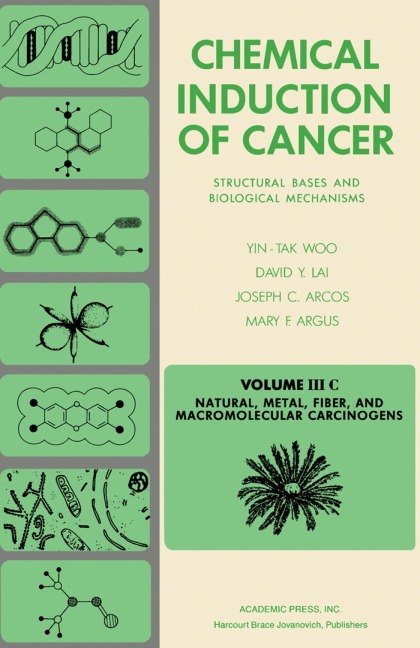
Chemical Induction of Cancer: Structural Bases and Biological Mechanisms, Volume IIIC: Natural, Metal, Fiber, and Macromolecular Carcinogens covers structure-carcinogenicity relationships of carcinogenic mycotoxins, carcinogenic substances generated by plants, carcinogenic metals and metalloids, and foreign-body carcinogens. The book discusses the metabolism and mechanism of carcinogenic action, physicochemical properties, other biological activities (principally mutagenicity and teratogenicity), modification of carcinogenic activity, formation and environmental significance. The text also describes the carcinogenic water-soluble high polymers and explores the intriguing problems of the carcinogenic effect of osmotic imbalance in tissue microenvironment, as well as of spontaneous malignant transformation occurring in cell cultures in vitro. Studies on tumor induction and carcinogenesis modification by nonviral nucleic acids, by nucleases, proteases, histones, and by antigenic stimulation as well as by antibodies are also considered. The book further tackles tumor-released factors as possible modifiers of carcinogenesis. The text will prove invaluable to chemists and people involved in cancer research.
General PlanPrefaceAcknowledgmentsPart III (Continued) Structure-Activity Relationships of Chemical Carcinogens. Effect of Reactivity, Molecular Geometry, and Metabolism on Carcinogenic Activity 5 . Structure-Activity Relationships 5.3 Naturally Occurring Carcinogens 5.4 Inorganic Carcinogens: Metals, Metalloids, and Other Inorganic Chemicals 5.5 Foreign-Body Carcinogens: Fibers, Silica, and Implants 5.6 Special Topics 5.7 Nonviral Biological Carcinogens and Modifiers of Carcinogenesis Appendix I: Novel Types of Carcinogens and Updating "News" Items A. Novel Types of Carcinogens B. Updating "News" Items References to Appendix I Special Reviews Pertaining to Appendix I Proof-stage Notes to Appendix I Appendix II: Nitroarenes Introduction Occurrence and Formation Genotoxicity and Mutagenicity in Bacteria Basis for the Mutagenicity of Nitroarenes in Bacteria Genotoxicity and Mutagenicity in Mammalian Cells Metabolism by Mammalian Cells and by Cell-Free Extracts In Vivo Genotoxicity Oncogenic Transformation Carcinogenicity in Animals Metabolism and Biodisposition in Whole Animals Nitroarene-Induced Microsomal Monooxygenases Competition of Nitroarenes with TCDD for Binding Sites References to Appendix II Source Book for Appendix II Appendix III: Mutagens/Carcinogens in Pyrolysates of Amino Acids and Proteins and in Cooked Foods: Heterocyclic Aromatic Amines Historical Background Physicochemical Properties Synthesis Mutagenicity Carcinogenicity Other Biological Properties Metabolism and Mechanism of Carcinogenesis Quantification and Human Risk Future Prospects References to Appendix III Source Books and Major Reviews for Appendix III Appendix IV: Decontamination and Destruction of Chemical Carcinogens Introduction Waste Disposal Handling Considerations Destruction Procedures Conclusion References to Appendix IV Appendix V: General Principles for the Prediction of Potential Carcinogenic Activity of Chemical Compounds Introduction Criteria for Suspecting a Chemical Agent of Having Carcinogenic Activity Overview of Interactions Determining Tumor Outcome in the Carcinogenic Process Physical and Chemical Properties Modulating the Carcinogenic Potential of a Chemical Compound Structural Criteria Functional Criteria Possible Use of Artificial Intelligence in the Prediction of Suspected Carcinogens References to Appendix V Special Reviews Pertaining to Appendix V Appendix VI: Evaluation of Scientific Uncertainty: Semantic-Probabilistic View of Narrative Expressions-An Aid to Hazard Assessment Introduction Assessing Chemical Hazard Expressing Chemical Hazard Potential Assessing the Use of Narrative Probability Expressions Analysis of the Survey Results Standardization Scheme Best Estimate versus Uncertainty: Separating the Assessment into Two Segments Conclusions References to Appendix VIIndexCumulative Chemicals Index to Volumes IIA-IIIC