Und dann auf "Zum Home-Bildschirm [+]".

Stöbern
genialokal zum Startbildschirm hinzufügen
Installieren Sie die genialokal App auf Ihrem Startbildschirm für einen schnellen Zugriff und eine komfortable Nutzung.
Installieren Sie die genialokal App auf Ihrem Startbildschirm für einen schnellen Zugriff und eine komfortable Nutzung.
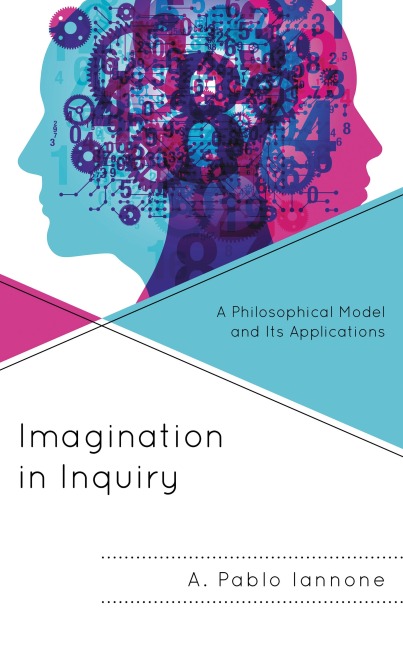
Imagination in Inquiry: A Philosophical Model and Its Applications investigates the nature, kinds, component elements, functions, scope, and uses of the imagination involved in inquiry. It further discusses how these kinds and functions vary and interact depending on the context of inquiries carried out in philosophy and its branches-from the philosophy of science and the philosophy of technology to ethics, sociopolitical philosophy, and aesthetics-and institutions like science, technology, art, and education. Using a homeostatic model, A. Pablo Iannone advances a conception of the imagination as a disposition to search for answers to various types of problems, abstract or concrete, theoretical or practical faced in inquiry. The book treats this as a working characterization, though it develops progressively clearer, more precise, and less ambiguous meanings. All along, the primary concern of the author-as well as of contributors Alejandra Iannone and Rocci Luppicini-is with the moral, aesthetic, logical, communicative, scientific, technological, artistic, literary, and philosophical uses and roles of the imagination. The book's primary focus is not just on such things as the capacity to generate mental images, but especially on the ability to discover and create, anticipate and envision, entertain and manage.
A. Pablo Iannone is emeritus professor of philosophy at Central Connecticut State University.
Part I: Conceptualizations
Chapter One: A Conceptual Cartography of Inquiry, the Imagination, and their Interconnected Roles
Chapter Two: Dynamics of the Imagination
Chapter Three: The Imagination's Elements: Motives, Abilities, Circumstances, Instruments, and Functions
Chapter Four: The Interactive Imagination
Part II: The Imagination: Philosophical And Practical
Chapter Five: The Philosophical Imagination
Chapter Six: Wonder, Reason, and the Imagination in Philosophical Inquiry Contrasted with Inquiry in Art, Literature, and Science
Chapter Seven: Inquiry and the Imagination's Balancing Act
Chapter Eight: Basic Philosophical Attitudes and the Imagination
Part III: Comparative Assessments
Chapter Nine: Feedback Loops, Today's World, and the Practical Imagination
Chapter Ten: Analogies and Disanalogies between the Roles of the Imagination in Inquiries in Philosophy, the Arts, Sciences, Other Branches of Inquiry, and Everyday Life
Part IV: Applications and Tests of This Book's Model
Chapter Elev
Dieses eBook wird im PDF-Format geliefert und ist mit einem Adobe Kopierschutz (DRM) versehen. Sie können dieses eBook mit allen Geräten lesen, die das PDF-Format und den Adobe Kopierschutz (DRM) unterstützen.
Zum Beispiel mit den folgenden Geräten:
• tolino Reader
Laden Sie das eBook direkt über den Reader-Shop auf dem tolino herunter oder übertragen Sie das eBook auf Ihren tolino mit einer kostenlosen Software wie beispielsweise Adobe Digital Editions.
• Sony Reader & andere eBook Reader
Laden Sie das eBook direkt über den Reader-Shop herunter oder übertragen Sie das eBook mit der kostenlosen Software Sony READER FOR PC/Mac oder Adobe Digital Editions auf ein Standard-Lesegeräte mit epub- und Adobe DRM-Unterstützung.
• Tablets & Smartphones
Möchten Sie dieses eBook auf Ihrem Smartphone oder Tablet lesen, finden Sie hier unsere kostenlose Lese-App für iPhone/iPad und Android Smartphone/Tablets.
• PC & Mac
Lesen Sie das eBook direkt nach dem Herunterladen mit einer kostenlosen Lesesoftware, beispielsweise Adobe Digital Editions, Sony READER FOR PC/Mac oder direkt über Ihre eBook-Bibliothek in Ihrem Konto unter „Meine eBooks“ - „online lesen“.
Schalten Sie das eBook mit Ihrer persönlichen Adobe ID auf bis zu sechs Geräten gleichzeitig frei.
Bitte beachten Sie, dass die Kindle-Geräte das Format nicht unterstützen und dieses eBook somit nicht auf Kindle-Geräten lesbar ist.