Und dann auf "Zum Home-Bildschirm [+]".

Stöbern
genialokal zum Startbildschirm hinzufügen
Installieren Sie die genialokal App auf Ihrem Startbildschirm für einen schnellen Zugriff und eine komfortable Nutzung.
Installieren Sie die genialokal App auf Ihrem Startbildschirm für einen schnellen Zugriff und eine komfortable Nutzung.
Ihr gewünschter Artikel ist in 0 Buchhandlungen vorrätig - wählen Sie hier eine Buchhandlung in Ihrer Nähe aus:

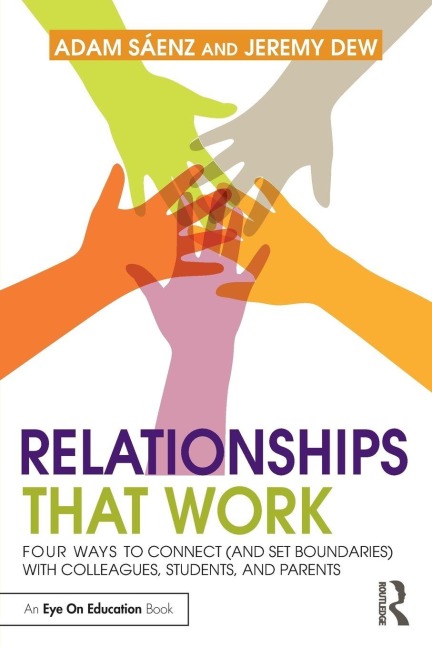
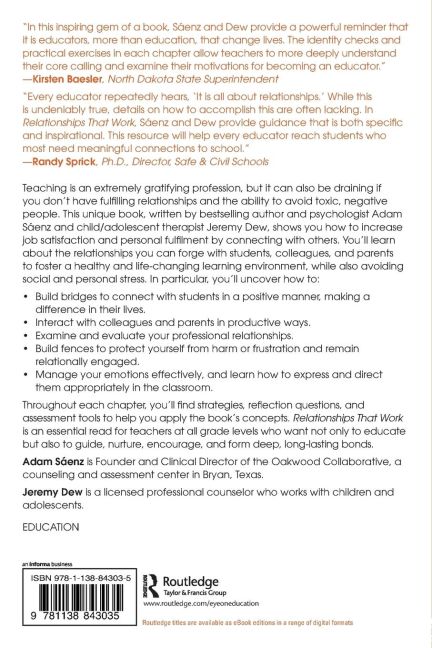
Teaching is an extremely gratifying profession, but it can also be draining if you don't have fulfilling relationships and the ability to avoid toxic, negative people. This unique book, written by bestselling author and psychologist Adam Sáenz and child/adolescent therapist Jeremy Dew, shows you how to increase job satisfaction and personal fulfilment by connecting with others. You'll learn about the relationships you can forge with students, colleagues, and parents to foster a healthy and life-changing learning environment, while also avoiding social and personal stress. In particular, you'll uncover how to:
Build bridges to connect with students in a positive manner, making a difference in their lives.
Interact with colleagues and parents in productive ways.
Examine and evaluate your professional relationships.
Build fences to protect yourself from harm or frustration and remain relationally engaged.
Manage your emotions effectively, and learn how to express and direct them appropriately in the classroom.
Throughout each chapter, you'll find strategies, reflection questions, and assessment tools to help you apply the book's concepts. Relationships That Work is an essential read for teachers at all grade levels who want not only to educate but also to guide, nurture, encourage, and form deep, long-lasting bonds.
Adam Sáenz is Founder and Clinical Director of the Oakwood Collaborative, a counseling and assessment center in Bryan, Texas. Jeremy Dew is a licensed professional counselor who works with children and adolescents.
Introduction: A Tale of Two Campuses Chapter 1: The Case for Relationships Great Programming Skills: But Can You Interact With Other Humans? What Is Normal Versus What Is Healthy Characteristics of Unhealthy Relationships We Are Here to Help You Reflecting: What Am I Doing Here? Directing: How Do I Manage My Emotions? Connecting: Can I Build a Bridge? Protecting: Can I Build a Fence? The Case of the Teacher Who Exploded Chapter 2: Reflecting: Why Am I Here? Jobs, Careers, and Callings A Bit More About Calling Meet Martha Identifying Your Right Why Identifying My Calling: A Sentence Completion Exercise Two More Sentences: Creating Your Personal Mission Statement Sample Sentence Completion Responses Personal Mission Statement How Reflecting On Calling Impacts Relationships Key Point Summary Chapter 3: Directing: Can I Manage My Emotions? Emotional Constipation Experiencing Emotions Expressing Emotions Meet Ms. Dunn The Environment/Feeling/Thought Connection How Directing Impacts Relationships Key Point Summary Chapter 4: Connecting: Can I Build A Bridge? About Good Bridge Builders Differences and the Protective Mechanism They Evoke Do You Feel Like We Do (And See Like We Do?) Looking Past The Thing About You That Bothers Me Meet Coach Williams Connecting and Bridge-Building: A Readiness Assessment Key Point Summary Chapter 5: Protecting: Can I Build a Fence? What is Building a Fence in Relationships? About the Unskilled Fence Builder What Is and Is Not Mine? The Case of the Two Teachers Protecting and Fence-Building: A Readiness Assessment Key Point Summary Chapter 6: Towards Integration Practice #1: Reflecting on calling Practice #2: Directing my emotion Practice #3: Connecting by building bridges across difference Practice #4: Protecting by building fences