Und dann auf "Zum Home-Bildschirm [+]".

Stöbern
genialokal zum Startbildschirm hinzufügen
Installieren Sie die genialokal App auf Ihrem Startbildschirm für einen schnellen Zugriff und eine komfortable Nutzung.
Installieren Sie die genialokal App auf Ihrem Startbildschirm für einen schnellen Zugriff und eine komfortable Nutzung.
Ihr gewünschter Artikel ist in 0 Buchhandlungen vorrätig - wählen Sie hier eine Buchhandlung in Ihrer Nähe aus:

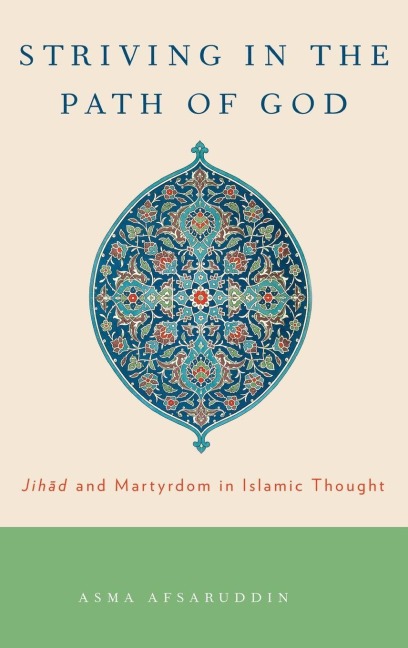
In popular and academic literature, jihad is predominantly assumed to refer to armed combat, and Muslim martyrdom is understood to be invariably of the military kind. This perspective, derived mainly from legal texts, has led to discussions of jihad and martyrdom primarily as concepts with fixed, universal meanings divorced from the socio-political circumstances in which they have been deployed through time. This book, however, studies in a more holistic manner the range of significations that can be ascribed to the term jihad from the earliest period to the contemporary period against the backdrop of specific historical and political circumstances that frequently mediated the meanings of this critical term. Instead of privileging the juridical literature, the book canvasses a more diverse array of texts - Qur'an, tafsir, hadath, edifying and hortatory literature -- to recuperate a more nuanced and multifaceted understanding of both jihad and martyrdom through time. As a result, many conventional and monochromatic assumptions about the military jihad and martyrdom are challenged and undermined. Asma Afsaruddin argues that the notion of jihad as primarily referring to armed combat is in fact relatively late. A comprehensive interrogation of varied sources, she shows, reveals early and multiple competing definitions of a word that translates literally to "striving on the path of God."
Asma Afsaruddin is Professor of Islamic Studies and Chairperson of the Department of Near Eastern Languages and Cultures at Indiana University, Bloomington. She is the author of The First Muslims: History and Memory (2008) and Excellence and Precedence: Medieval Islamic Discourse on Legitimate Leadership (2002).
- Introduction
- Chapter 1: Striving "for," "in," and "in the path of" God: Qur'anic Imperatives in the Meccan Period
- Chapter 2: Fighting in the Path of God: A Religious and Moral Obligation
- Chapter 3: The Ethics of Fighting, Refraining from Fighting, and Peacemaking
- Chapter 4: Dying in the Path of God: Exegeses of Martyrdom
- Chapter 5: Jihad and Martyrdom Compared in Early and Later Hadith Literature
- Chapter 6: Jihad and Martyrdom in Early and Late Treatises on the Merits of Jihad
- Chapter 7: The Excellences of Patient Forbearance: Counter-Narratives on Striving in the Path of God
- Chapter 8: Modern and Contemporary Debates on Jihad and Martyrdom I: Political and Militant Perspectives
- Chapter 9: Modern and Contemporary Debates on Jihad and Martyrdom II: Privileging History, Context, and Polysemy
- Conclusion: Analysis of Texts: A Summation