Und dann auf "Zum Home-Bildschirm [+]".

Stöbern
genialokal zum Startbildschirm hinzufügen
Installieren Sie die genialokal App auf Ihrem Startbildschirm für einen schnellen Zugriff und eine komfortable Nutzung.
Installieren Sie die genialokal App auf Ihrem Startbildschirm für einen schnellen Zugriff und eine komfortable Nutzung.
Ihr gewünschter Artikel ist in 0 Buchhandlungen vorrätig - wählen Sie hier eine Buchhandlung in Ihrer Nähe aus:

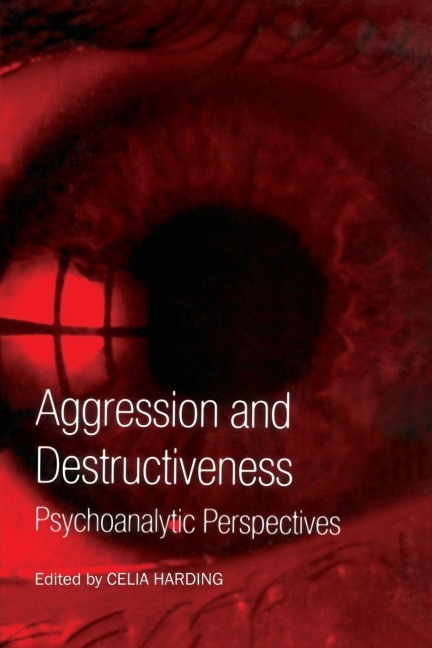
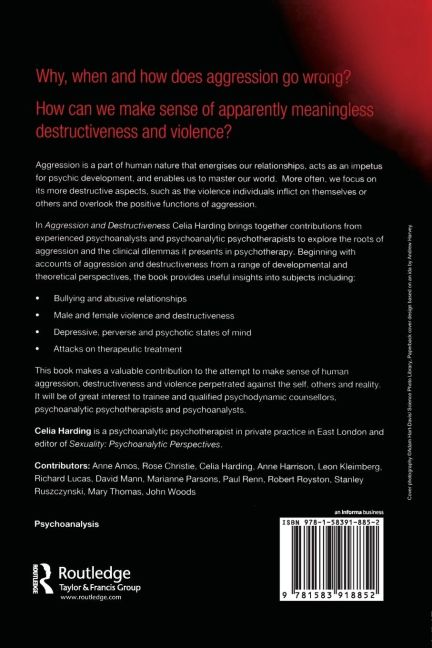
Why, when and how does aggression go wrong?
How can we make sense of apparently meaningless destructiveness and violence
Aggression is a part of human nature that energises our relationships, acts as an impetus for psychic development, and enables us to master our world. More often, we focus on its more destructive aspects, such as the violence individuals inflict on themselves or others and overlook the positive functions of aggression.
In Aggression and Destructiveness Celia Harding brings together contributions from experienced psychoanalysts and psychoanalytic psychotherapists to explore the roots of aggression and the clinical dilemmas it presents in psychotherapy. Beginning with accounts of aggression and destructiveness from a range of developmental and theoretical perspectives, the book provides useful insights into subjects including:
Bullying and abusive relationships
Male and female violence and destructiveness
Depressive, perverse and psychotic states of mind
Attacks on therapeutic treatment
This book makes a valuable contribution to the attempt to make sense of human aggression, destructiveness and violence perpetrated against the self, others and reality. It will be of great interest to trainee and qualified psychodynamic counsellors, psychoanalytic psychotherapists and psychoanalysts.
Celia Harding is a Psychoanalytic Psychotherapist in private practice in East London and editor of Sexuality: Psychoanalytic Perspectives.
Part I: Mapping the Terrain. Harding, Making Sense of Aggression, Destructiveness and Violence. Royston, Destructiveness: Revenge, Dysfunction or Constitutional Envy? Part II: Developmental and Theoretical Perspectives. Parsons, From Biting Teeth to Biting Wit: The Normative Development of Aggression. Renn, Attachment, Trauma and Violence: Understanding Destructiveness from an Attachment Theory Perspective. Harrison, 'In Pieces': The Effects of the Memory of a Violent Father on a Son's Development. Ruszczynski, The Problem of Certain Psychic Realities: Aggression and Violence as Perverse Solutions. Part III: Destructiveness in Disguise and as Disguise. Mann, Misanthropy and the Broken Mirror of Narcissism: Hatred in the Narcissistic Personality. Harding, The Victim's Revenge: He is 'Crime' and I am 'Punishment' (Rigoletto). Woods, Bullying, Education and the Role of Psychotherapy. Christie, On a Hiding into Nothing? Work with Women Affected by Violence. Kleimberg, Some Reflections on the Connections Between Aggression and Depression. Lucas, Destructive Attacks on Reality and the Self. Amos, 'Poison his Delight': Destructiveness and the Ending of Treatment. Thomas, Absence and Absent-mindedness.