Und dann auf "Zum Home-Bildschirm [+]".

Stöbern
genialokal zum Startbildschirm hinzufügen
Installieren Sie die genialokal App auf Ihrem Startbildschirm für einen schnellen Zugriff und eine komfortable Nutzung.
Installieren Sie die genialokal App auf Ihrem Startbildschirm für einen schnellen Zugriff und eine komfortable Nutzung.
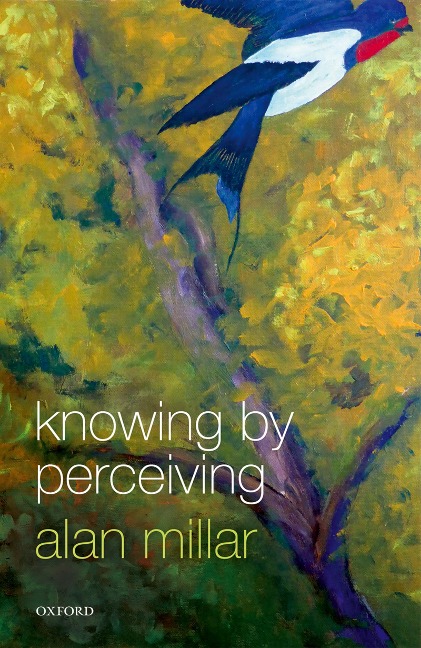
Epistemological discussions of perception usually focus on something other than knowledge. They consider how beliefs arising from perception can be justified. With the retreat from knowledge to justified belief there is also a retreat from perception to the sensory experiences implicated by perception. On the most widely held approach, perception drops out of the picture other than as the means by which we are furnished with the experiences that are supposed to be the real source of justification-experiences that are conceived to be no different in kind from those we could have had if we had been perfectly hallucinating. In this book a radically different perspective is developed, one that explicates perceptual knowledge in terms of recognitional abilities and perceptual justification in terms of perceptually known truths as to what we perceive to be so. Contrary to mainstream epistemological tradition, justified belief is regarded as belief founded on known truths. The treatment of perceptual knowledge is situated within a broader conception of epistemology and philosophical method. Attention is paid to contested conceptions of perceptual experience, to knowledge from perceived indicators, and to the standing of background presuppositions and knowledge that inform our thinking. Throughout, the discussion is sensitive to ways in which key concepts figure in ordinary thinking while remaining resolutely focused on what knowledge is, and not just on how we think of it.
Alan Millar studied philosophy at the University of Edinburgh and then received a PhD from the University of Cambridge. He was appointed to a Lectureship at Stirling in 1971 and was made Professor in 1994; he is now an Emeritus Professor at the University of Stirling. In 2005 he was elected to a Fellowship of the Royal Society of Edinburgh, Scotland's National Academy. He has served on the Executive Committees of the Aristotelian Society and the Royal Institute of Philosophy, and he was President of the Mind Association from 2014 until 2015.
- 1: Epistemology and Philosophical Method - 2: Justified Belief, Reasons, and Evidence - 3: Perception, Experience, and Direct Realism - 4: Perceptual Knowledge and Recognitional Abilities - 5: Perception and the Justification of Belief - 6: Abilities, Competences and Fallibility - 7: Abilities: Further issues - 8: Knowledge from Perceived Indicators and Background Knowledge - 9: Going By What We Know
Dieses eBook wird im PDF-Format geliefert und ist mit einem Adobe Kopierschutz (DRM) versehen. Sie können dieses eBook mit allen Geräten lesen, die das PDF-Format und den Adobe Kopierschutz (DRM) unterstützen.
Zum Beispiel mit den folgenden Geräten:
• tolino Reader
Laden Sie das eBook direkt über den Reader-Shop auf dem tolino herunter oder übertragen Sie das eBook auf Ihren tolino mit einer kostenlosen Software wie beispielsweise Adobe Digital Editions.
• Sony Reader & andere eBook Reader
Laden Sie das eBook direkt über den Reader-Shop herunter oder übertragen Sie das eBook mit der kostenlosen Software Sony READER FOR PC/Mac oder Adobe Digital Editions auf ein Standard-Lesegeräte mit epub- und Adobe DRM-Unterstützung.
• Tablets & Smartphones
Möchten Sie dieses eBook auf Ihrem Smartphone oder Tablet lesen, finden Sie hier unsere kostenlose Lese-App für iPhone/iPad und Android Smartphone/Tablets.
• PC & Mac
Lesen Sie das eBook direkt nach dem Herunterladen mit einer kostenlosen Lesesoftware, beispielsweise Adobe Digital Editions, Sony READER FOR PC/Mac oder direkt über Ihre eBook-Bibliothek in Ihrem Konto unter „Meine eBooks“ - „online lesen“.
Schalten Sie das eBook mit Ihrer persönlichen Adobe ID auf bis zu sechs Geräten gleichzeitig frei.
Bitte beachten Sie, dass die Kindle-Geräte das Format nicht unterstützen und dieses eBook somit nicht auf Kindle-Geräten lesbar ist.