Und dann auf "Zum Home-Bildschirm [+]".

Stöbern
genialokal zum Startbildschirm hinzufügen
Installieren Sie die genialokal App auf Ihrem Startbildschirm für einen schnellen Zugriff und eine komfortable Nutzung.
Installieren Sie die genialokal App auf Ihrem Startbildschirm für einen schnellen Zugriff und eine komfortable Nutzung.
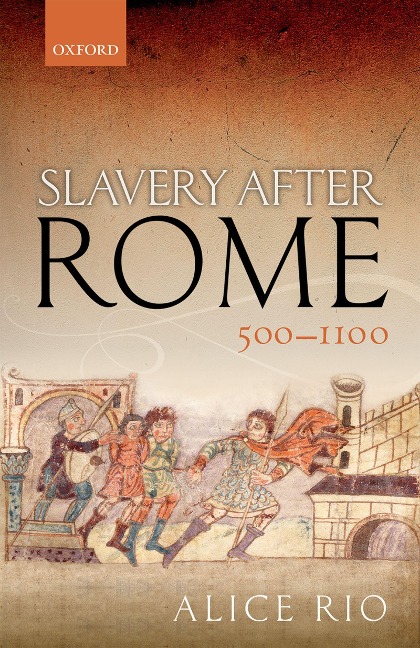
Slavery After Rome, 500-1100 offers a substantially new interpretation of what happened to slavery in Western Europe in the centuries that followed the fall of the Roman Empire. The periods at either end of the early middle ages are associated with iconic forms of unfreedom: Roman slavery at one end; at the other, the serfdom of the twelfth century and beyond, together with, in Southern Europe, a revitalised urban chattel slavery dealing chiefly in non-Christians. How and why this major change took place in the intervening period has been a long-standing puzzle. This study picks up the various threads linking this transformation across the centuries, and situates them within the full context of what slavery and unfreedom were being used for in the early middle ages. This volume adopts a broad comparative perspective, covering different regions of Western Europe over six centuries, to try to answer the following questions: who might become enslaved and why? What did this mean for them, and for their lords? What made people opt for certain ways of exploiting unfree labour over others in different times and places, and is it possible, underneath all this diversity, to identify some coherent trajectories of historical change?
Alice Rio was Junior Research Fellow at New College, Oxford, and Osborn Fellow and College Lecturer at Sidney Sussex College, Cambridge, before joining the History department at King's College London in 2009. She is the author of Legal Practice and the Written Word in the Early Middle Ages (2009), which won the Royal Historical Society Gladstone Prize in 2010, as well as of a number of articles on law, legal practice, and unfreedom in the early middle ages.
- Introduction - Part I: Diversity: ways in and ways out - 1: Slave raiding and slave trading - 2: Self-sale, debt slavery, and penal enslavement - 3: Freedmen and manumission - Part II: Regularities: the logic of diversity - 4: Household slavery and service - 5: Unfree status in estate communities - Part III: The institutional framework: continuity and change - 6: Rights and duties - Conclusion - Bibliography
Dieses eBook wird im PDF-Format geliefert und ist mit einem Adobe Kopierschutz (DRM) versehen. Sie können dieses eBook mit allen Geräten lesen, die das PDF-Format und den Adobe Kopierschutz (DRM) unterstützen.
Zum Beispiel mit den folgenden Geräten:
• tolino Reader
Laden Sie das eBook direkt über den Reader-Shop auf dem tolino herunter oder übertragen Sie das eBook auf Ihren tolino mit einer kostenlosen Software wie beispielsweise Adobe Digital Editions.
• Sony Reader & andere eBook Reader
Laden Sie das eBook direkt über den Reader-Shop herunter oder übertragen Sie das eBook mit der kostenlosen Software Sony READER FOR PC/Mac oder Adobe Digital Editions auf ein Standard-Lesegeräte mit epub- und Adobe DRM-Unterstützung.
• Tablets & Smartphones
Möchten Sie dieses eBook auf Ihrem Smartphone oder Tablet lesen, finden Sie hier unsere kostenlose Lese-App für iPhone/iPad und Android Smartphone/Tablets.
• PC & Mac
Lesen Sie das eBook direkt nach dem Herunterladen mit einer kostenlosen Lesesoftware, beispielsweise Adobe Digital Editions, Sony READER FOR PC/Mac oder direkt über Ihre eBook-Bibliothek in Ihrem Konto unter „Meine eBooks“ - „online lesen“.
Schalten Sie das eBook mit Ihrer persönlichen Adobe ID auf bis zu sechs Geräten gleichzeitig frei.
Bitte beachten Sie, dass die Kindle-Geräte das Format nicht unterstützen und dieses eBook somit nicht auf Kindle-Geräten lesbar ist.