Und dann auf "Zum Home-Bildschirm [+]".

Stöbern
genialokal zum Startbildschirm hinzufügen
Installieren Sie die genialokal App auf Ihrem Startbildschirm für einen schnellen Zugriff und eine komfortable Nutzung.
Installieren Sie die genialokal App auf Ihrem Startbildschirm für einen schnellen Zugriff und eine komfortable Nutzung.

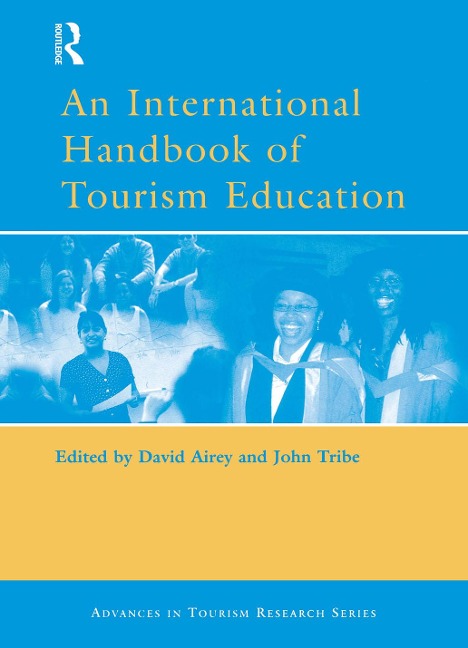
As tourism matures as an academic subject and the number of tourism higher education providers continues to expand world-wide, there is an increasing interest in its educational aspects. At the same time the development of research into education issues related to tourism means that there is now a developing literature on the subject. This international handbook offers a timely evaluation of the sate of the art of tourism higher education.
The book brings together expert contributors from around the world to present current thinking and practice about what is now a major element of education provision world-wide. It is structured round four key themes:
- Curriculum
- International perspective
- Teaching, learning and assessment
- Resources, progression and quality
Its global survey of tourism education offers a comprehensive basis for comparative review. In addition to setting out the development and current provision of tourism education it also addresses cutting edge issues such PhD education, non-formal education, cultural issues in learning, research and teaching, e-learning and e-assessment. It offers practical advice for the design, delivery, evaluation and resourcing of courses and concludes with a reflective agenda of issues for the future.
David Airey, John Tribpson
Part 1 INTRODUCTION; Chapter 1 Introduction, John Tribe, David Airey; Chapter 2 Growth and Development, David Airey; Chapter 3 Overview of Research, John Tribe; Part 2 CURRICULUM; Chapter 4 Tourism, Knowledge and the Curriculum, John Tribe; Chapter 5 Curriculum Theory and Practice: A Case in Online Education, Sheryl Elliott, Ginger Smith; Chapter 6 Curriculum, Development and Conflict: A Case Study of Moldova, John Tribe; Chapter 7 Work Experience and Industrial Links, Graham Busby; Part 3 INTERNATIONAL TOURISM EDUCATION; Chapter 8 Australasia, Brian King, Stephen Craig-Smith; Chapter 9 Brazil and Latin America, Sérgio Leal, Maria Auxiliadora Padilha; Chapter 10 The Caribbean, Acolla Lewis; Chapter 11 China, Wen Zhang, Xixia Fan; Chapter 12 East Africa, Melphon Mayaka; Chapter 13 Germany, Walter Freyer, Michael Hammer, Astrid Piermeier; Chapter 14 India, Shalini Singh, Tej Vir Singh; Chapter 15 The Netherlands, Magiel Venema; Chapter 16 North America, Simon Hudson; Chapter 17 Slovenia, Tanja Mihali?; Chapter 18 South Africa, Melville Saayman; Chapter 19 United Kingdom, David Airey; Part 4 TEACHING, LEARNING AND ASSESSMENT; Chapter 20 Teaching, Dimitrios Stergiou; Chapter 21 The Student Experience, Eugenia Wickens, Alastair Forbes; Chapter 22 Issues in Teaching and Learning, Brian Wheeller; Chapter 23 Assessment, Nina Becket; Chapter 24 Undergraduate Dissertations, Karen A. Smith; Chapter 25 Cultural Issues in Learning, Paul Barron; Chapter 26 e-Learning and e-Assessment, Marianna Sigala; Chapter 27 Teaching and Research, Fiona Jordan; Chapter 28 Community Education, Stroma Cole; Part 5 RESOURCES, PROGRESSION AND QUALITY; Chapter 29 Teachers, Marion Stuart-Hoyle; Chapter 30 Learning Resources, Lyn Bibbings; Chapter 31 Careers and Employment, Adele Ladkin; Chapter 32 Quality Assurance, Derek Robbins; Chapter 33 Postgraduate and Ph.D. Education, Botterill David, Gale Tim; Part 6 POSTSCRIPT; Chapter 34 Practical Issues for Design, Delivery, Evaluation and Resourcing of Courses, Miriam Moir, Lisa Hodgkins; Chapter 35 Issues for the Future, David Airey, John Tribe;