Und dann auf "Zum Home-Bildschirm [+]".

Stöbern
genialokal zum Startbildschirm hinzufügen
Installieren Sie die genialokal App auf Ihrem Startbildschirm für einen schnellen Zugriff und eine komfortable Nutzung.
Installieren Sie die genialokal App auf Ihrem Startbildschirm für einen schnellen Zugriff und eine komfortable Nutzung.
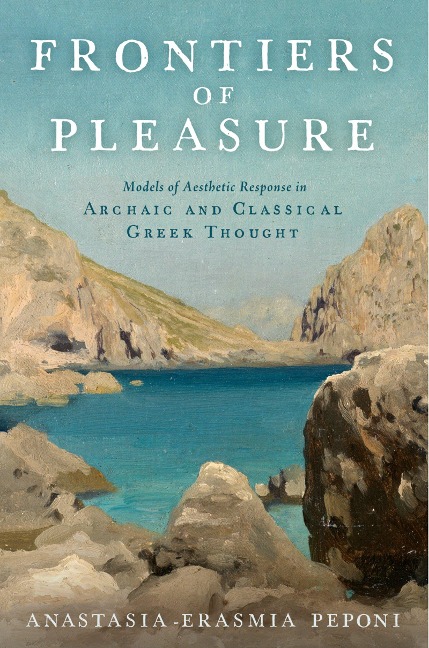
Frontiers of Pleasure calls into question a number of influential modern notions regarding aesthetics by going back to the very beginnings of aesthetic thought in Greece and raising critical issues regarding conceptions of how one responds to the beautiful. Despite a recent rebirth of interest in aesthetics, extensive discussion of this key cluster of topics has been absent. Anastasia-Erasmia Peponi argues that although the Greek language had no formal term equivalent to the "aesthetic," the notion was deeply rooted in Greek thought. Her analysis centers on a dominant aspect of beauty--the aural--associated with a highly influential sector of culture that comprised both poetry and instrumental music, the "activity of the Muses," or mousikê. The main argument relies on a series of close readings of literary and philosophical texts, from Homer and Plato through Kant, Joyce, and Proust. Through detailed attention to such scenes as Odysseus' encounter with the Sirens and Hermes' playing of his lyre for his brother Apollo, she demonstrates that the most telling moments in the conceptualization of the aesthetic come in the Greeks' debates and struggles over intense models of auditory pleasure. Unlike current tendencies to treat poetry as an early, imperfect mode of meditating upon such issues, Peponi claims that Greek poetry and philosophy employed equally complex, albeit different, ways of articulating notions of aesthetic response. Her approach often leads her to partial or total disagreement with earlier interpretations of some of the most well-known Greek texts of the archaic and classical periods. Frontiers of Pleasure thus suggests an alternative mode of understanding aesthetics in its entirety, freed from some modern preconceptions that have become a hindrance within the field.
Anastasia-Erasmia Peponi is Professor of Classics at Stanford University.
Preface 1. Concepts and Terms 2. Tranquility 3. Weeping 4. Fusion 5. Eros I 6. Eros II 7. Coda Bibliography Index
Dieses eBook wird im PDF-Format geliefert und ist mit einem Adobe Kopierschutz (DRM) versehen. Sie können dieses eBook mit allen Geräten lesen, die das PDF-Format und den Adobe Kopierschutz (DRM) unterstützen.
Zum Beispiel mit den folgenden Geräten:
• tolino Reader
Laden Sie das eBook direkt über den Reader-Shop auf dem tolino herunter oder übertragen Sie das eBook auf Ihren tolino mit einer kostenlosen Software wie beispielsweise Adobe Digital Editions.
• Sony Reader & andere eBook Reader
Laden Sie das eBook direkt über den Reader-Shop herunter oder übertragen Sie das eBook mit der kostenlosen Software Sony READER FOR PC/Mac oder Adobe Digital Editions auf ein Standard-Lesegeräte mit epub- und Adobe DRM-Unterstützung.
• Tablets & Smartphones
Möchten Sie dieses eBook auf Ihrem Smartphone oder Tablet lesen, finden Sie hier unsere kostenlose Lese-App für iPhone/iPad und Android Smartphone/Tablets.
• PC & Mac
Lesen Sie das eBook direkt nach dem Herunterladen mit einer kostenlosen Lesesoftware, beispielsweise Adobe Digital Editions, Sony READER FOR PC/Mac oder direkt über Ihre eBook-Bibliothek in Ihrem Konto unter „Meine eBooks“ - „online lesen“.
Schalten Sie das eBook mit Ihrer persönlichen Adobe ID auf bis zu sechs Geräten gleichzeitig frei.
Bitte beachten Sie, dass die Kindle-Geräte das Format nicht unterstützen und dieses eBook somit nicht auf Kindle-Geräten lesbar ist.