Und dann auf "Zum Home-Bildschirm [+]".

Stöbern
genialokal zum Startbildschirm hinzufügen
Installieren Sie die genialokal App auf Ihrem Startbildschirm für einen schnellen Zugriff und eine komfortable Nutzung.
Installieren Sie die genialokal App auf Ihrem Startbildschirm für einen schnellen Zugriff und eine komfortable Nutzung.
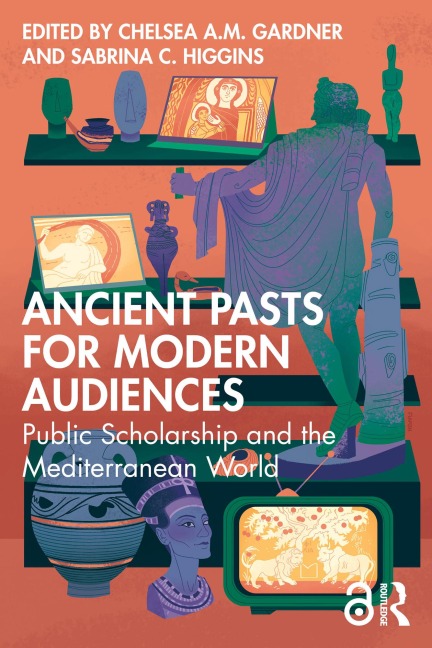
This volume brings together specialists from a broad demographic and professional range - academics, museum curators, students, and content creators - to discuss case studies, challenges, and potential future avenues for public scholarship on the history, archaeology, and cultures of the ancient Mediterranean, North Africa and Western Asia. Together, the contributions promote the creation of inclusive methods of knowledge mobilisation and communication in public spheres across three main areas: cultural heritage, pedagogy and public-facing scholarship. These areas have all been directly affected by Eurocentric structures that have claimed ownership of ancient Mediterranean cultural heritage and have dictated how it has been taught in schools and communicated to the broader public. The volume is divided into three sections - Museums, Teaching and Learning, and Global and Local Projects - each addressing pressing challenges faced within these interrelated fields and offering ways for us to overcome the exclusionary narratives that plague them. Ancient Pasts for Modern Audiences provides an invaluable resource for those interested in public history, from academics to lay audiences, in the fields of Ancient Mediterranean, North African, and Western Asian Studies. The book also appeals to professionals and researchers whose interests lie in public-facing scholarship, pedagogy, digital humanities, decolonisation studies, museum studies and popular media. The Open Access version of this book, available at http://www.taylorfrancis.com, has been made available under a Creative Commons Attribution-Non Commercial-No Derivatives (CC BY-NC-ND) 4.0 license.
Chelsea A.M. Gardner is Associate Professor in the Department of History and Classics at Acadia University. She is an archaeologist working in the Mani Peninsula in southern Greece, where she is the director of the CARTography Project and the Southern Mani Archaeological Project. Sabrina C. Higgins is Associate Professor of Aegean and Mediterranean Societies and Cultures, cross-appointed between the Departments of Global Humanities and Archaeology at Simon Fraser University. She is an archaeologist and art historian whose research interests include the cult of the Virgin Mary in Late Antique Egypt, religious transformation, sacred landscapes, gender and agency theory, late antique Monasticism, eastern Christianity, material culture of religion, and digital humanities pedagogy.
Introduction: Our Collective Responsibility to the Future of the Ancient Past - Sabrina C. Higgins and Chelsea A.M. Gardner; Section 1 - Museums; 1. I Will Believe in Art When it is Made for the People: Teaching with Greco-Roman Copies in Santiago - Frances Gallart Marques; 2. The Unwavering Divide: Collection and Display Practices of Ancient and Medieval African Collections - Annissa Malvoisin; 3. Respect, Recognition, and Rematriation: An Indigenous Egyptian Perspective on Meaningful Public Discourse - Heba Abd el Gawad; 4. Indigenizing as Anti-Classical? Locating Indigenous Classicisms in and Beyond Museum Frameworks - Kendall Lovely; 5. Densities of Provenancing: Narrating the Colonial Provenance of the Bay View Collection at the Kelsey Museum of Archaeology - Ashton Rodgers; Section 2 - Teaching/Learning; 6. The Peopling the Past Project: Multivocality and Multimodality in Ancient Mediterranean Studies Teaching - Christine L. Johnston, Megan Daniels, Sabrina C. Higgins, Victoria Austen; 7. Back to Basics: Illuminating the Hidden Curriculum and BIPOC Scholars to Promote a More Diverse and Equitable Field - Nadhira Hill; 8. The Lux Project: Using Small-scale Public Scholarship to Reach Local Audiences - Melissa Funke, Kira Lang, Colton Van Gerwen, Bourke Karras; 9. Teaching the Ancient World with Reproductions: Using 3D Printed Objects in Authentic Active History Learning - Christine L. Johnston, Alan Wheeler, Alexis Nunn, Erin Escobar; 10. Research-driven Pedagogy and Public-Facing Outcomes: The Antioch Recovery Project - Ella J. Gonzalez, Danielle Ortiz, Jennifer Stager; Section 3 - Public Projects, Local and Global; 11. Wiki Education, the Ancient Mediterranean Classroom, and the Production of Global Knowledge - Chelsea A.M. Gardner, Victoria Austen; 12. Lasting impressions: archaeology and community engagement in the Xeros River valley (Cyprus) - Francesco Ripanti, Giorgos Papantoniou, Athanasios Vionis, Andreas Lanitis; 13. The Database of Religious History and Responsible Global Scholarship - Gino Canlas, M. Willis Monroe, Andrew Danielson, Julian Weideman, Ian Randall; 14. Reimagining the Digital Mary Project as a Counter-Practice Within/Against the Neoliberal University - Sabrina C. Higgins, Aurora Camaño, Michael R. Laurence; 15. Public Humanities and the Ancient Mediterranean: A Conversation with Liv Albert of the Let's Talk about Myths, Baby! Podcast, Flora Kirk of Flaroh Illustration, and Megan Lewis of Digital Hammurabi - Melissa Funke, Liv Albert, Flora Kirk, Megan Lewis.
Dieses eBook wird im PDF-Format geliefert und ist mit einem Adobe Kopierschutz (DRM) versehen. Sie können dieses eBook mit allen Geräten lesen, die das PDF-Format und den Adobe Kopierschutz (DRM) unterstützen.
Zum Beispiel mit den folgenden Geräten:
• tolino Reader
Laden Sie das eBook direkt über den Reader-Shop auf dem tolino herunter oder übertragen Sie das eBook auf Ihren tolino mit einer kostenlosen Software wie beispielsweise Adobe Digital Editions.
• Sony Reader & andere eBook Reader
Laden Sie das eBook direkt über den Reader-Shop herunter oder übertragen Sie das eBook mit der kostenlosen Software Sony READER FOR PC/Mac oder Adobe Digital Editions auf ein Standard-Lesegeräte mit epub- und Adobe DRM-Unterstützung.
• Tablets & Smartphones
Möchten Sie dieses eBook auf Ihrem Smartphone oder Tablet lesen, finden Sie hier unsere kostenlose Lese-App für iPhone/iPad und Android Smartphone/Tablets.
• PC & Mac
Lesen Sie das eBook direkt nach dem Herunterladen mit einer kostenlosen Lesesoftware, beispielsweise Adobe Digital Editions, Sony READER FOR PC/Mac oder direkt über Ihre eBook-Bibliothek in Ihrem Konto unter „Meine eBooks“ - „online lesen“.
Schalten Sie das eBook mit Ihrer persönlichen Adobe ID auf bis zu sechs Geräten gleichzeitig frei.
Bitte beachten Sie, dass die Kindle-Geräte das Format nicht unterstützen und dieses eBook somit nicht auf Kindle-Geräten lesbar ist.