Und dann auf "Zum Home-Bildschirm [+]".

Stöbern
genialokal zum Startbildschirm hinzufügen
Installieren Sie die genialokal App auf Ihrem Startbildschirm für einen schnellen Zugriff und eine komfortable Nutzung.
Installieren Sie die genialokal App auf Ihrem Startbildschirm für einen schnellen Zugriff und eine komfortable Nutzung.
Ihr gewünschter Artikel ist in 0 Buchhandlungen vorrätig - wählen Sie hier eine Buchhandlung in Ihrer Nähe aus:

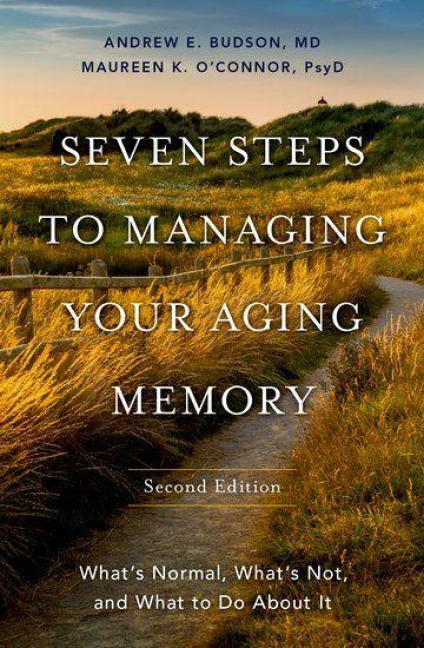
FDA's approval of aducanumab has radically changed the world of Alzheimer's disease and you're going to need guidance regarding whether they should take it or not. This book conveys all the insight. As you age, you may find yourself worrying about your memory. Where did I put those car keys? What time was my appointment? What was her name again? With more than 41 million Americans over the age of 65 in the United States, the question becomes how much (or, perhaps, what type) of memory loss is to be expected as one gets older and what should trigger a visit to the doctor. Seven Steps to Managing Your Aging Memory addresses these key concerns and more, such as: · What are the signs that suggest your memory problems are more than just part of normal aging? · Is it normal to have concerns about your memory? · What are the markers of mild cognitive impairment, dementia, Alzheimer's, and other brain diseases? · How should you talk about your memory concerns to your doctor? · What should your doctor do to evaluate your memory? · Which healthcare professional(s) should you see? · What medicines, alternative therapies, diets, and exercises actually work to improve your memory? · Can crossword puzzles, computer brain-training games, memory aids, and strategies help strengthen your memory? · What other resources are available when dealing with memory loss? Seven Steps to Managing Your Aging Memory is written in an easy-to-read yet comprehensive style, featuring clinical vignettes and character-based stories that provide real-life examples of how to successfully manage memory loss.
Andrew Budson, MD majored in chemistry and philosophy at Haverford College before receiving his medical degree from Harvard Medical School. Dr. Budson is Chief of Cognitive & Behavioral Neurology at the Veterans Affairs Boston Healthcare System, Professor of Neurology at Boston University, and Lecturer in Neurology at Harvard Medical School. His career combines education, research, and clinical care to help those with memory disorders. Maureen O'Connor, PsyD received her doctorate in psychology from Indiana University of Pennsylvania and completed her predoctoral internship at Yale University School of Medicine. In 2005, after completing her postdoctoral residency at the Bedford Veterans Affairs Hospital/Boston University School of Medicine, she accepted an appointment at the Bedford VA as Director of Neuropsychology, where she established the Memory Diagnostic Clinic to evaluate and treat Veterans with memory loss and provide support to their families. In 2019 she was appointed the Director of the Research Education Component at the Boston University Alzheimer's Disease Research Center.
- Preface - Acknowledgments - How to Use This Book - About the Stories - Introduction - STEP 1. LEARN WHAT IS NORMAL MEMORY - Chapter 1: Which Memory Errors Can Happen to Anyone of Any Age - Chapter 2: How Does Memory Change in Normal Aging - STEP 2. DETERMINE IF YOUR MEMORY IS NORMAL - Chapter 3: What Kinds of Memory Problems Are Not Normal? - Chapter 4: What Should the Doctor Do to Evaluate My Memory? - Chapter 5: When Are Special Tests and Evaluations Needed? - STEP 3 UNDERSTAND YOUR MEMORY LOSS - Chapter 6: Will My Memory Get Better? Which Causes of Memory Loss Are Reversible? - Chapter 7: What Are Dementia, Mild Cognitive Impairment, and Subjective Cognitive Decline? - Chapter 8: What Is Alzheimer's Disease? - Chapter 9: What Are Vascular Dementia and Vascular Mild Cognitive Impairment? - Chapter 10: What Else Could It Be? What Are Other Brain Disorders of Aging Affecting Thinking and Memory? - STEP 4 TREAT YOUR MEMORY LOSS - Chapter 11: Which Medications Can Help Memory Loss and Alzheimer's Disease? - Chapter 12: I'm Feeling a Bit Anxious and Depressed by My Memory Loss or My Diagnosis: What Should I Do About These Feelings? - STEP 5 MODIFY YOUR LIFESTYLE - Chapter 13: How Can Sleep Help My Memory? - Chapter 14: What Foods Should I Eat or Avoid to Help My Memory? - Chapter 15: Can Physical Activity and Exercise Help My Memory? - STEP 6 STRENGTHEN YOUR MEMORY - Chapter 16: What Can I Do to Strengthen My Memory? - Chapter 17: What Strategies Can I Use to Help My Memory? - Chapter 18: Which Memory Aids Are Helpful? - STEP 7 PLAN YOUR FUTURE - Chapter 19: Will Changes in My Memory Change My Life? - Chapter 20: Where Do I Go from Here? - Glossary - Further Reading - About the Authors - Index