Und dann auf "Zum Home-Bildschirm [+]".

Stöbern
genialokal zum Startbildschirm hinzufügen
Installieren Sie die genialokal App auf Ihrem Startbildschirm für einen schnellen Zugriff und eine komfortable Nutzung.
Installieren Sie die genialokal App auf Ihrem Startbildschirm für einen schnellen Zugriff und eine komfortable Nutzung.
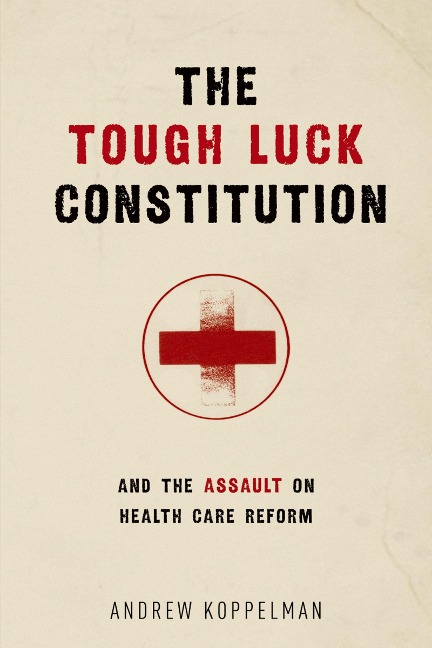
Chief Justice John Roberts stunned the nation by upholding the Affordable Care Act--more commonly known as Obamacare. But legal experts observed that the decision might prove a strategic defeat for progressives. Roberts grounded his decision on Congress's power to tax. He dismissed the claim that it is allowed under the Constitution's commerce clause, which has been the basis of virtually all federal regulation--now thrown in doubt. In The Tough Luck Constitution and the Assault on Health Care Reform, Andrew Koppelman explains how the Court's conservatives embraced the arguments of a fringe libertarian legal movement bent on eviscerating the modern social welfare state. They instead advocate what Koppelman calls a "tough luck" philosophy: if you fall on hard times, too bad for you. He argues that the rule they proposed--that the government can't make citizens buy things--has nothing to do with the Constitution, and that it is in fact useless to stop real abuses of power, as it was tailor-made to block this one law after its opponents had lost in the legislature. He goes on to dismantle the high court's construction of the commerce clause, arguing that it almost crippled America's ability to reverse rising health-care costs and shrinking access. Koppelman also places the Affordable Care Act within a broader historical context. The Constitution was written to increase central power, he notes, after the failure of the Articles of Confederation. The Supreme Court's previous limitations on Congressional power have proved unfortunate: it has struck down anti-lynching laws, civil-rights protections, and declared that child-labor laws would end "all freedom of commerce, and . . . our system of government [would] be practically destroyed." Both somehow survived after the court revisited these precedents. Koppelman notes that the arguments used against Obamacare are radically new--not based on established constitutional principles. Ranging from early constitutional history to potential consequences, this is the definitive postmortem of this landmark case.
Andrew Koppelman is John Paul Stevens Professor of Law, Northwestern University. His books include Defending American Religious Neutrality, A Right to Discriminate?, and The Gay Rights Question in Contemporary American Law.
Contents
Introduction Chapter One: The Road to the Mandate Origins of health insurance After Medicare and Medicaid Obama Chapter Two: Appropriate Constitutional Limits The enumerated powers Necessary and Proper The unhappy story of judicially crafted limits A Constitution of subsidiarity Why the mandate is constitutional Chapter Three: Bad News for Mail Robbers The invention of the constitutional objection Barnett's libertarianism The path to the Supreme Court The Broccoli Horrible From court to Court Chapter Four: What the Court Did The mandate Medicaid Severability Explaining John Roberts Chapter Five: Where It Hurts So what happens to the Medicaid expansion? Your tough luck Acknowledgements
Dieses eBook wird im PDF-Format geliefert und ist mit einem Adobe Kopierschutz (DRM) versehen. Sie können dieses eBook mit allen Geräten lesen, die das PDF-Format und den Adobe Kopierschutz (DRM) unterstützen.
Zum Beispiel mit den folgenden Geräten:
• tolino Reader
Laden Sie das eBook direkt über den Reader-Shop auf dem tolino herunter oder übertragen Sie das eBook auf Ihren tolino mit einer kostenlosen Software wie beispielsweise Adobe Digital Editions.
• Sony Reader & andere eBook Reader
Laden Sie das eBook direkt über den Reader-Shop herunter oder übertragen Sie das eBook mit der kostenlosen Software Sony READER FOR PC/Mac oder Adobe Digital Editions auf ein Standard-Lesegeräte mit epub- und Adobe DRM-Unterstützung.
• Tablets & Smartphones
Möchten Sie dieses eBook auf Ihrem Smartphone oder Tablet lesen, finden Sie hier unsere kostenlose Lese-App für iPhone/iPad und Android Smartphone/Tablets.
• PC & Mac
Lesen Sie das eBook direkt nach dem Herunterladen mit einer kostenlosen Lesesoftware, beispielsweise Adobe Digital Editions, Sony READER FOR PC/Mac oder direkt über Ihre eBook-Bibliothek in Ihrem Konto unter „Meine eBooks“ - „online lesen“.
Schalten Sie das eBook mit Ihrer persönlichen Adobe ID auf bis zu sechs Geräten gleichzeitig frei.
Bitte beachten Sie, dass die Kindle-Geräte das Format nicht unterstützen und dieses eBook somit nicht auf Kindle-Geräten lesbar ist.