Und dann auf "Zum Home-Bildschirm [+]".

Stöbern
genialokal zum Startbildschirm hinzufügen
Installieren Sie die genialokal App auf Ihrem Startbildschirm für einen schnellen Zugriff und eine komfortable Nutzung.
Installieren Sie die genialokal App auf Ihrem Startbildschirm für einen schnellen Zugriff und eine komfortable Nutzung.
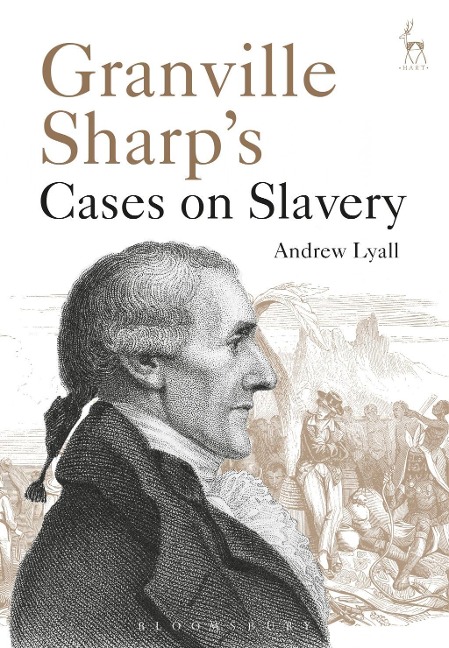
The purpose of Granville Sharpe's Cases on Slavery is twofold: first, to publish previously unpublished legal materials principally in three important cases in the 18th century on the issue of slavery in England, and specifically the status of black people who were slaves in the American colonies or the West Indies and who were taken to England by their masters. The unpublished materials are mostly verbatim transcripts made by shorthand writers commissioned by Granville Sharp, one of the first Englishmen to take up the cause of the abolition of the slave trade and slavery itself. Other related unpublished material is also made available for the first time, including an opinion of an attorney general and some minor cases from the library of York Minster. On the slave ship Zong, there are transcripts of the original declaration, the deposition by the chief mate, James Kelsall and an extract from a manuscript that Professor Martin Dockray was working on before his untimely death.
The second purpose, outlined in the Introduction, is to give a social and legal background to the cases and an analysis of the position in England of black servants/slaves brought to England and the legal effects of the cases, taking into account the new information provided by the transcripts. There was a conflict in legal authorities as to whether black servants remained slaves, or became free on arrival in England.
Lord Mansfield, the chief justice of the court of King's Bench, was a central figure in all the cases and clearly struggled to come to terms with slavery. The material provides a basis for tracing the evolution of his thought on the subject. On the one hand, the huge profits from slave production in the West Indies flooded into England, slave owners had penetrated the leading institutions in England and the pro-slavery lobby was influential. On the other hand, English law had over time established rights and liberties which in the 18th century were seen by many as national characteristics. That tradition was bolstered by the ideas of the Enlightenment.
By about the 1760s it had become clear that there was no property in the person, and by the 1770s that such servants could not be sent abroad without their consent, but whether they owed an obligation of perpetual service remained unresolved.
Andrew Lyall is a retired member of staff in Law at University College Dublin.
INTRODUCTION
Granville Sharp (1735-1813)
The Manuscripts
Jonathan Strong
The King (Lewis) v Stapylton
Somerset v Stuart
Gregson v Gilbert (The Zong)
Black Servants Brought to England
Factual Background
State of the Law
The Case Law
Blackstone
The Royal Navy
The Cases
Jonathan Strong
The King (Lewis) v Stapylton (1771)
Somerset v Stewart
Versions of the Judgment
The Order
Scope of the Judgment
Attempts to Evade Somerset
Habeas Corpus and Foreigners
Slave Law in the Colonies
Villeinage in England
Gregson v Gilbert (The Zong)
The "Absolute Necessity"
Marine Insurance and Slave Trade Acts
Navigation and the Longitude Problem
Did it Really Happen?
TRANSCRIPTIONS
Jonathan Strong
King (Lewis) v Stapylton
Proceedings in the King's Bench
Motions for Judgment
Granville Sharp's Argument
Granville Sharp's Remarks on the Case
Somerset v Stuart
First Hearing in the King's Bench
Third Day, "Second Hearing" in the King's Bench
Lord Mansfield's Judgment
1. The Scots Magazine/Estwick version
2. Granville Sharp MS of the Judgment
3. Letter to the General Evening Post
4. Lincoln's Inn, Hill MS version
5. Lincoln's Inn, Ashhurst Paper Book
6. Lofft's Report
Sharp's Memoranda on Somerset v Stuart
Gregson v Gilbert
The Declaration in the King's Bench
Proceedings on a Motion for a New Trial
Letter from Granville Sharp to Admiralty
An Account of the Murder of Slaves on the Zong
Letter from Granville Sharp to Duke of Portland
Bill in the Court of Exchequer
James Kelsall's Answer
Gregson's Answer
Extract from Martin Dockray MS
Minor Cases
De Grey Opinion
Cay v Crichton
Hylas v Newton
Sharp's Remarks on Hylas v Newton
Legislation
Habeas Corpus Act 1679
Act of the Scottish Parliament, 1701 c 6
Slave Trade Act, 1788
Slave Trade Act, 1793
Slave Trade Act, 1798
Slave Trade Act, 1799
Letters
Letter from Blackstone to Sharp
Letter from Dr Fothergill to Sharp
Blackstone's Commentaries
Dieses eBook wird im PDF-Format geliefert und ist mit einem Adobe Kopierschutz (DRM) versehen. Sie können dieses eBook mit allen Geräten lesen, die das PDF-Format und den Adobe Kopierschutz (DRM) unterstützen.
Zum Beispiel mit den folgenden Geräten:
• tolino Reader
Laden Sie das eBook direkt über den Reader-Shop auf dem tolino herunter oder übertragen Sie das eBook auf Ihren tolino mit einer kostenlosen Software wie beispielsweise Adobe Digital Editions.
• Sony Reader & andere eBook Reader
Laden Sie das eBook direkt über den Reader-Shop herunter oder übertragen Sie das eBook mit der kostenlosen Software Sony READER FOR PC/Mac oder Adobe Digital Editions auf ein Standard-Lesegeräte mit epub- und Adobe DRM-Unterstützung.
• Tablets & Smartphones
Möchten Sie dieses eBook auf Ihrem Smartphone oder Tablet lesen, finden Sie hier unsere kostenlose Lese-App für iPhone/iPad und Android Smartphone/Tablets.
• PC & Mac
Lesen Sie das eBook direkt nach dem Herunterladen mit einer kostenlosen Lesesoftware, beispielsweise Adobe Digital Editions, Sony READER FOR PC/Mac oder direkt über Ihre eBook-Bibliothek in Ihrem Konto unter „Meine eBooks“ - „online lesen“.
Schalten Sie das eBook mit Ihrer persönlichen Adobe ID auf bis zu sechs Geräten gleichzeitig frei.
Bitte beachten Sie, dass die Kindle-Geräte das Format nicht unterstützen und dieses eBook somit nicht auf Kindle-Geräten lesbar ist.